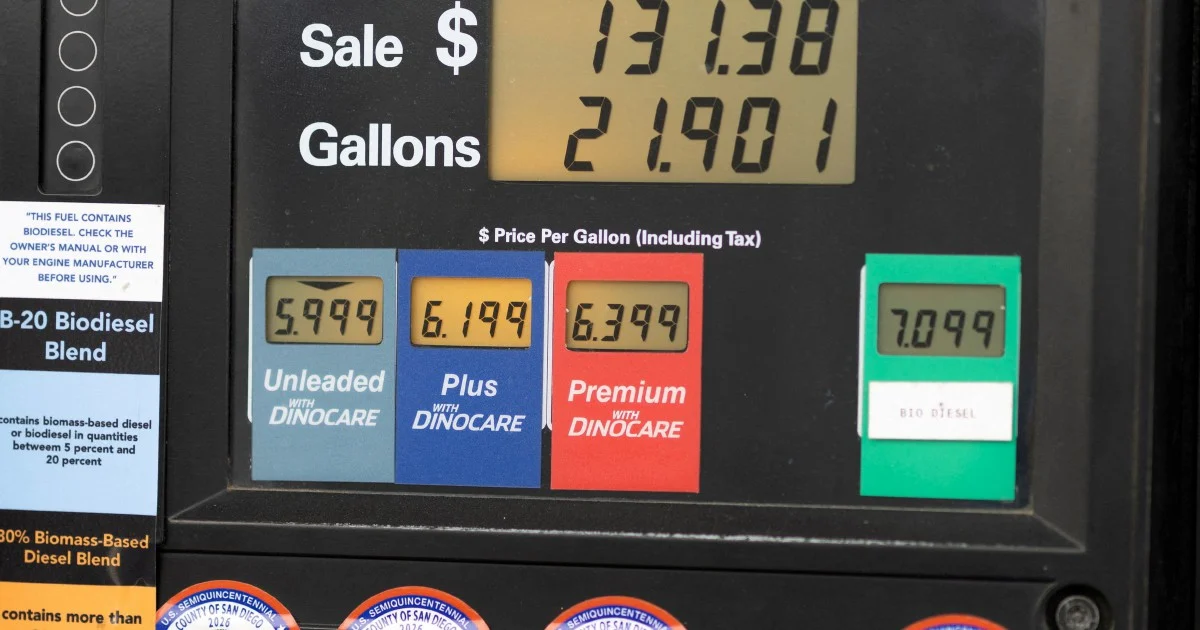
Donald Trump announced on Wednesday that he has directed authorities to investigate major oil companies, citing frustration with gasoline prices that have remained stubbornly elevated despite his expectations they would fall more rapidly. The US President faces mounting criticism regarding the economic consequences of Middle Eastern conflicts and their ripple effects across global energy markets, making fuel costs an increasingly sensitive political issue as he seeks to demonstrate control over economic conditions affecting American households.
The investigation reflects a broader pattern of Trump wielding executive pressure against the energy sector when prices diverge from his preferred trajectories. Rather than attributing elevated fuel costs to structural market forces or geopolitical volatility, Trump has opted for a more confrontational approach that targets corporate decision-making at major oil producers. This stance positions his administration as an advocate for consumers while simultaneously signalling to the petroleum industry that pricing strategies remain subject to presidential scrutiny and potential regulatory consequence.
Gasoline prices in the United States have been influenced by multiple overlapping factors, including the ongoing instability in the Middle East region where critical energy infrastructure remains vulnerable to disruption. Military actions, regional tensions, and threats to shipping corridors through strategic waterways have created uncertainty that typically translates into higher crude prices and subsequently elevated pump prices. These geopolitical dynamics sit beyond any single leader's direct control, yet political expectations increasingly hold administrations accountable for energy costs regardless of their underlying causes.
The timing of Trump's directive reflects broader political calculations surrounding economic messaging. Fuel prices carry outsized psychological weight in consumer perception, often serving as a highly visible indicator of economic performance. Even when underlying economic conditions remain sound, elevated petrol costs can erode confidence and generate public discontent. Trump's decision to initiate an investigation provides a visible demonstration of executive action on a matter where American voters express genuine concern, regardless of whether investigatory mechanisms can materially influence market pricing.
For Malaysian energy observers, Trump's approach offers instructive lessons about how political pressure on energy companies operates across different regulatory regimes. Malaysia, as a Southeast Asian energy producer with significant oil and gas resources, faces its own complexities around fuel pricing policy and consumer expectations. The region's oil exporters have watched how administrations in major consuming markets attempt to influence energy costs, recognising that such interventions often reflect political necessity rather than effective market mechanisms.
The investigation itself may examine whether oil companies have engaged in pricing strategies that exceed what market conditions justify, or whether production decisions artificially constrain supply and inflate prices. Large multinational petroleum firms typically argue that pricing reflects global market fundamentals, production costs, and financial risks inherent to energy markets. Regulatory investigators must distinguish between legitimate profit maximisation in competitive commodity markets and potentially manipulative practices that distort pricing away from equilibrium levels.
Major oil companies operating in the United States face a complex regulatory environment where they balance shareholder returns against political pressure and potential government action. The investigation Trump has ordered represents another instance of executives operating within a context where policy responses to energy prices carry real consequences for corporate operations and strategic planning. Companies have invested substantially in understanding and preparing for various regulatory scenarios, yet the uncertainty surrounding investigatory scope and potential findings creates tangible business risks.
The broader context of Middle Eastern instability remains crucial to understanding this moment. Conflict dynamics, military posturing, and potential disruptions to crude supplies have legitimately contributed to price pressures across global markets. Trump's administration simultaneously manages broader foreign policy in the region while seeking to manage domestic political consequences of elevated energy costs. These dual imperatives sometimes pull in opposing directions, creating friction between immediate economic messaging and longer-term strategic positioning.
From a Southeast Asian perspective, this episode underscores how US energy policy and political dynamics reverberate through regional markets. Malaysia, Indonesia, Brunei, and Vietnam all engage in oil production and consume petroleum products substantially. Price movements in major consuming markets influence regional pricing structures and investment decisions within ASEAN energy sectors. When the world's largest economy initiates investigations into pricing practices, it sends signals that ripple through global supply chains and corporate decision-making frameworks across the region.
The investigation also highlights tensions between government price management expectations and private sector operational realities. Oil companies argue convincingly that they cannot directly control crude prices set in global markets, nor can they independently manage the geopolitical factors that influence supply uncertainty premiums. Yet political actors increasingly expect corporate entities to absorb or mitigate price pressures for consumers, creating conflicting mandates that prove impossible to simultaneously satisfy.
Looking forward, the investigatory process will likely reveal limited evidence of explicit collusion or manipulation that triggers criminal liability, while simultaneously highlighting legitimate business practices that nonetheless contribute to elevated prices. This gap between political expectations and investigatory findings frequently generates frustration among policymakers seeking concrete remedies. Trump's order serves primarily as a political statement of concern and action on an issue that resonates with voters, even if the investigation produces few tangible policy changes.
For Malaysia and neighbouring ASEAN nations, monitoring how major consuming markets respond to energy price volatility offers valuable perspective on managing their own energy policies. The region's continued development depends partly on stable, reasonably priced energy supplies, making global pricing dynamics a matter of significant strategic concern. The interplay between geopolitical realities, market forces, and political pressure on energy companies will likely intensify as Middle Eastern tensions persist and global energy transitions accelerate.

