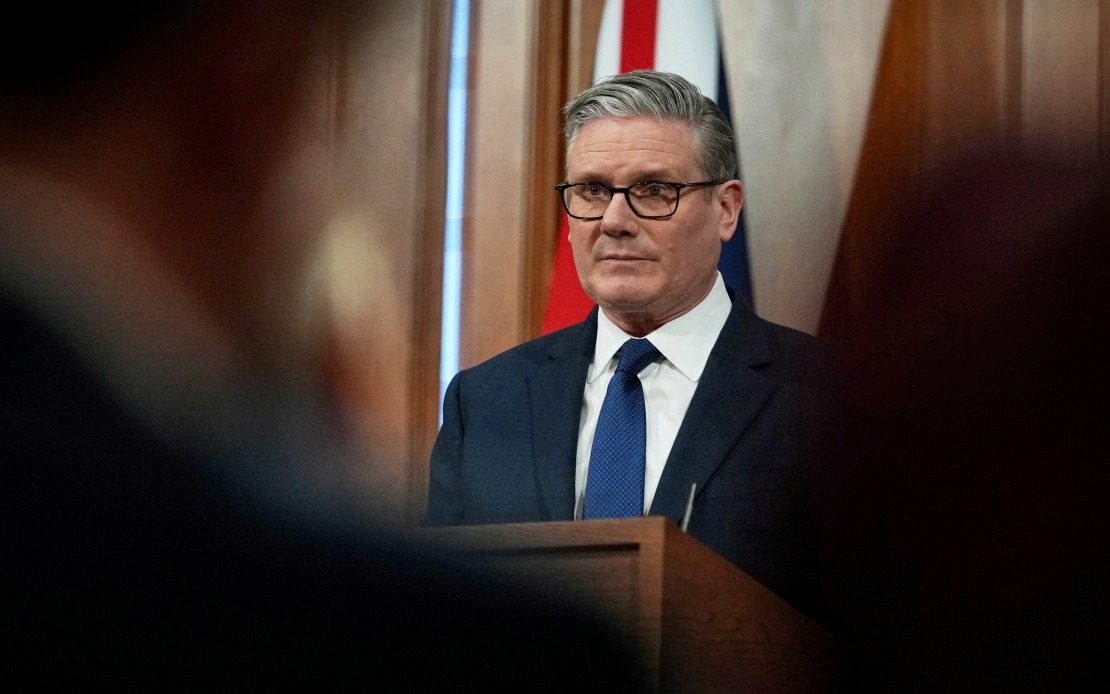
US President Donald Trump declared on Sunday that British Prime Minister Keir Starmer will resign from office, attributing the anticipated departure to what he characterised as serious mishandling of immigration and energy matters. Speaking through his Truth Social platform while in Istanbul, Trump stated unequivocally that Starmer's tenure as head of the UK government would end, though he offered qualified wishes for the Prime Minister's future.
The American President's pronouncement zeroed in on two policy domains he views as critical failures. On immigration, Trump suggested that Starmer had proven incapable of implementing adequate border controls, a perennial concern for Trump himself. Energy policy formed the second pillar of his criticism, with Trump specifically referencing the North Sea oil sector and implying that Starmer had neglected opportunities to expand extraction from this vital resource. The combination of these two perceived failures, in Trump's assessment, renders Starmer's position untenable.
Trump's intervention into British domestic politics arrives amid gathering speculation within Westminster itself. The BBC reported on the same Sunday that government insiders were privately discussing the possibility of Starmer announcing a resignation timetable as early as Monday. This convergence of Trump's public prediction with internal government discussions suggested that pressures on the Prime Minister had reached critical levels, though the precise reasons for the putative collapse differed between Trump's public commentary and Westminster's internal calculations.
The reported mood within Starmer's administration appears to have deteriorated significantly. Several officials close to government operations reportedly believe the Prime Minister might feel compelled to outline when he intends to step down from his position. The fact that such discussions were already circulating before Trump's statement indicates that concerns about Starmer's viability extend beyond external critics to include members of his own governmental apparatus. This internal fracturing, if accurate, would represent a serious erosion of confidence in his leadership.
For Malaysian readers and Southeast Asian observers, the potential collapse of the Starmer government carries implications for UK engagement in the region. Malaysia and other ASEAN nations have developed diplomatic and trade relationships with the British government across multiple sectors. Any transition in UK political leadership could affect continuity in regional policies, particularly those touching on trade negotiations, defence partnerships, and participation in regional forums. The UK's role in Indo-Pacific affairs, though limited compared to regional powers, remains relevant to broader geopolitical dynamics.
The timing of Trump's statement merits consideration within the context of US-UK relations. Trump has previously been critical of various British policies and leaders, and his intervention here reflects his willingness to publicly comment on allied governments' internal political fortunes. Whether his prediction reflects genuine confidence in intelligence about Starmer's imminent resignation or represents Trump's characteristic confident pronouncement about matters outside his direct purview remains open to interpretation.
Starmer assumed office as Prime Minister following the Labour Party's decisive electoral victory in July 2024, ending fourteen years of Conservative governance. His administration was tasked with addressing significant challenges including cost-of-living pressures, public sector reforms, and restoring economic stability. However, his government has faced sustained criticism from multiple quarters regarding its handling of various policy matters, and Trump's comments on immigration and energy represent just one external perspective on these contested issues.
The immigration critique from Trump particularly resonates given the contentious status of small boat crossings in the English Channel, a politically volatile issue that has dominated British domestic discourse for years. Successive governments have struggled to develop effective responses to this challenge, and the Starmer administration inherited this intractable problem. Energy policy, conversely, touches on Britain's green transition ambitions and decisions about North Sea operations, areas where the government's approach has generated both support and opposition from different political constituencies.
If Starmer were indeed to announce a resignation, it would represent a remarkable political reversal for someone elected less than a year previously with a substantial parliamentary majority. The British premiership, despite its formal powers, remains vulnerable to erosion of internal party support, media pressure, and accumulated policy difficulties. The gap between electoral victory and political collapse, should it occur, would underscore how rapidly political fortunes can shift in Westminster's competitive environment.
The potential succession to Starmer raises questions about the trajectory of British politics and Labour Party leadership. Several senior figures within the government could theoretically assume the premiership, each bringing different policy emphases and political profiles. The nature of any transition would shape UK policy directions in areas affecting regional relationships, including those with Malaysia and ASEAN partners.
%22%2F%3E%3C%2Fpattern%3E%3C%2Fdefs%3E%3Crect%20width%3D%22100%25%22%20height%3D%22100%25%22%20fill%3D%22url(%23ph5bjwng)%22%2F%3E%3Crect%20width%3D%22100%25%22%20height%3D%22100%25%22%20fill%3D%22url(%23ph5bjwnp)%22%2F%3E%3Ctext%20x%3D%2250%25%22%20y%3D%2250%25%22%20text-anchor%3D%22middle%22%20dominant-baseline%3D%22central%22%20fill%3D%22rgba(255%2C255%2C255%2C0.95)%22%20font-family%3D%22Georgia%2C%20'Times%20New%20Roman'%2C%20serif%22%20font-weight%3D%22700%22%20font-size%3D%22226%22%20letter-spacing%3D%22-0.02em%22%3EHamzah%3C%2Ftext%3E%3C%2Fsvg%3E)
%22%2F%3E%3C%2Fpattern%3E%3C%2Fdefs%3E%3Crect%20width%3D%22100%25%22%20height%3D%22100%25%22%20fill%3D%22url(%23ph5pue1g)%22%2F%3E%3Crect%20width%3D%22100%25%22%20height%3D%22100%25%22%20fill%3D%22url(%23ph5pue1p)%22%2F%3E%3Ctext%20x%3D%2250%25%22%20y%3D%2250%25%22%20text-anchor%3D%22middle%22%20dominant-baseline%3D%22central%22%20fill%3D%22rgba(255%2C255%2C255%2C0.95)%22%20font-family%3D%22Georgia%2C%20'Times%20New%20Roman'%2C%20serif%22%20font-weight%3D%22700%22%20font-size%3D%22170%22%20letter-spacing%3D%22-0.02em%22%3ETambirat%3C%2Ftext%3E%3C%2Fsvg%3E)
%22%2F%3E%3C%2Fpattern%3E%3C%2Fdefs%3E%3Crect%20width%3D%22100%25%22%20height%3D%22100%25%22%20fill%3D%22url(%23ph444f3g)%22%2F%3E%3Crect%20width%3D%22100%25%22%20height%3D%22100%25%22%20fill%3D%22url(%23ph444f3p)%22%2F%3E%3Ctext%20x%3D%2250%25%22%20y%3D%2250%25%22%20text-anchor%3D%22middle%22%20dominant-baseline%3D%22central%22%20fill%3D%22rgba(255%2C255%2C255%2C0.95)%22%20font-family%3D%22Georgia%2C%20'Times%20New%20Roman'%2C%20serif%22%20font-weight%3D%22700%22%20font-size%3D%22194%22%20letter-spacing%3D%22-0.02em%22%3EBintulu%3C%2Ftext%3E%3C%2Fsvg%3E)