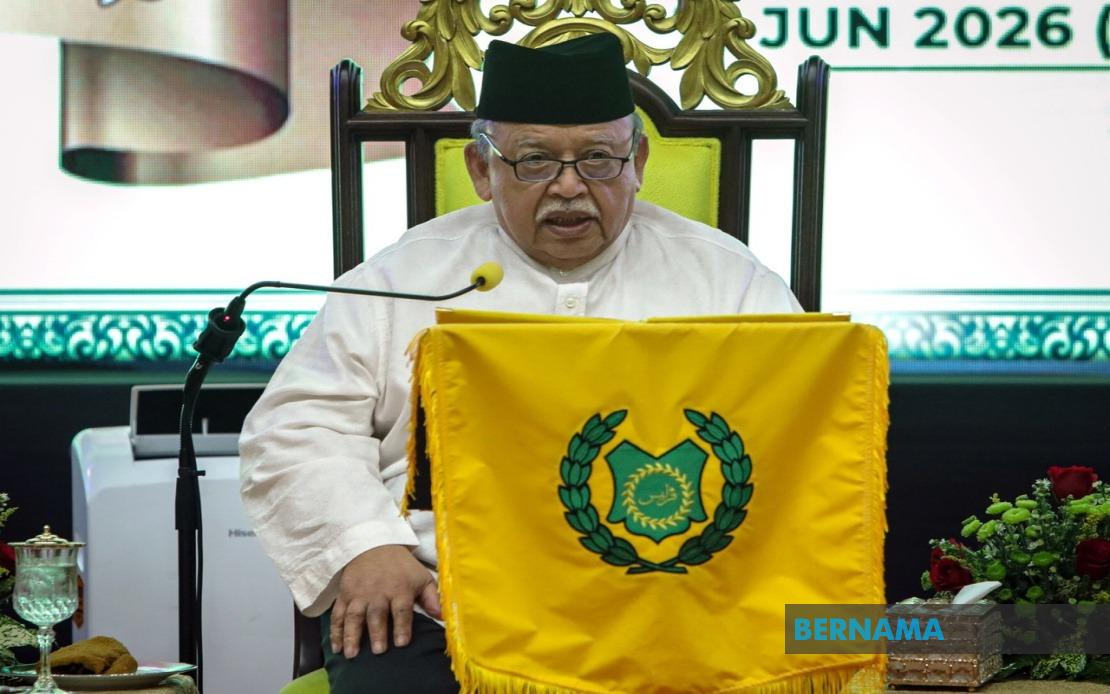
The Raja of Perlis, Tuanku Syed Sirajuddin Jamalullail, has issued a powerful call for moral accountability and anti-corruption efforts, arguing that genuine societal advancement rests on the character and values of citizens rather than infrastructure or economic metrics alone. Speaking at the state-level Maal Hijrah 1448H/2026M celebration in Kangar on June 18, the Ruler emphasised that people must discharge their duties with genuine commitment, view their work as a form of worship, and categorically resist corruption in all its manifestations. This intervention carries particular significance as Malaysia continues to grapple with governance challenges and public trust deficits, positioning the monarchy's voice as a moral compass in national discourse.
Tuanku Syed Sirajuddin framed the relationship between progress and integrity as foundational to any prosperous state. He contended that a polity can only reach authentic advancement when its inhabitants possess knowledge, demonstrate moral integrity, maintain civil conduct, and maintain social cohesion. This framing represents a departure from purely development-centric narratives that dominate much policy discussion in Southeast Asia, instead anchoring progress in the softer dimensions of human capital and institutional culture. The Raja's perspective aligns with emerging global recognition that sustainable development requires concurrent investment in ethics and social capital.
The Ruler distinguished between what he termed "true MADANI progress" and conventional measures of development. Rather than fixating on physical infrastructure, he argued that genuine advancement encompasses intellectual development, character formation, cultural vitality, intellectual maturation, and the integrity of values that underpin society. This distinction proves particularly relevant for Malaysian policymakers who have emphasised the MADANI framework as a guiding principle. The Raja's interpretation suggests that the framework demands deeper examination of institutional ethics and individual accountability rather than mere accumulation of physical assets or GDP growth.
Tuanku Syed Sirajuddin articulated a comprehensive prescription for national advancement, urging citizens to embrace civilised values in their everyday interactions, strengthen communal bonds, pursue knowledge continuously, preserve propriety in conduct, and execute their duties with full accountability. This multi-faceted approach acknowledges that anti-corruption efforts and institutional reform cannot succeed without parallel transformation in individual behaviour and collective expectations. For Malaysian civil society, the message provides valuable reinstatement that systemic problems require cultural solutions alongside regulatory ones.
The Ruler also stressed the importance of reinforcing authentic Islamic understanding grounded in the Qur'an and Sunnah, while simultaneously cultivating political maturity and civilised discourse. This dual emphasis demonstrates careful navigation between religious and civic dimensions of governance—a balance that remains contested in Malaysian politics. By linking Islamic scholarship to political civility, Tuanku Syed Sirajuddin suggested that religious commitment and democratic values need not conflict, but rather reinforce one another when properly understood.
Emphasis on people-centred empowerment formed another pillar of the Raja's message. He called for sustained priority on comprehensive ummah development spanning religious, political, economic, and social dimensions. Critically, he advocated cultivating courage, intelligence, and self-reliance as defining characteristics of Perlis citizens, framing these virtues as prerequisites for constructing a sustainable future for succeeding generations. This focus on individual and collective agency stands in contrast to dependency narratives that sometimes characterise Malaysian public discourse.
The Ruler identified contemporary challenges requiring proactive engagement rather than passive acceptance. Technological advancement, artificial intelligence proliferation, social transformation, and shifting global economic dynamics demand that Malaysians and Southeast Asians position themselves as active participants rather than passive observers. Tuanku Syed Sirajuddin insisted that his people must become generators of ideas, catalysts for change, and contributors to progress rather than mere bystanders. This formulation carries urgent implications for Malaysia's competitive position in a rapidly evolving regional and global environment.
The ceremony also served to honour exemplary citizenship through the presentation of the Perlis Tokoh Maal Hijrah award to Datuk Izham Mahmud, a board member of Yayasan Tuanku Syed Putra, in recognition of his demonstrated contributions. This ceremonial act reinforced the Ruler's substantive message by celebrating concrete examples of principled service and dedication to community betterment. Such recognition mechanisms help establish and reinforce the cultural values the Raja advocates.
The occasion brought together senior members of Perlis's royal household, including the Raja Muda of Perlis, Tuanku Syed Faizuddin Putra Jamalullail, and the Raja Puan Muda of Perlis, Tuanku Dr Hajah Lailatul Shahreen Akashah Khalil, underscoring institutional support for the integrity agenda. For the broader Malaysian context, the intervention demonstrates how traditional institutions continue to articulate moral frameworks and governance principles, filling spaces where political leadership sometimes remains circumspect. The Raja's unambiguous stance on corruption and integrity offers welcome moral clarity in an environment where institutional accountability remains a persistent challenge.

