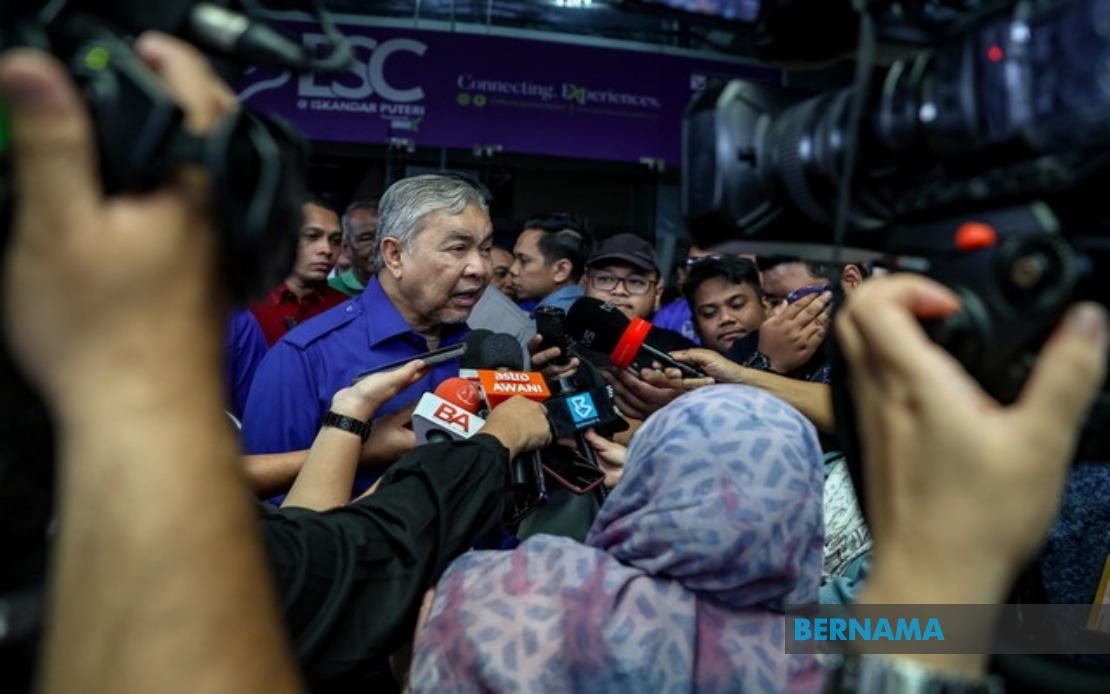
Deputy Prime Minister Datuk Seri Dr Ahmad Zahid Hamidi has signalled that Malaysia's long-awaited Technical and Vocational Education and Training (TVET) Commission will be formally established before the year concludes, with accompanying parliamentary legislation to follow. The announcement, made during the Johor Darul Ta'zim TVET MARA Roadshow in Iskandar Puteri, indicates that the government intends to move beyond consultation phases and proceed with critical institutional reforms designed to elevate the nation's vocational training framework.
The proposed commission represents a structural overhaul of how Malaysia manages technical education policy. Rather than operating as an advisory body, the new entity will assume direct responsibility for both formulating and implementing TVET policies nationwide. This expanded mandate mirrors approaches adopted by Organisation for Economic Co-operation and Development nations, where dedicated commissions drive vocational education with executive authority rather than merely recommending courses of action. The shift reflects growing recognition that Malaysia's competitive position in regional and global talent markets depends on streamlined governance structures capable of rapid policy deployment.
Ahmad Zahid, who chairs the existing National TVET Council, explained that intensive engagement with stakeholders remains underway before the Cabinet can formally advance the proposal. These consultation sessions involve educational institutions, industry bodies, employers, and training providers—constituencies whose buy-in is essential for implementation success. The government has already secured policy approval in principle, but procedural requirements around parliamentary tabling and legal scrutiny remain unresolved. This cautious approach reflects the complexity inherent in restructuring national institutions, particularly when legislative change must accommodate constitutional considerations affecting both federal and state education portfolios.
The transition from council to commission carries implications extending far beyond administrative reorganisation. It signals governmental commitment to positioning TVET as central rather than peripheral to Malaysia's economic strategy. Current gaps between employer demand for skilled workers and training output remain pronounced, particularly in advanced manufacturing, digital services, and green energy sectors. A more empowered commission could theoretically facilitate faster curriculum adjustments, tighter alignment with industry needs, and more agile deployment of training resources to emerging sectors.
However, the timeline carries inherent risks. Compressing institutional establishment, legislative passage, and operational transition into a five-month window demands flawless coordination across multiple government agencies and parliamentary processes. Any delays in Cabinet approvals, parliamentary scheduling, or technical drafting could cascade into missed deadlines, creating uncertainty for training providers dependent on clear regulatory frameworks.
Beyond TVET mechanics, Ahmad Zahid used the occasion to address Johor's evolving political demography. The introduction of Undi18 voting rights has fundamentally altered state electoral mathematics, with voters aged 40 and younger now comprising approximately 52 percent of Johor's electorate. This demographic reality compels political parties to recalibrate messaging and policy priorities toward younger constituencies whose concerns frequently diverge from traditional voter bases.
Ahmad Zahid, in his capacity as Barisan Nasional chairman, explicitly positioned the coalition's continued investment in Johor's incumbent Menteri Besar Datuk Onn Hafiz Ghazi as a generational strategy. By framing Onn Hafiz as a youthful leader embodying continuity rather than changeover, BN attempts to retain state government stability while appearing responsive to younger voters' presumed preferences for renewal. This positioning becomes critical given Johor's traditional role as BN stronghold; any erosion of support in this state would signal broader vulnerability across other constituencies.
The youth vote composition in Johor mirrors national trends but appears more pronounced. Malaysia's overall voter base has been steadily youthing, but Johor's demographic profile particularly skews toward younger cohorts employed in manufacturing hubs around Iskandar Malaysia and Pasir Gudang industrial zones. These voters, typically more price-conscious and opportunity-focused than older generations, may prioritise different policy packages around job creation, education funding, and cost of living. BN's emphasis on Onn Hafiz's youthfulness and developmental accomplishments likely reflects internal polling suggesting younger voters respond to pragmatic governance narratives rather than traditional partisan appeals.
The TVET Commission initiative intersects with this generational political shift. Young voters increasingly recognise that Malaysia's long-term prosperity depends on workforce competitiveness in rapidly evolving global markets. A more effective TVET system directly benefits younger citizens seeking career pathways beyond traditional degree-track education. By advancing institutional reforms addressing youth employment concerns, the government simultaneously pursues dual objectives: strengthening economic fundamentals while demonstrating policy responsiveness to generational priorities.
The implementation challenges ahead warrant close monitoring. Other nations have established specialized education commissions with mixed results—success depends heavily on adequate funding, insulation from short-term political pressures, and genuine industry participation in governance. Malaysia's track record suggests these conditions cannot be assumed. The commission's effectiveness will ultimately depend on whether it operates as a genuine coordinating authority or devolves into another bureaucratic layer.
For Malaysian employers, vocational training institutions, and workers navigating skills development pathways, the commission's establishment represents both opportunity and uncertainty. Opportunity lies in potentially smoother coordination, faster policy adaptation, and more coherent standards across TVET providers. Uncertainty persists regarding transition mechanisms, funding stability, and whether institutional restructuring alone can address deeper systemic issues around skills matching and regional training disparities. The coming months will reveal whether the government can translate administrative reform into tangible improvements in Malaysia's technical workforce capabilities.

