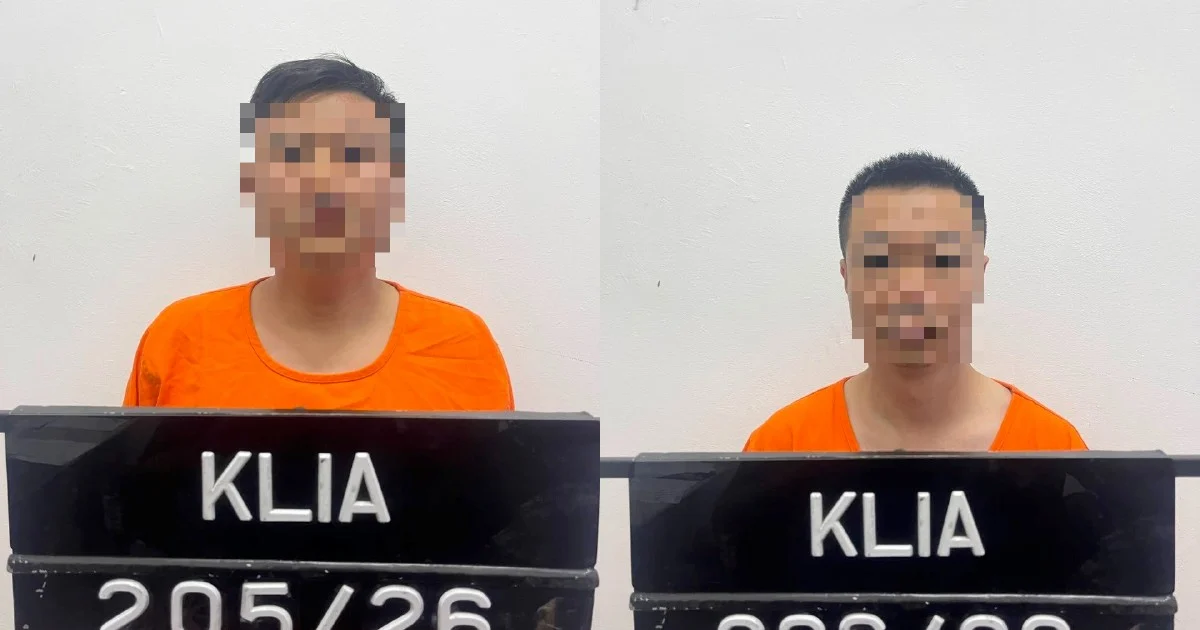
Two men holding Chinese nationality are being held in detention for a four-day period beginning immediately to assist police with enquiries into what authorities allege was an attempted theft during mid-flight operations. The incident occurred aboard an aircraft that departed from Dili, the capital of Timor-Leste, with Kuala Lumpur International Airport as its final destination. The arrests were made at KLIA's facilities in Sepang, the administrative hub for the airport situated southwest of Kuala Lumpur.
The alleged occurrence has raised fresh concerns about in-flight security protocols at the region's busiest international aviation hub. Incidents involving passenger misconduct during commercial flights remain relatively uncommon in Southeast Asia, yet when they do surface, they trigger immediate reviews of surveillance systems, crew training procedures, and passenger screening mechanisms. The Timor-Leste route has historically maintained solid safety records, making this incident particularly notable to aviation authorities monitoring cross-border traffic through Malaysian airspace.
Details surrounding the precise nature of the alleged theft remain restricted at this investigative stage. Police have not disclosed whether valuables, documents, or other items were specifically targeted, nor have they confirmed whether any property was successfully taken or if crew members interrupted the incident before completion. Such information typically remains confidential during active investigations to preserve the integrity of questioning and prevent compromising leads.
The four-day remand period represents a standard procedural timeframe employed by Malaysian authorities to allow investigating officers sufficient opportunity to gather statements, review security footage, coordinate with airlines, and determine whether additional charges may be warranted. During this custody period, the two men will undergo formal interviews conducted by commercial crime or aviation security specialists working within the Royal Malaysia Police framework.
This development comes amid Malaysia's broader efforts to strengthen aviation security standards following various international incidents affecting regional carriers. KLIA, which accommodates more than 50 million passengers annually across numerous international routes, maintains comprehensive security architecture designed to prevent such occurrences. Yet the incident underscores that individual lapses by passengers can still occur despite robust preventative systems in place throughout terminal facilities and boarding procedures.
The route connecting Dili with Kuala Lumpur serves an essential function linking Timor-Leste with broader Southeast Asian economic networks. Thousands of passengers traverse this corridor monthly for business, tourism, and personal reasons. Airlines operating this service must now confront reputational considerations arising from security incidents, even when they involve passenger conduct rather than operational failures by carriers themselves.
Timor-Leste, having gained independence in 2002, maintains developing aviation infrastructure served largely by regional carriers and international operators. Cooperation between Malaysian and Timorese authorities regarding aviation matters reflects broader bilateral relationships emphasizing security coordination and mutual assistance in law enforcement contexts. The incident may trigger bilateral discussions regarding enhanced passenger screening procedures at Dili's airport.
Crew training for responding to suspected criminal activity during flight operations has become increasingly standardized across Asia-Pacific carriers. Protocols now typically emphasize de-escalation techniques, discreet communication with flight deck personnel, and preservation of evidence should incidents occur. The crew's apparent response in either preventing or reporting the alleged theft suggests training mechanisms functioned appropriately during this encounter.
Police investigations will necessarily examine passenger manifest information, seating arrangements, timing sequences, and security camera footage spanning departure terminals, aircraft interiors, and arrival facilities. Digital evidence, including mobile phone data and potential financial transaction records, may also feature prominently in establishing motive and intent. The investigation's scope could expand to determine whether the incident represents isolated opportunistic conduct or part of coordinated activity.
The remand decision reflects judicial confidence in investigative necessity, suggesting magistrates found sufficient preliminary evidence to justify continued custody beyond standard interview periods. Prosecutors will present findings to determine whether charges should proceed under the Penal Code's theft provisions or whether aviation-specific legislation applies to this set of circumstances.
For Malaysian travelers and regional passengers transiting through KLIA, such incidents typically prompt heightened awareness regarding personal security of valuables during air travel. The overwhelming majority of commercial flights conclude without incident, yet individual cases receive disproportionate attention due to the confined nature of aircraft environments and public concern regarding safety matters affecting confined spaces at elevation.

