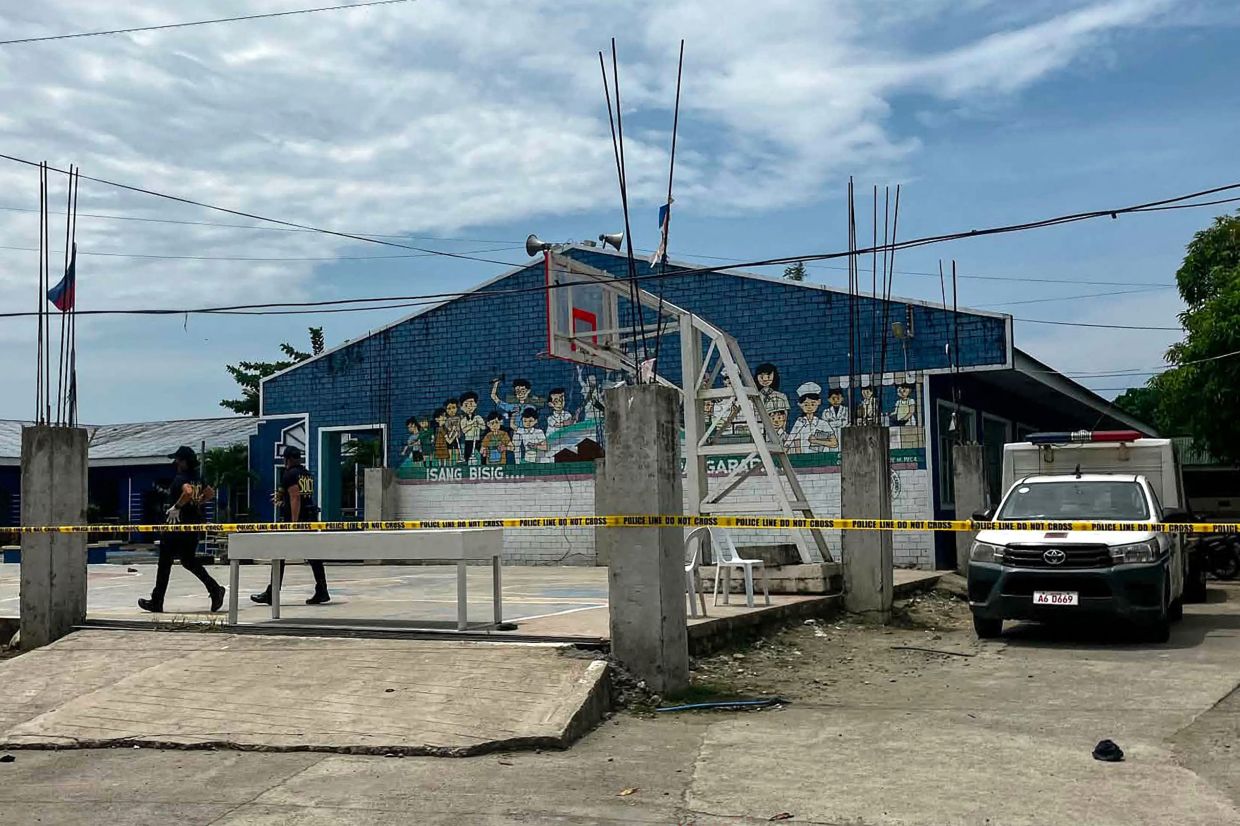
A shocking outbreak of violence at a public high school in the central Philippines has left the nation grappling with difficult questions about youth safety and gun access. Two teenage students, armed with handguns, discharged fire during school hours at San Jose National High School in Tacloban city on Monday morning, resulting in three deaths and seven injuries amongst their peers. The suspects, both in their early teens, were swiftly apprehended by authorities, marking the beginning of what is expected to be an intensive investigation into the circumstances surrounding the incident.
Regional police commander Brig. Gen. Jason Capoy confirmed that both perpetrators and all those affected were enrolled at the sprawling government school, which serves more than 1,500 students across its sprawling campus. In their initial police interviews, the two suspects—who investigators describe as close friends—claimed they had endured prolonged bullying within the school environment. However, Capoy offered limited detail about the specific nature of these grievances or how extensively bullying may have factored into their decision to commit violence. The revelation that bullying motivated the attack has triggered broader concerns about the adequacy of support systems and anti-bullying measures in Philippine educational institutions.
Investigators have uncovered a troubling picture regarding how the weapons entered the school grounds. One of the teenagers obtained a 9-millimetre pistol through an aunt who works as a police officer—a discovery that has now expanded the investigation's scope to include law enforcement accountability. The second suspect carried a calibre 38 revolver sourced through means still being determined. The ease with which both firearms passed through school security raises serious questions about institutional safeguarding. Campus protection proved inadequate, with only a single security guard stationed across multiple entry and exit points of the sprawling facility, according to Capoy's account. This staffing gap appears to have been a critical vulnerability that the perpetrators exploited deliberately.
The sequence of events on Monday morning illuminated the chaotic nature of the assault. The first shooting occurred in one classroom, causing students to flee in panic. The suspects then pursued some of their victims into an adjacent room, forcing them to confront additional gunfire in a confined space. During the attack, investigators recovered at least 40 spent shell casings scattered across the crime scene, indicating sustained and sustained assault. The majority of those killed and injured were female students, adding another distressing dimension to the tragedy.
Harrowing footage circulating on social media captured the terror experienced by students sheltering in locked classrooms. Audio recordings preserved their anguished cries and gunshots echoing through hallways, interspersed with calls to their mothers as they sought reassurance and protection. Video documentation also showed students pouring out of the campus gates, many visibly traumatized and clinging to one another for emotional support. These recordings provide stark documentation of the psychological impact such violence inflicts on young people witnesses to tragedy.
The arrest process itself unfolded across two locations. One suspect was apprehended directly at the school immediately following the shooting, but the second managed to flee the scene and sought refuge in a nearby residential house. Police traced and arrested the fugitive after local residents tipped off authorities to his whereabouts. Both teenagers entered custody without recorded criminal histories, presenting authorities with perpetrators previously unknown to the criminal justice system.
President Ferdinand Marcos Jr. responded with a call for comprehensive security improvements across multiple sectors of society. Through Communications Undersecretary Claire Castro, the president expressed deep sorrow regarding the incident and ordered law enforcement agencies to conduct thorough investigations while simultaneously enhancing security protocols at schools, business establishments, and public gathering spaces nationwide. Castro emphasized that the shooting had profoundly affected not only bereaved families but also instilled widespread fear among the general population, particularly parents concerned about their children's safety during school hours.
The legal framework surrounding juvenile offenders in the Philippines complicates the prosecution pathway. A 2006 law establishes fifteen years as the minimum age threshold for criminal liability, meaning the 14-year-old suspect cannot face prosecution under standard criminal statutes. Both teenagers will be transferred to government welfare officials for processing as minors rather than conventional criminal defendants. However, authorities may still establish that the 14-year-old possessed clear comprehension of the criminal acts committed and understood their consequences—a determination that could potentially modify the legal trajectory.
While firearms-related crimes occur with concerning frequency across the Philippines due to widespread circulation of unlicensed weapons, school-based shootings represent a relatively uncommon phenomenon. The incident recalls a 2022 shooting at an exclusive Manila-area university when a gunman killed three people, including a former municipal mayor who had been the perpetrator's long-standing adversary. That earlier attack demonstrated that security lapses extend beyond public institutions into the country's private educational sector. The comparative rarity of school shootings makes this Tacloban incident particularly shocking to Filipino society and raises urgent questions about whether violence prevention measures adequately protect one of the country's most vulnerable populations during their daily academic routines. Southeast Asian counterparts observing the Philippines' experience will likely evaluate their own institutional safeguards and youth violence prevention strategies in response.

