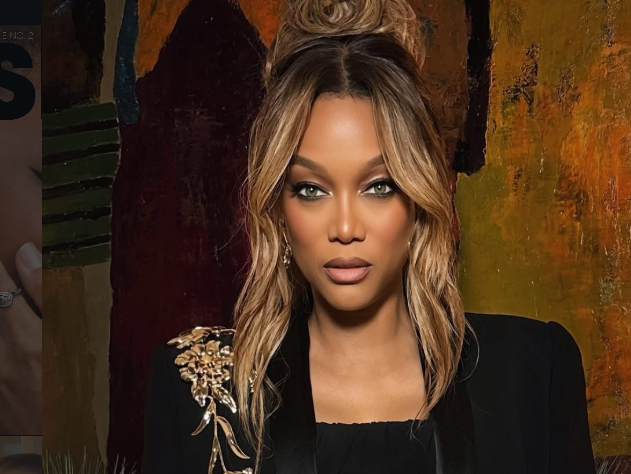
Supermodel and television personality Tyra Banks has launched a legal challenge against Netflix, alleging that a recent docuseries about her iconic reality competition show employed deceptive editing techniques to distort her public image and credibility. The defamation lawsuit, filed Saturday in Los Angeles federal court, names Netflix, directors Daniel Sivan and Mor Loushy, and production company EverWonder Studio as defendants. Banks is pursuing monetary damages and seeking an injunction to prevent her image from being used in connection with the docuseries' accompanying album soundtrack.
At the heart of Banks' legal complaint lies a claim of editorial manipulation. According to her lawyers, the Netflix production utilised "selective editing, deliberate omission, and surgical manipulation of continuous footage" to construct a narrative portraying Banks in an unfavourable light regarding allegations of sexual assault on the show. The lawsuit specifically contends that the documentary was edited to suggest Banks had knowledge of questions about sexual assault during her interview and deliberately avoided addressing them, when in fact she had not been informed about or asked concerning the incident prior to filming.
"The accountability Ms. Banks took ended up on the cutting room floor. It was there, but viewers were never given the opportunity to see it," her legal team argued in court documents. This assertion highlights a central tension between what was filmed and what ultimately reached audiences, raising broader questions about editorial responsibility in documentary filmmaking and the fair representation of interview subjects.
The lawsuit provides additional context about the documentary production process that Banks' representatives characterise as fundamentally unfair. Banks was only permitted to view the finished docuseries a single day before its February 16 release, according to the legal filing. Moreover, her legal team claims that Netflix and the producers never contacted Banks for fact-checking purposes following her interviews, nor did they afford her an opportunity to formally respond to allegations raised by other show participants before publication. This procedural critique suggests a lack of transparency that contrasts sharply with journalistic and documentary standards that typically involve such verification steps.
The involvement of former show judges in the documentary's production raised further concerns in Banks' legal strategy. The lawsuit indicates that judges who worked on "America's Next Top Model" served as consultants shaping the editorial direction of the Netflix series. One such judge, according to Banks' lawyers, harbours a personal grudge against the supermodel. Had Banks been aware of this arrangement and their exclusion from any consultative role, the lawsuit claims she would have recognised the situation as problematic and likely declined to participate in interviews altogether.
"America's Next Top Model" premiered in 2003 and became a cultural phenomenon, running for 24 seasons before concluding. In recent years, the show has faced significant critical reassessment, with former contestants and media critics raising concerns about body shaming practices, manipulation of contestants for entertainment purposes, and controversial photoshoots reflecting problematic attitudes. Banks herself has acknowledged these criticisms in public statements, admitting to "the insensitivity of past ANTM moments" and "some really off choices" made during the show's run. This pre-existing cultural conversation about the show's legacy provides the backdrop against which the Netflix documentary arrived.
The collateral damage from the documentary's release has extended beyond Banks' reputation into her business ventures. According to the lawsuit, public reaction following the docuseries' premiere was "swift, harsh, and directed squarely at Ms. Banks." Most notably, SMiZE & DREAM, an ice cream shop Banks operates in Sydney, Australia, experienced coordinated review bombing on Google, with negative reviews flooding the business' online presence. This phenomenon illustrates how documentary narratives can rapidly mobilise online audiences to penalise subjects through commercial pressure.
Banks' legal team emphasises that her efforts to resolve the dispute directly with Netflix and the producers proved unsuccessful. In March, following the documentary's release, Banks' representatives requested access to the full unedited footage of her interviews conducted for the series. Both Netflix and EverWonder denied this request, effectively preventing Banks from independently verifying the allegations made in the lawsuit about how her statements were edited and presented. This refusal to provide access to source material becomes significant in disputes about editorial accuracy and representation.
The lawsuit frames the documentary as drowning out other narratives about Banks' legacy and her willingness to engage in candid reflection about the show. According to her lawyers, Banks came to the interview prepared to discuss the show's problematic elements openly and honestly. That broader conversation, they argue, has been overshadowed entirely by allegations she was never given proper opportunity to address. The legal action therefore represents her attempt to restore balance to the public discourse surrounding her career and the show's complicated history.
For the entertainment industry and documentary practitioners in particular, the lawsuit raises important questions about editorial ethics and the obligations filmmakers have toward interview subjects. The claims of selective editing, omission of exculpatory content, and the involvement of individuals with potential conflicts of interest speak to practices that could become more common as streaming platforms race to produce controversial content designed to generate audience engagement and discussion. Banks' case may ultimately clarify the boundaries between aggressive documentary storytelling and legally actionable misrepresentation.

