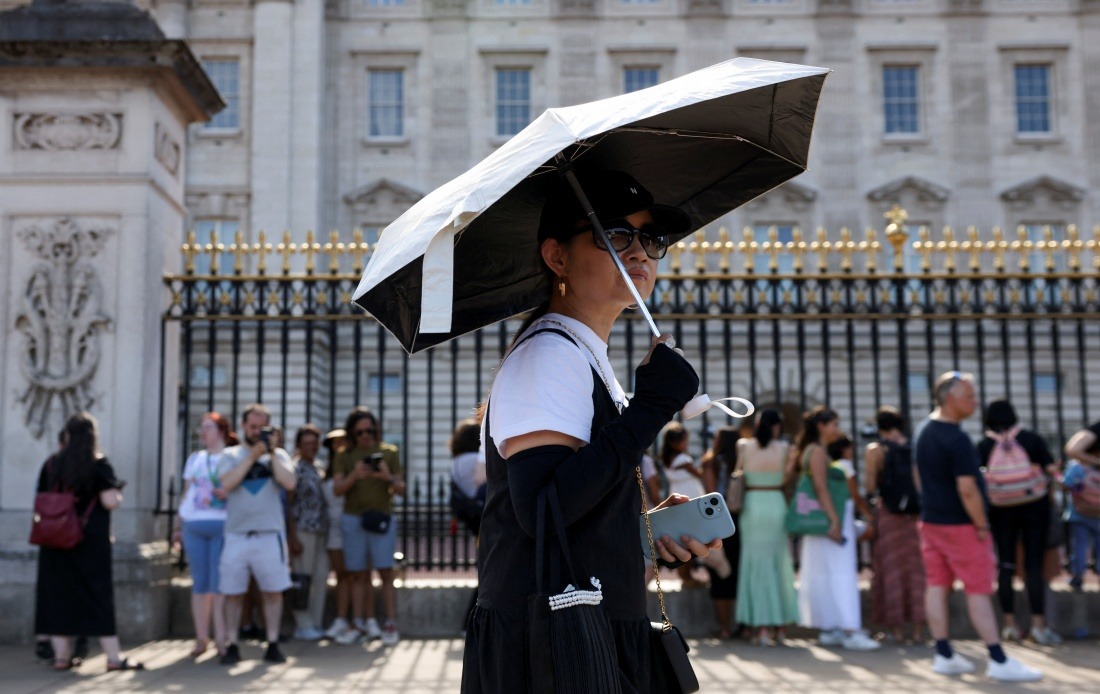
The United Kingdom's Household Division has taken the unusual step of suspending all ceremonial guard changes at Buckingham Palace, Windsor Castle, and London locations for three consecutive days this week in response to dangerously high temperatures sweeping across the nation. This decision underscores the serious threat posed by an exceptional weather system that forecasters predict will shatter the UK's June temperature record, marking a rare disruption to one of Britain's most recognisable state traditions.
The UK's Met Office issued a red weather alert on Monday, the most severe classification in its warning system, following forecasts indicating temperatures would reach 39 degrees Celsius on Wednesday and Thursday, with some localities potentially experiencing even more extreme conditions. This level of heat is exceptionally rare for the British Isles in June and represents a dramatic deviation from the nation's typically moderate climate. The red alert covers Wales and multiple southern English counties, including London, Somerset, Gloucestershire, and Buckinghamshire, affecting millions of residents across the country's most densely populated regions.
The Household Division's statement prioritised the welfare of those involved in the ceremonial operations, specifically naming soldiers, military working horses, and large public gatherings as vulnerabilities during extreme heat exposure. The decision to cancel guard changes entirely on Tuesday through Thursday demonstrates the organisation's assessment that even modified operations would pose unacceptable risks. The military body acknowledged that spectators flock to these events in considerable numbers, creating crowded conditions incompatible with severe heat management protocols.
However, the Royal Horse Guards' traditionally elaborate ceremony scheduled for Wednesday will proceed in a substantially altered form, commencing in the early morning hours when temperatures remain lower, but without the full pageantry and ceremonial elements that typically characterise the display. This compromise acknowledges both the symbolic importance of maintaining some form of the tradition whilst prioritising safety. Additional protective measures will be implemented, including positioning soldiers in shaded locations and rotating personnel more frequently to prevent heat exhaustion and related medical emergencies.
The heatwave's impact extends well beyond ceremonial disruptions into the education sector, where the extreme conditions have prompted mass closures across the affected regions. Somerset's local authority announced that approximately 100 schools would remain shut during the period of peak temperatures, recognising that school buildings without adequate air conditioning become dangerous environments for young people and staff during such weather conditions. Buckinghamshire reported a similar number of closures, whilst Gloucestershire suspended classes at more than 80 institutions, creating significant logistical challenges for working parents and disrupting academic calendars at a critical time in the school year.
London itself, home to the national capital and millions of residents, has seen nearly 10 major educational institutions cancel in-person instruction, shifting to remote learning where feasible. These closures are concentrated within the areas covered by the Met Office's red weather warning, suggesting that decision-making by local authorities has been appropriately calibrated to the severity of the forecasted conditions. The simultaneous shutdown of educational facilities across multiple counties represents a substantial societal disruption, reflecting the genuine hazards posed by prolonged exposure to temperatures far exceeding what British infrastructure, building design, and public health systems are engineered to manage.
For Malaysian and Southeast Asian observers, the UK's response to this weather event offers instructive perspective on how developed nations approach extreme heat challenges, albeit from a different baseline. Whilst tropical regions have long experience managing persistently high temperatures, the acute crisis posed by record-breaking heat in traditionally cooler climates reveals how vulnerability to weather extremes depends partly on adaptation infrastructure and population expectations. The British scenario demonstrates that even wealthy nations with advanced emergency management systems must make difficult decisions about curtailing normal activities when meteorological conditions exceed design parameters.
The cancellation of such iconic ceremonies as the Buckingham Palace guard change carries symbolic weight beyond mere operational convenience. These rituals represent continuity, national identity, and institutional stability, making their suspension a visible acknowledgment of the heat threat's severity. The UK government and military leadership clearly calculated that the reputational cost of cancellation was outweighed by the genuine risks to public and personnel safety, a judgment call that reflects contemporary understanding of climate-related hazards.
The broader implications of this event extend to questions about long-term climate adaptation in temperate regions. As global temperature patterns shift and extreme weather becomes less anomalous, institutions throughout Europe and North America will face recurring challenges to business-as-usual operations. The UK's decision to prioritise safety over ceremonial tradition suggests institutional maturity in acknowledging new environmental realities, though it simultaneously raises questions about whether current infrastructure and planning adequately anticipate future climate scenarios.
From a regional perspective, Southeast Asian nations watching these developments may see validation for their own infrastructure investments in heat mitigation, from building design standards to public health preparedness. The disruption caused by what amounts to three days of exceptional heat in Britain contrasts sharply with the daily operational challenges faced by tropical nations managing substantially higher baseline temperatures. Yet both contexts share the common challenge of protecting vulnerable populations—young people in schools, outdoor workers, and the elderly—during periods of heat stress, suggesting universal principles apply even across vastly different climate zones.

