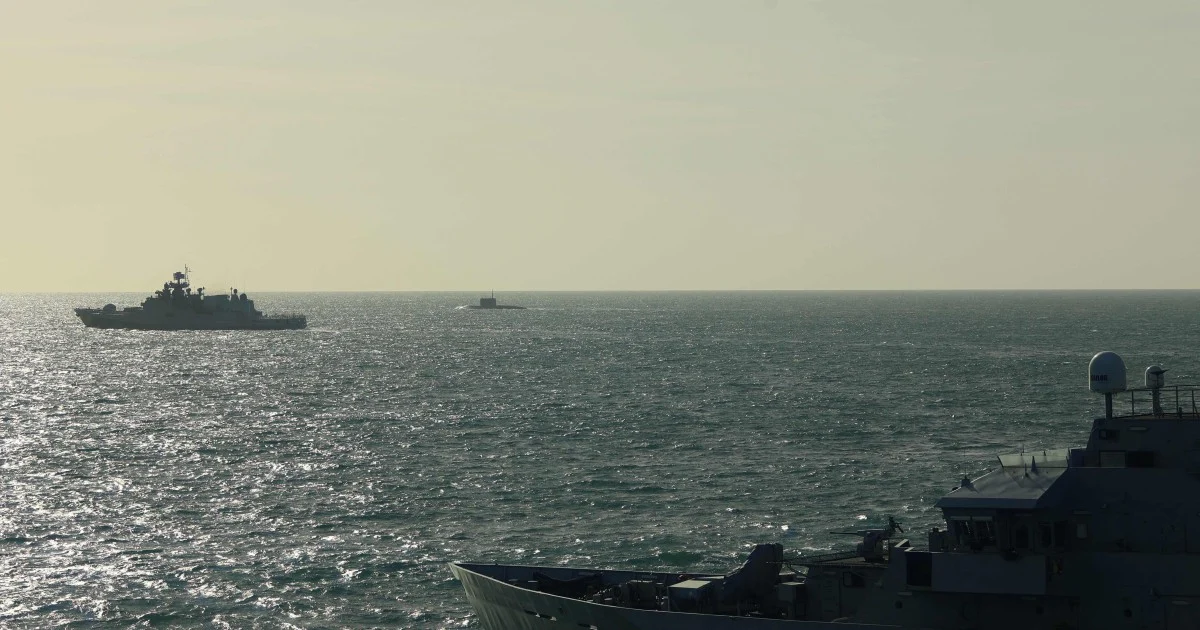
The United Kingdom's Prime Minister Keir Starmer has sought to moderate the characterisation of a confrontation between a Russian naval vessel and a private yacht in the English Channel, carefully distinguishing between recklessness and intentional provocation during remarks on Wednesday. The distinction Starmer drew appears designed to prevent further escalation while still registering British concern about the incident, which represents the latest flashpoint in a series of tense maritime encounters between London and Moscow in contested waters.
The warning shots fired by the Russian warship have sparked alarm among British officials and maritime operators, yet Starmer's framing suggests the government wants to avoid interpreting the action as part of a calculated strategy to intimidate British shipping or test NATO resolve. By labelling the incident reckless rather than sinister, the Prime Minister appears to be signalling that while the behaviour was dangerous and unacceptable, he does not believe Russia deliberately intended to escalate into a broader military confrontation. This measured response reflects the delicate balance London must maintain between appearing strong in the face of Russian assertiveness and avoiding rhetoric that could trigger an uncontrolled spiral of tit-for-tat escalation.
The English Channel incident arrives at a moment of intense scrutiny over maritime security in European waters, particularly as Russia has intensified its naval operations in the North Sea and surrounding areas. The corridor is one of the world's most heavily trafficked shipping lanes, serving as a vital conduit for international commerce and connecting the Atlantic to continental ports. Any disruption to safe passage through these waters carries significant economic and security implications, not only for Britain but for the entire European trading system. The presence of Russian warships conducting operations in this strategically critical region has become increasingly common, forcing Western naval powers to confront questions about how to maintain freedom of navigation without triggering dangerous miscalculation.
For Malaysia and other Southeast Asian nations dependent on maritime trade routes for economic survival, the English Channel incident carries instructive lessons about the risks posed by great power rivalry in strategic waterways. The incident demonstrates how modern naval powers use warships to project influence and test boundaries in contested spaces, a dynamic that resonates acutely in the South China Sea where similar patterns of assertion and counter-assertion have become routine. The British approach to responding—seeking to characterise the action as dangerous but not deliberately hostile—mirrors the careful diplomatic language Southeast Asian nations often employ when responding to maritime provocations in their own waters, suggesting a common playbook for managing escalation without capitulation.
Russia's increasingly active naval presence in waters traditionally dominated by NATO and British influence reflects Moscow's strategic determination to challenge Western hegemony and demonstrate that its military remains relevant despite economic sanctions and international isolation. The warship's warning shots, whether or not they constituted deliberate provocation, succeeded in generating international attention and signalling Russian willingness to use force near Western vessels. For maritime operators and shipping companies, particularly those managing commercial vessels in these waters, such incidents create operational uncertainty and may influence routing decisions or insurance costs. The psychological effect of Russian naval assertiveness often exceeds the tactical significance of individual incidents.
Starmer's careful language also reflects domestic political considerations within Britain. By avoiding inflammatory rhetoric while still condemning the Russian action, the Prime Minister maintains support from those demanding a tough stance on Russia while preserving diplomatic channels that might prove essential if any miscalculation threatens to escalate into genuine military confrontation. The government must also consider the broader strategic relationship with Russia, where maintaining certain lines of communication—however strained—occasionally produces unexpected diplomatic breakthroughs. The characterisation of the warship's behaviour as reckless acknowledges the reality that the action was dangerous and violated accepted maritime norms, while the denial that it was sinister leaves room for diplomatic interpretation rather than assuming malign intent.
The incident underscores how the rules governing naval operations in international waters remain contested and unevenly applied. While international law generally permits warships to operate in international waters, the practice of firing warning shots creates ambiguity about whether such actions constitute legitimate assertions of authority or constitute hostile acts. Russia has consistently argued that its naval operations remain within legal bounds, while Western powers contend that Moscow's methods increasingly operate in grey areas where technical legality masks aggressive intent. These disputed boundaries create spaces where dangerous confrontations can occur without either side believing it has crossed a clear red line.
Britain's response to the incident will likely influence how other NATO members address similar provocations from Russia in their waters. If London appears too accommodating, other allies may question the alliance's collective resolve. If the response seems too inflammatory, it risks triggering a dangerous cycle of escalation that neither side truly desires. Starmer's calibrated approach attempts to navigate this tightrope, maintaining that Britain takes the incident seriously while avoiding language that assumes Russia intends wider conflict. This balancing act has become characteristic of how Western powers manage Russian naval assertiveness in the post-Cold War era.
For Malaysian observers, the incident illustrates how maritime disputes evolve in regions of great power competition. The techniques Russia employs in the English Channel—naval assertions, warning shots, boundary-testing—resemble strategies employed by larger powers in Southeast Asian waters. The challenge for smaller maritime nations lies in developing response frameworks that protect legitimate interests without becoming ensnared in great power struggles. Britain's cautious characterisation of the warship incident suggests one approach: acknowledge problems while avoiding language that forecloses diplomatic resolution. Whether such calibration ultimately proves sufficient to prevent future incidents remains uncertain, but it reflects the pragmatic thinking of powers attempting to manage competition while reducing risks of unintended escalation.

