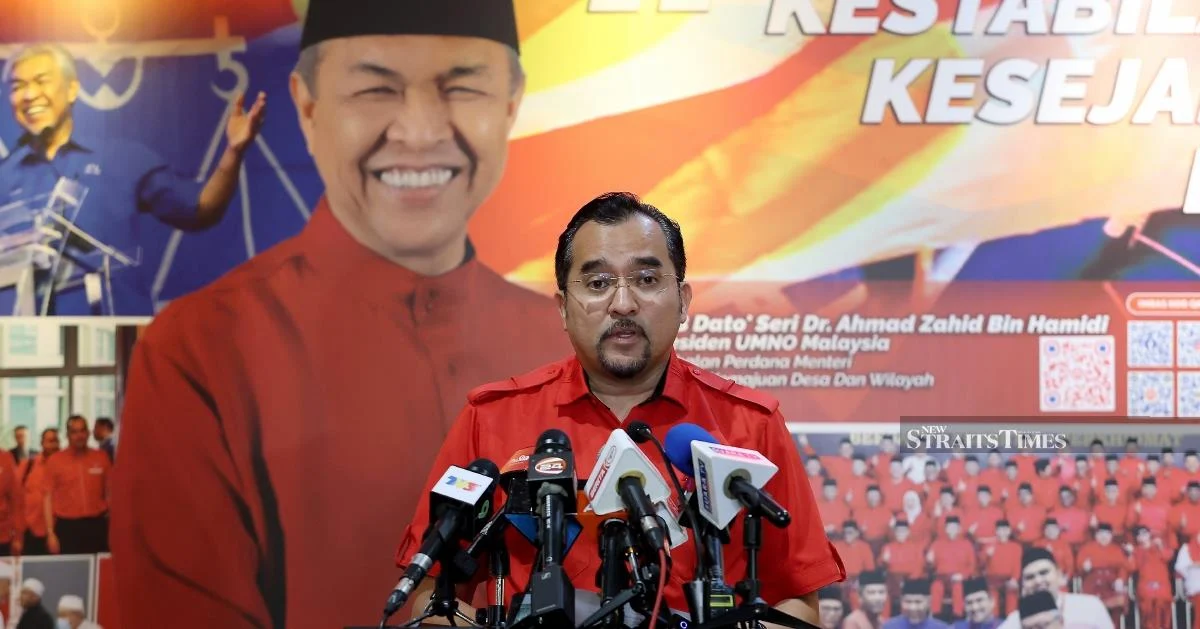
The United Malays National Organisation has signalled its intention to take the high ground in the coming state elections across Johor and Negri Sembilan, with party secretary-general Datuk Dr Asyraf Wajdi Dusuki declaring that campaign efforts will emphasise concrete policy initiatives and demonstrable benefits to communities rather than resort to character assassination or inflammatory rhetoric. The commitment represents an explicit stance by Malaysia's dominant Malay-Muslim political force as it gears up for electoral contests in two strategically important states.
Umno's approach reflects a calculated shift in Malaysian electoral politics, where campaigns have historically been marked by intense personal attacks and character assaults between rival factions and parties. By publicly committing to a policy-centric strategy, the party is attempting to position itself as the mature, solutions-oriented alternative even as political temperatures typically rise during election cycles. This positioning carries weight, particularly among middle-class and educated voters who increasingly demand substantive engagement with their concerns rather than tabloid-style political theatre.
The timing of Asyraf's statement is significant, arriving as both states prepare for electoral contests that will test Umno's organisational strength and voter appeal following years of internal upheaval and leadership transitions. Johor, historically a Umno bastion, and Negri Sembilan, where Umno maintains considerable but contested influence, represent crucial battlegrounds for a party seeking to rebuild its credibility and electoral machinery. The electoral outcomes will send powerful signals about whether voters are receptive to Umno's leadership, or whether rival coalitions have successfully eroded the party's support base.
The secretary-general's emphasis on what Umno can deliver to ordinary Malaysians underscores the party's recognition that voters increasingly prioritise material improvements in their daily lives over party loyalty or historical political narratives. Issues ranging from cost of living pressures, employment opportunities, education quality, healthcare provision, and infrastructure development represent the terrain where electoral contests are genuinely won or lost in contemporary Malaysia. By anchoring its campaigns to these tangible concerns, Umno is signalling that it understands this electoral reality and intends to compete on grounds where substantive governance records matter.
Umno's pledge against mudslinging also carries internal organisational significance. The party has experienced considerable factional tensions in recent years, with different camps and personality-driven blocs competing for influence and resources. A commitment to issue-based campaigning, enforced across the party structure, could serve to discipline potential spoilers and ensure messaging consistency. Party members who might otherwise be tempted to launch personal attacks on opponents or rival candidates can be instructed that such behaviour contradicts official party strategy, providing leadership with tools to maintain organisational coherence.
However, the pledge must be assessed against Umno's actual campaign conduct in practice. Malaysian electoral history demonstrates that what parties pledge publicly and what actually occurs on the ground during campaigns often diverge substantially. Grassroots activists, youth wings, and unofficial party-aligned media may engage in precisely the kind of negative campaigning that formal party statements disavow. The credibility of Asyraf's commitment will depend significantly on whether Umno's leadership actively enforces such standards or allows them to erode as campaigns intensify and political temperatures rise.
The strategy also reflects broader Southeast Asian trends in which established parties attempt to recalibrate their appeal amid changing voter demographics and political expectations. Across the region, traditional parties face competition from newer movements and from their own coalition partners, necessitating a constant evolution of campaign messaging and strategy. For Umno, which occupied uncontested political dominance for decades before experiencing significant electoral losses and internal crises, demonstrating that it can compete on contemporary terms represents an important test of organisational adaptability.
For Malaysian voters across Johor and Negri Sembilan, the question becomes whether Umno and its rivals can genuinely anchor their campaigns to serious policy discussion or whether elections will devolve into predictable cycles of personal attacks and tribal scoring. The public stance Asyraf has articulated sets a standard against which citizens and media observers can measure actual campaign conduct. Should Umno successfully maintain this elevated approach while opponents engage in mudslinging, the party may extract political advantage by claiming the moral high ground and appealing to voters fatigued by toxic electoral environments.
The broader implications for Malaysian politics are equally important. If major political forces genuinely commit to issue-based campaigning, it could represent a incremental improvement in the overall quality of democratic discourse and create space for more substantive engagement with the policy challenges confronting the nation. Conversely, if Asyraf's statement proves merely symbolic while campaigns proceed along familiar destructive patterns, Malaysian voters will have additional evidence that the country's political elite, across parties, remain unwilling to elevate campaign standards and prioritise nation-building over partisan advantage.

