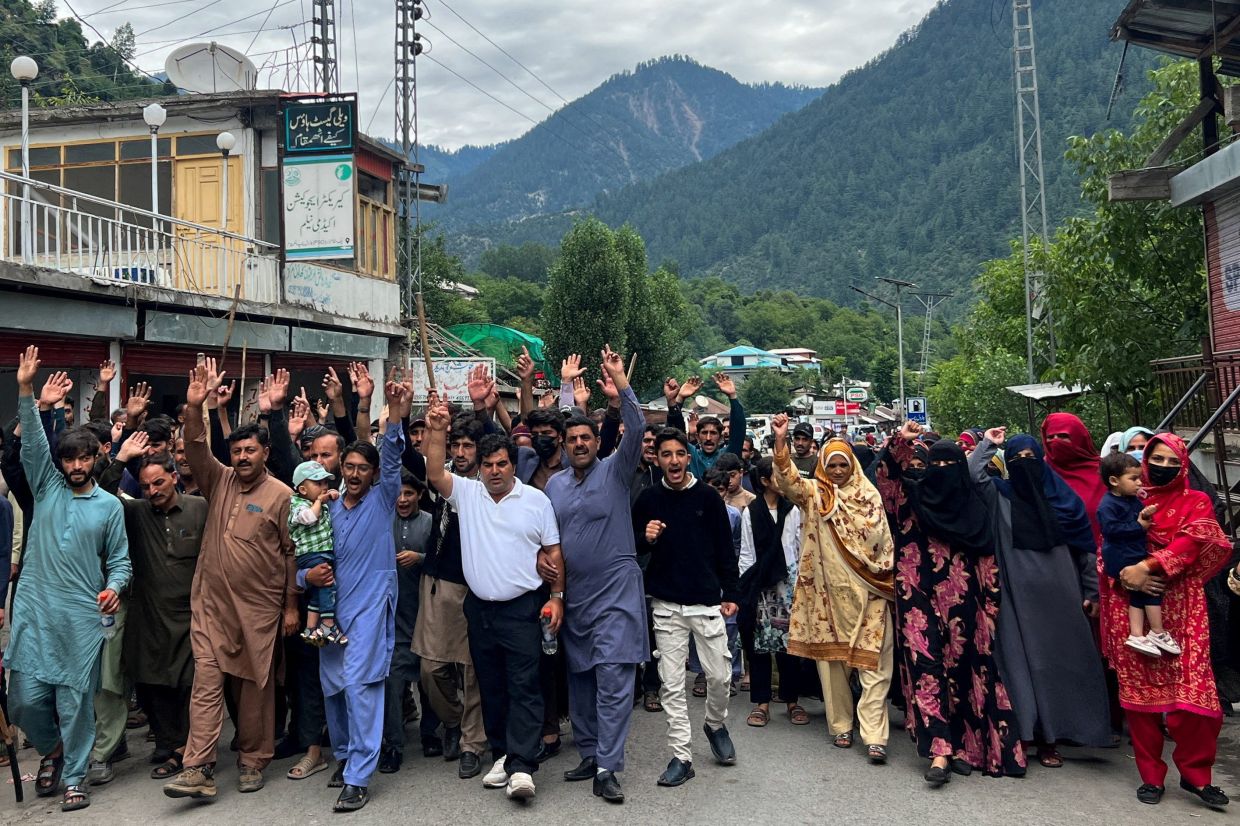
The United Nations has demanded impartial investigations into a wave of deaths sweeping Pakistani-administered Kashmir in the lead-up to regional legislative elections scheduled for July 27. UN High Commissioner for Human Rights Volker Turk issued the appeal through his spokesman Jeremy Laurence at a Geneva briefing on Friday, responding to reports of mounting casualties linked to civil unrest in the Himalayan territory. The statement marks a significant international intervention into an increasingly volatile domestic political situation that has drawn global scrutiny for its humanitarian implications.
According to UN sources, dozens of individuals have lost their lives since June, with victims including both anti-government protesters and law enforcement personnel engaged in security operations. The deaths have occurred amid a intensifying protest movement centred on the Joint Awami Action Committee, a grassroots coalition demanding substantive economic reforms and improved governance standards in the region. The escalating casualty figures have alarmed international human rights bodies, which have characterised the unrest as a critical test of Pakistan's commitment to protecting civilian lives during periods of civil unrest.
The JAAC has maintained momentum for its campaign despite the Pakistani government's decision last month to ban the organisation under anti-terrorism legislation. Authorities justified the ban on grounds that the movement posed threats to public order and national security, though critics contend the designation was deployed as a mechanism to suppress legitimate dissent during a politically sensitive electoral period. The continued mobilisation of supporters despite this legal prohibition underscores the depth of public grievance driving the movement and the determination of participants to voice their demands regardless of governmental restrictions.
Turk's office has specifically called for "prompt, thorough and impartial investigations into all deaths that have occurred due to the unrest, both amongst protesters and members of security forces." This language reflects international concern that investigations must examine conduct by both civilian participants and state security apparatus, ensuring no party operates beyond accountability. The emphasis on impartiality addresses a persistent worry among international observers that investigations conducted by authorities may lack independence or rigour in examining the conduct of their own security personnel.
The UN has also expressed alarm at the arrest of JAAC leadership figures in recent weeks, interpreting these actions within a broader pattern of restrictions on civil liberties. The rights office warned that criminalising civil society organisations and imposing "strict limitations on gatherings" creates "serious concerns about infringements on the rights to freedom of expression, peaceful assembly and association." These concerns reflect established international norms regarding the protection of political activism and the space required for democratic discourse, even when governments view such activity as threatening to order or security.
Detainees have been denied adequate access to legal representation and contact with family members, according to UN documentation. The organisation has insisted that fundamental due process protections and fair trial guarantees must remain inviolable even during periods of civil unrest or security emergencies. This emphasis on procedural rights reflects a core principle of international humanitarian law: that counter-insurgency or order-maintenance operations cannot justify the wholesale suspension of legal protections.
Beyond arrest protocols, the UN has flagged serious concerns regarding internet restrictions that have been imposed across Pakistani-administered Kashmir. Digital communications have been significantly curtailed, limiting residents' capacity to document events, communicate with the outside world, or access independent news sources. The UN characterised these restrictions as "disproportionately" limiting freedom of expression "at a time when tensions are running high." The timing is particularly significant, as information restrictions during moments of high tension can obscure what actually transpires on the ground and prevent independent verification of claims by either protesters or authorities.
The historical context of Kashmir disputes adds another layer of complexity to this situation. The territory has remained divided between Indian and Pakistani administration since both countries achieved independence from British rule, with each claiming full sovereignty over the entire region. This enduring territorial disagreement has generated decades of military friction, periodic warfare, and persistent security concerns that shape how Pakistani authorities approach unrest in their portion of the territory.
For Pakistani military and civilian leadership, Kashmir represents exceptionally sensitive strategic terrain due to historical conflicts with India and the region's geopolitical significance. These security anxieties frequently influence how authorities respond to domestic unrest, sometimes leading to more restrictive policies than might otherwise be deployed in other parts of the country. The ban on JAAC and the internet restrictions should be understood partly through this security lens, even as international observers argue that such measures exceed what is proportionate or necessary.
Turk has advocated for "meaningful and inclusive political dialogue to address the underlying issues and grievances of the local population," suggesting that military or police responses alone cannot resolve the fundamental demands animating the protest movement. The JAAC's emphasis on economic and governance reforms indicates that protesters seek substantive policy changes rather than merely tactical concessions. Dialogue-based approaches might address root causes more effectively than security-focused responses, though Pakistani authorities face genuine constraints in negotiating when they have designated the opposing movement as a terrorist organisation.
The September 2023 clashes in the region offer a cautionary precedent, with nine confirmed deaths resulting from violent confrontations between JAAC-led protesters and police. That earlier episode demonstrates the cyclical nature of unrest and the limited effectiveness of purely repressive approaches in suppressing underlying discontent. As the July 27 election approaches, international concern has intensified that similar violence could recur unless authorities pursue de-escalation strategies alongside security measures.
For Malaysian observers and policymakers, the Kashmir situation offers instructive lessons regarding the management of regional tensions, protection of civil liberties during unrest, and the international dimensions of domestic political crises. Like Malaysia, Pakistan must balance legitimate security concerns against protection of fundamental rights, a challenge that requires sophisticated governance approaches rather than binary choices between openness and restriction. The UN's intervention signals that significant-scale unrest and repression in any region attracts sustained international scrutiny and can carry diplomatic consequences.

