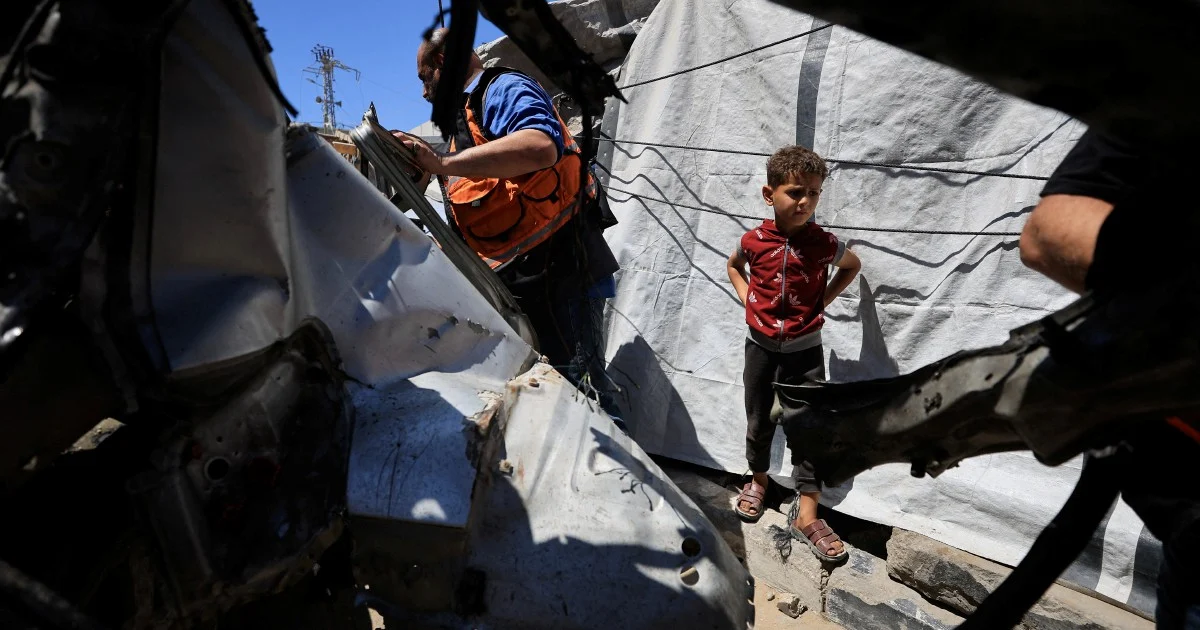
A United Nations fact-finding mission released findings on Tuesday accusing Israel of deliberately targeting Palestinian children in Gaza, characterising such actions as a central element of what the investigators describe as genocide unfolding in the territory. The report, delivered in Geneva, represents one of the most serious allegations levelled by the international body against Israeli forces during the conflict that has gripped the region for months.
The UN's independent investigation team concluded that the systematic harm inflicted on children appears to form part of a deliberate campaign rather than collateral damage from military operations. According to the investigators, the pattern of destruction affecting the youngest members of the Palestinian population demonstrates intent that goes beyond standard rules of engagement in armed conflict. This characterisation places the allegations squarely within the legal framework of crimes against humanity and genocide as defined in international law.
For Malaysian and Southeast Asian observers, the investigation's conclusions carry particular weight given the region's traditional emphasis on international law and humanitarian standards. The UN probe lends credibility to humanitarian organisations operating across Asia that have documented similar allegations through independent channels. The findings may influence how regional governments approach diplomatic engagement on the Israeli-Palestinian question, particularly within forums like the Association of Southeast Asian Nations where consensus on human rights matters remains contentious.
Israel's immediate rejection of the report underscores the profound division between the government in Jerusalem and UN bodies on matters concerning Gaza. Officials have previously dismissed such investigations as biased, arguing that they fail to account for the security environment in which Israeli military operations occur. The dispute reflects a longstanding tension between Israeli assertions regarding security necessities and international investigations that prioritise civilian protection standards without similar consideration of threat environments.
The investigators apparently documented evidence suggesting that children have been disproportionately harmed through various mechanisms—from direct military strikes to deprivation of essential services including healthcare, clean water, and food supplies. The methodology used by the UN team involved reviewing available documentation, testimony from affected communities, and analysis of available imagery and data. Such approaches have become standard in contemporary investigations into alleged mass atrocities, though they necessarily operate within constraints regarding direct access to conflict zones.
The allegation of genocide carries profound legal implications under the Genocide Convention, to which both Israel and Palestine-related entities have varying relationships with the international framework. If substantiated through formal legal proceedings, such findings could trigger obligations for signatory nations to intervene or pursue accountability measures. However, translating investigation findings into enforceable legal action remains notoriously difficult, particularly when powerful states resist prosecution mechanisms.
The timing of the report arrives as international attention on Gaza remains divided by competing global crises and shifting diplomatic priorities. Regional powers, including those in Southeast Asia, balance their humanitarian concerns against complex geopolitical considerations involving major trading partners and security relationships. Malaysia, in particular, has maintained vocal criticism of Israeli actions in Palestine, but faces practical limitations in translating diplomatic positions into material consequences.
The UN investigation appears to build upon previous documentation by humanitarian organisations that have compiled extensive records regarding civilian casualties and infrastructure damage in Gaza. International medical journals and human rights bodies have published research suggesting disproportionate harm to vulnerable populations, including children and women. The UN's institutional weight adds formal credibility to these broader bodies of evidence, though it does not necessarily resolve factual disputes regarding causes and intent that remain fiercely contested.
For Southeast Asian policymakers and civil society organisations, the report reinforces questions about accountability mechanisms in contemporary conflicts. The region has witnessed its own disputes over international investigations into alleged atrocities, creating complex relationships with UN bodies and International Criminal Court processes. The Gaza investigation thus carries precedential implications extending beyond the immediate Israeli-Palestinian context.
The dispute between UN investigators and Israel reflects deeper tensions regarding how international law applies to military conflicts involving state actors with significant global influence. The investigators' methodology assumes that international humanitarian law sets objective standards applicable across all parties regardless of security circumstances. Israel's position conversely emphasises contextual factors that, from its perspective, justify operational approaches that might appear disproportionate when examined through purely civilian-protection frameworks.
Moving forward, the report's allegations may influence ongoing international legal processes, including potential cases before the International Court of Justice or the International Criminal Court. Several nations and groups have filed complaints or supported investigations through these bodies, and the UN's findings could feature prominently in such proceedings. For Southeast Asian states, how they engage with these mechanisms remains a careful calculation involving humanitarian principles against broader diplomatic relationships.
The investigation's conclusions regarding children specifically may prove particularly consequential for international public opinion and diplomatic positioning. Child casualties and targeting generate distinct moral and legal weight in international humanitarian frameworks, potentially activating stronger obligations for third-party states to respond. This dimension may eventually influence how regional governments, including those in Southeast Asia, calibrate their responses to developments in the Gaza conflict and broader Palestinian-Israeli disputes.

