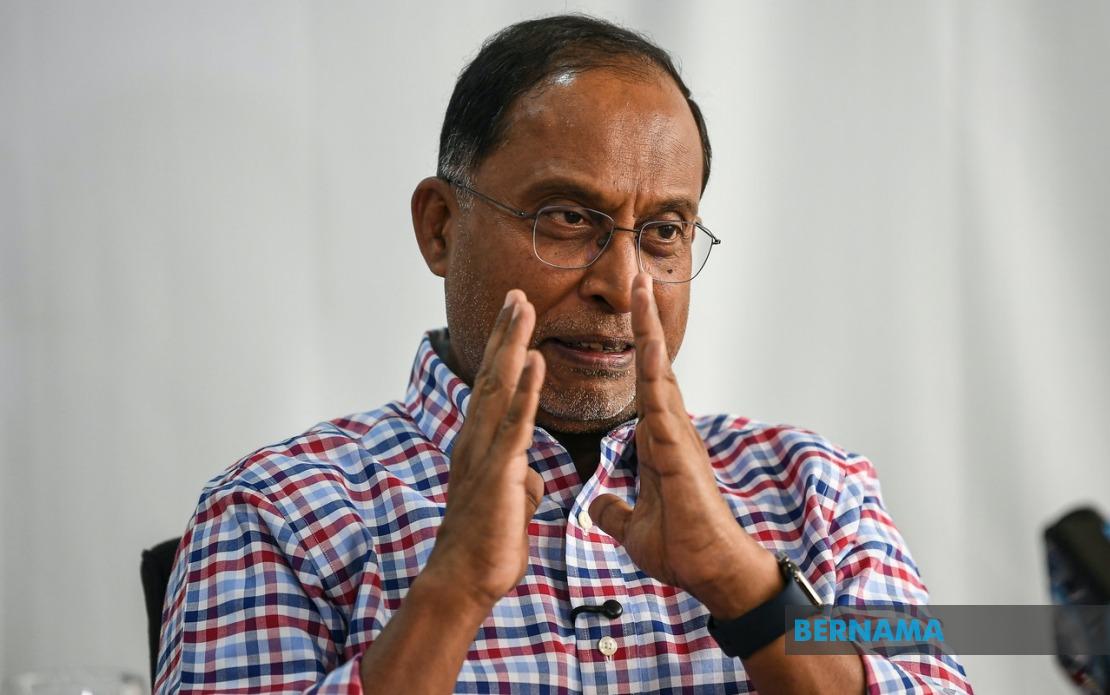
Allegations that between 30,000 and 60,000 students have secured places at Malaysia's public universities through irregular channels represent a fundamental challenge to the credibility of the nation's higher education sector, according to Higher Education Minister Datuk Seri Dr Zambry Abd Kadir. The minister characterised such assertions as deeply troubling accusations that risk damaging public perception of institutional integrity at a time when the government has invested significantly in strengthening Malaysia's standing as a regional education hub.
The controversy strikes at the heart of ongoing debates about fairness in university admissions across Southeast Asia, where questions about meritocracy and equal opportunity remain persistently contentious. Beyond Malaysia's borders, countries including Thailand, Indonesia, and the Philippines have grappled with similar concerns regarding preferential admission practices, making this a broader regional issue that reflects wider anxieties about systemic equity in higher learning institutions.
Zambry emphasised that allegations of such magnitude carry serious implications for student trust and parental confidence in the university application process. When prospective students and their families lose faith in the reliability of admission systems, it creates downstream consequences for institutional legitimacy and diminishes the perceived value of degrees earned through regular channels. The minister articulated concern that widespread belief in backdoor admissions could discourage genuinely qualified candidates from applying, ultimately weakening the talent pool that universities depend upon to maintain academic standards and international competitiveness.
According to the minister, Malaysia's admission framework for public universities operates through established protocols grounded in meritocratic principles and transparent eligibility criteria. The government has framed the system as one of clearly defined procedures rather than opaque or arbitrary decision-making. However, the fact that such allegations have gained traction suggests that public understanding of how these mechanisms function may be insufficient, or that gaps exist between the theoretical framework and actual implementation that warrant closer examination.
Zambry called upon those advancing these claims to furnish concrete evidence substantiating their contentions. He stressed that serious allegations demand rigorous support through verifiable data, documented methodology, and factual backing rather than speculation or hearsay. This position reflects a tension between demands for transparency and the minister's assertion that critics bear responsibility for proving their assertions rather than placing the burden on institutions to disprove unsubstantiated claims.
In response to the mounting pressure, several public universities have initiated police investigations into the allegations. The ministry characterised this step not as an attempt to silence dissent or curtail legitimate discourse, but rather as an appropriate mechanism for subjecting claims to formal scrutiny through established legal procedures. This move signals institutional defensiveness while simultaneously positioning the government as committed to impartial investigation rather than dismissal of concerns outright.
The minister reinforced the distinction between protected freedom of expression and irresponsible propagation of unverified allegations. Malaysia's constitutional framework protects speech rights, but Zambry suggested these protections do not extend to making serious accusations without foundational evidence. This framing echoes broader global conversations about balancing open discourse with accountability for false claims, though it also raises questions about power dynamics when government actors define the boundaries of acceptable criticism.
Zambry acknowledged the ministry's receptiveness to constructive feedback intended to enhance educational quality and institutional performance. This positioning attempts to frame the government as reform-minded while simultaneously dismissing specific allegations as exaggerated rather than engaging substantively with underlying concerns about admissions transparency. The distinction between "constructive" and "excessive" criticism remains subjectively determined by authorities rather than through independent assessment.
The controversy reflects deeper anxieties about social mobility and equity in Malaysia's educational landscape. University admission represents a crucial gateway to professional opportunity and economic advancement, particularly for students from less privileged backgrounds. If significant numbers of places are allocated outside merit-based channels, this directly affects access opportunities for various demographic groups and shapes long-term economic outcomes for entire cohorts of Malaysians.
For Southeast Asian observers monitoring developments in Malaysia, this episode highlights the challenge of maintaining public confidence in large institutional systems amid competing narratives about how they actually function. The burden of proof question—whether those alleging wrongdoing or those defending systems bear greater responsibility for substantiation—remains fundamentally contentious. Indonesian and Philippine policymakers have confronted similar tensions when addressing claims of institutional irregularity.
The government's commitment to safeguarding institutional integrity and maintaining public confidence in higher education represents a legitimate governmental interest, yet the specific mechanisms chosen to advance these goals warrant independent scrutiny. Investigations conducted by police rather than independent educational bodies or parliamentary committees may ultimately provide less reassurance to sceptical publics.
Looking forward, Malaysia's higher education sector faces pressure to demonstrate genuine transparency in admissions processes rather than merely asserting their integrity. Publishing detailed statistical breakdowns of admission pathways, establishing independent oversight mechanisms, and facilitating external audits could address underlying concerns more comprehensively than defending against allegations or characterising critics as irresponsible.

