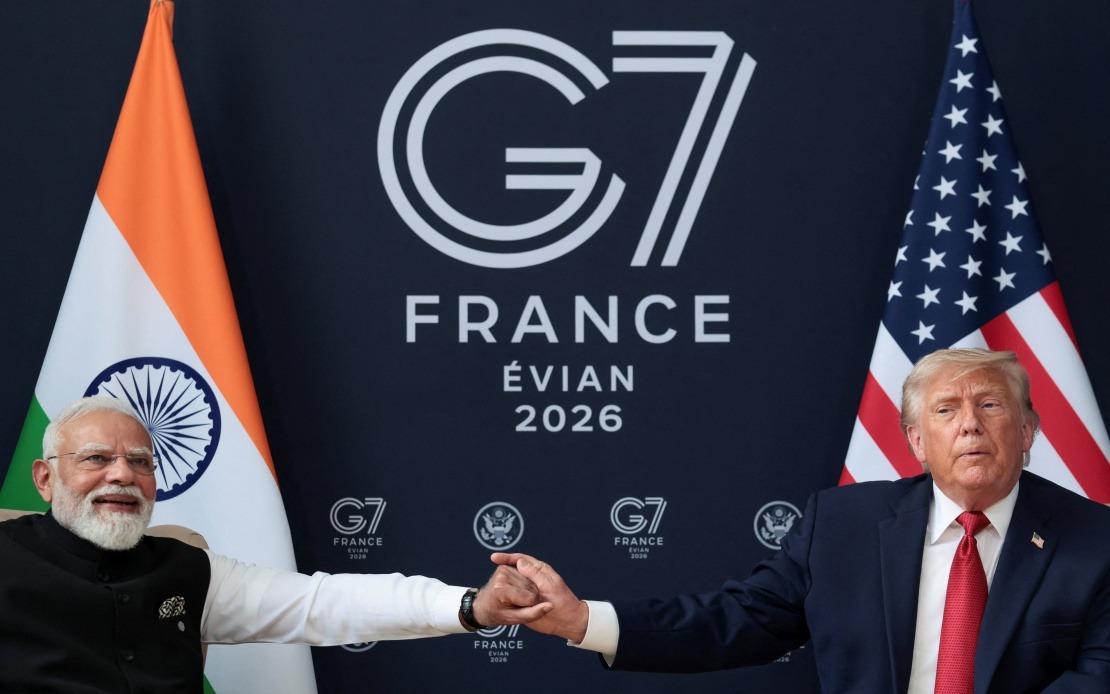
Negotiations between New Delhi and Washington have entered a new phase of productive engagement, with both countries expressing optimism about reaching a comprehensive trade accord. Indian Prime Minister Narendra Modi and US President Donald Trump discussed the commercial framework during their meeting on the sidelines of the Group of Seven summit held in Evian, France, emphasising their shared commitment to advancing mutually beneficial economic ties. The constructive tone of these discussions reflects a determination by both nations to resolve longstanding trade frictions through structured dialogue rather than unilateral action.
India's External Affairs Ministry characterised the progress as substantial, noting that trade negotiators from both capitals have demonstrated genuine willingness to craft an agreement that serves the economic interests of their respective populations. The formal statement released by New Delhi's diplomatic establishment stressed that officials would be instructed to accelerate work toward finalising an accord that balances commercial gains across multiple sectors and industries. This language suggests that negotiators are moving beyond preliminary discussions toward drafting specific trade provisions that address the concerns of businesses, farmers, and consumers in both countries.
The trajectory of these talks gains particular significance given the history of trade tensions between the world's two largest democracies. Trump's characterisation of Modi as one of the world's toughest negotiators underscores the complexity of bridging gaps between nations with distinct economic priorities and protectionist constituencies. The US president's remark—that the Indian leader appears angelic but negotiates like a formidable competitor—reflects the delicate balance both sides must navigate when resolving disputes over agricultural access, manufacturing standards, and intellectual property frameworks. Such negotiations require political capital and strategic patience from senior leadership on both sides.
The anticipated visit by US Trade Representative Jamieson Greer to India in the coming weeks signals concrete momentum in moving from high-level political agreement toward technical implementation. Trade representatives typically focus on the granular details of tariff schedules, rules of origin for manufactured goods, and dispute resolution mechanisms that ultimately determine whether an agreement delivers tangible benefits to exporters and consumers. Greer's presence in New Delhi will provide an opportunity to address specific sectoral concerns—ranging from pharmaceuticals and information technology to agricultural commodities and automotive components—that affect millions of workers and businesses across both nations.
The context of these negotiations includes earlier bilateral agreements that have already produced measurable results. In February of the current year, the two countries concluded an interim trade arrangement that resulted in the United States reducing its tariff rates to eighteen per cent on selected Indian products. This preliminary accord offered both sides a proof of concept, demonstrating that structured negotiation could yield practical compromises even amid broader geopolitical and economic competition. The agreement provided relief to Indian exporters facing prohibitive duties while giving American domestic producers assurances about market access and competitive fairness.
However, the broader trade environment remains complicated by Trump administration policies implemented earlier this year. The imposition of twenty-five per cent tariffs on Indian goods, coupled with an additional twenty-five per cent penalty targeting imports of Russian oil, created significant friction in bilateral relations and raised concerns among Indian business leaders about the predictability of US trade policy. These tariffs affected Indian producers across multiple sectors and threatened to undermine confidence in the stability of bilateral commercial arrangements. The fact that both nations have returned to intensive negotiations despite these tensions suggests that the underlying incentives for a comprehensive agreement outweigh the immediate pain of current trade barriers.
For Southeast Asian economies including Malaysia, the trajectory of US-India trade relations carries important implications for regional commerce and geopolitical alignment. A strengthened bilateral trade framework between Washington and New Delhi could reshape supply chains across Asia, as companies evaluate opportunities to diversify manufacturing and sourcing away from China toward India. Additionally, closer economic integration between the United States and India reinforces the strategic partnership between two nations positioned to influence regional security architecture and economic governance frameworks. Malaysian businesses that participate in technology, manufacturing, and services sectors should monitor developments closely to identify opportunities and risks in their competitive positioning.
The broader significance of these negotiations extends beyond immediate bilateral commerce. Enhanced US-India trade engagement represents a cornerstone of Washington's strategic approach to countering Chinese economic dominance in Asia and building alternative supply chain networks that reduce dependence on any single manufacturing hub. India, with its vast workforce, growing technological capabilities, and democratic governance, appeals to American policymakers seeking to strengthen partnerships with countries perceived as sharing similar values and strategic interests. From India's perspective, closer commercial ties with the world's largest economy provide leverage in pursuing its own development objectives and reducing economic vulnerability to potential Chinese coercion.
The emphasis on reaching a "balanced, mutually beneficial, and commercially meaningful agreement" reflects both capitals' recognition that trade deals generate political legitimacy only when domestic constituencies perceive clear gains. In the United States, agricultural interests, manufacturing unions, and technology companies each have distinct priorities regarding market access and intellectual property protections. In India, farmers, small-scale manufacturers, and service sector exporters maintain different preferences about the pace and scope of liberalisation. Successfully navigating these competing domestic pressures while maintaining the momentum established at the G7 summit will test the negotiating skills of both governments throughout the coming months.

