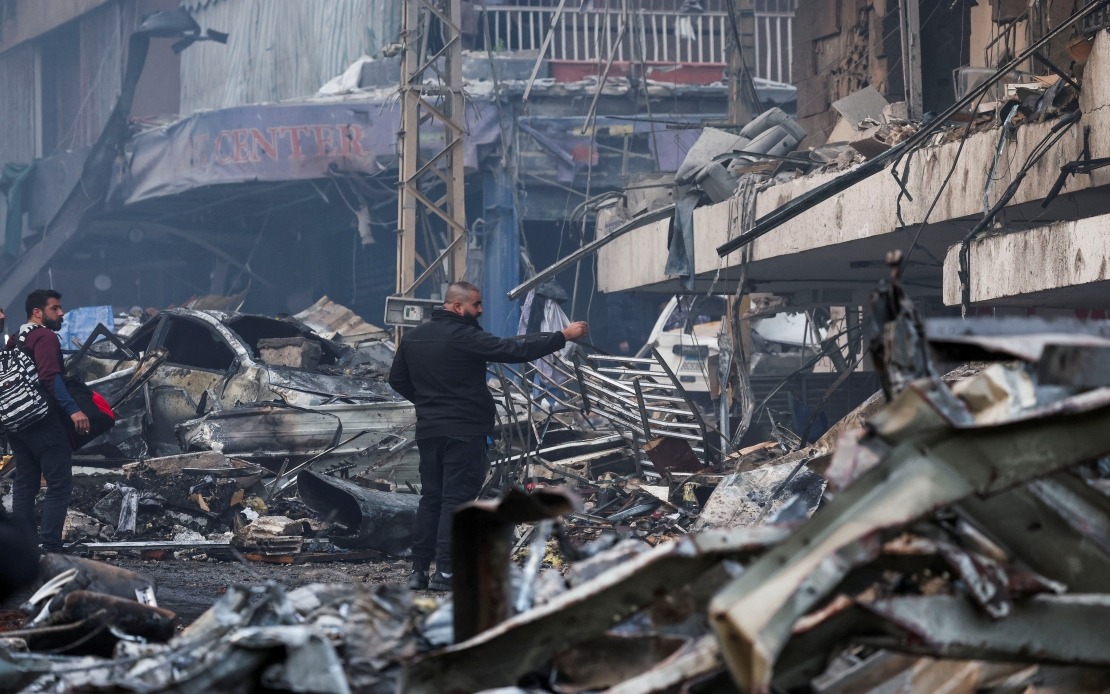
The United States has activated a real-time monitoring system through its military's Central Command to oversee the escalating conflict between Israel and Hezbollah in Lebanon, according to statements from American officials on Monday. The initiative represents a significant escalation in Washington's direct involvement in managing the volatile situation, moving beyond traditional diplomatic channels to include military-level surveillance and coordination infrastructure. This development underscores the gravity with which the Biden administration views the regional security situation and its determination to prevent further deterioration of an already fragile ceasefire arrangement.
The announcement emerged shortly after high-level telephone discussions that US Secretary of State Marco Rubio conducted on Friday with Israeli Prime Minister Benjamin Netanyahu and Lebanese President Joseph Aoun. Those conversations specifically centered on reinforcing the existing ceasefire framework and establishing pathways for substantive negotiations between the two nations. American officials framed the monitoring mechanism as essential infrastructure enabling both Israel and Lebanon to engage as sovereign states in pursuit of durable peace and security arrangements, moving away from the recurring cycle of armed confrontation that has characterized the region for decades.
The timing of this initiative carries particular significance given the broader diplomatic architecture now under construction across the Middle East. Following extended negotiations at the Burgenstock resort in Switzerland, the United States and Iran concluded talks that resulted in a comprehensive memorandum of understanding. This agreement established a 60-day diplomatic window during which both nations committed to resolving outstanding disputes, including the contentious issues of Iran's enriched uranium reserves, its nuclear programme, and various unresolved conflicts in the region. The parallel activation of the Lebanon monitoring system reflects Washington's attempt to create a coordinated diplomatic and military framework addressing multiple theatres simultaneously.
Qatar and Pakistan, both functioning as mediators in regional disputes, issued a joint statement confirming that all parties had consented to establish a dedicated de-confliction cell. This specialized coordination unit would involve the United States, Iran, and Lebanon, with Qatar and Pakistan providing facilitation. The de-confliction cell specifically aims to monitor compliance with the ceasefire arrangements established under the Islamabad Memorandum of Understanding, effectively creating a multilayered verification system to prevent accidental escalation or deliberate violations of the military cessation agreement.
The 14-point memorandum of understanding signed by the United States and Iran encompasses sweeping commitments affecting regional stability far beyond Lebanon's borders. The agreement mandates an immediate and permanent cessation of military operations across all conflict zones, with Lebanon explicitly mentioned as one of the critical frontlines requiring demilitarization. Beyond the military dimensions, the accord addresses longstanding economic grievances, including the removal of American naval restrictions on Iranian commerce and guarantees of secure passage for commercial shipping through the strategically vital Strait of Hormuz, one of the world's most critical energy transit routes.
The convergence of these diplomatic initiatives reflects a fundamental shift in American strategy toward managing Middle Eastern conflicts. Rather than relying solely on military deterrence or bilateral negotiations, Washington is constructing multilayered mechanisms involving allied states as mediators and creating technical infrastructure for real-time monitoring and verification. This approach acknowledges the complex nature of regional security challenges, where multiple actors possess the capacity to undermine peace processes, whether through direct military action or proxy activities.
For Malaysian observers and policymakers, these developments carry important implications regarding the broader architecture of international conflict management and regional stability. Southeast Asian nations have traditionally maintained careful distance from Middle Eastern disputes, yet the Lebanon-Israel conflict directly impacts global energy markets, international shipping routes, and the broader stability of the international system upon which ASEAN economies depend. The mechanisms being established in the Middle East may also serve as models for conflict prevention and management in other regions, including potentially Southeast Asia itself, where territorial disputes and historical grievances require similar multilayered diplomatic approaches.
The practical functioning of these monitoring mechanisms will test the willingness of regional actors to embrace transparency and compliance verification. The CENTCOM mechanism's effectiveness depends substantially on the cooperation of Israeli and Lebanese military establishments, who must grant unprecedented access to American forces for real-time battlefield observation. Similarly, the de-confliction cell requires Iran's genuine commitment to restraining proxy forces and military affiliates across the region, a particularly challenging requirement given the complex networks through which Iranian influence operates throughout the Levant.
Israeli and Lebanese officials scheduled visits to Washington from June 23 to 25 to engage in direct negotiations mediated by the United States, representing a critical test of whether the monitoring infrastructure can facilitate dialogue and compromise. These discussions will determine whether the ceasefire can transition from a fragile military arrangement into a durable political settlement addressing the underlying grievances and security concerns that have fueled conflict. The success or failure of these negotiations will significantly influence both the viability of the broader Iran-US agreement and the stability of the eastern Mediterranean region more broadly.
The United States indicated that additional details regarding the monitoring mechanism would be released shortly, suggesting that the current public disclosure represents only preliminary information about a more comprehensive arrangement. This phased revelation approach may reflect ongoing negotiations regarding the scope of American military involvement, the specific technological systems deployed, and the protocols governing information sharing among participating nations. The deliberate withholding of operational specifics also protects the mechanism's effectiveness by preventing actors from developing countermeasures or exploiting vulnerabilities in the monitoring system.
Regional observers should recognize that these diplomatic efforts, while representing genuine American commitment to preventing escalation, ultimately depend on the voluntary compliance of local parties with negotiated agreements. History demonstrates that monitoring mechanisms and de-confliction cells function only when all participants perceive greater benefit from adherence than from violation, a condition not universally present in Middle Eastern disputes. Nevertheless, the establishment of such mechanisms reflects international recognition that the costs of unmanaged conflict have become intolerable, driving investment in technological and diplomatic solutions to age-old security dilemmas.

