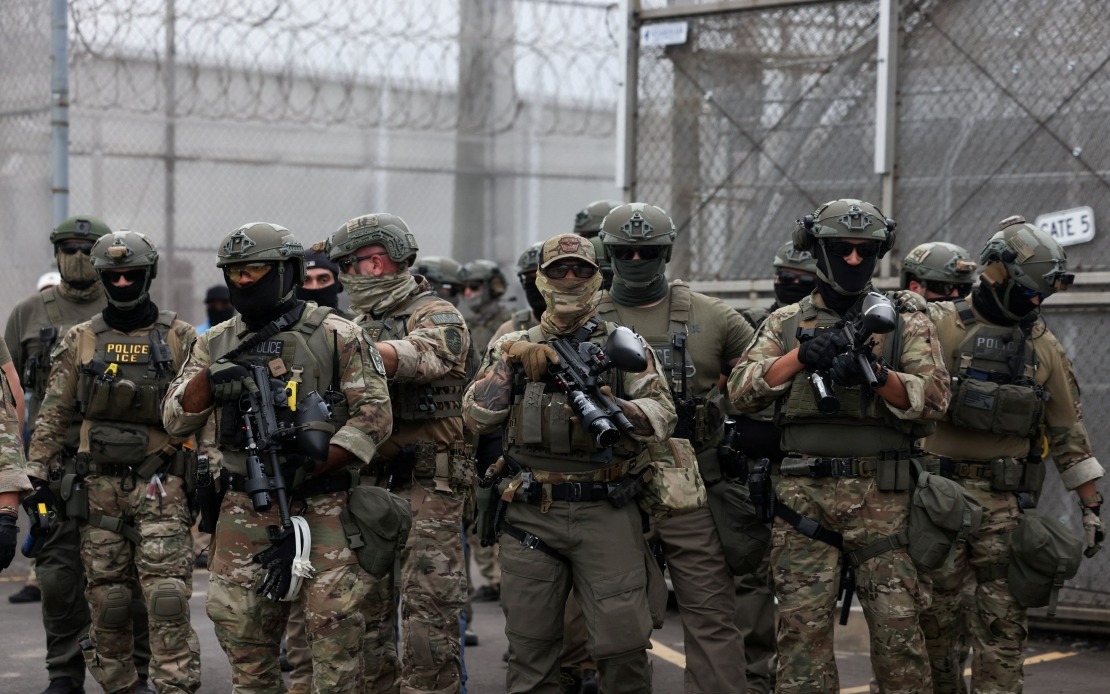
A federal judge in California has issued a sweeping nationwide order preventing United States Immigration and Customs Enforcement from detaining migrants at immigration courthouses, effectively curtailing a deportation strategy that has drawn sharp criticism from civil rights advocates and legal experts across the country. The ruling represents a significant judicial check on the Trump administration's approach to immigration enforcement and highlights the ongoing tension between executive action and constitutional protections in the American immigration system.
The practice of conducting courthouse arrests had become increasingly common, with ICE officers apprehending migrants both inside and outside immigration courts at various stages of their legal proceedings. Critics have long argued that this tactic creates a chilling effect on the immigration court system itself, discouraging vulnerable populations from appearing for scheduled hearings and effectively denying them their right to due process. The presence of enforcement agents at courthouses transforms what should be neutral judicial spaces into settings where individuals fear immediate detention regardless of their legal status or the nature of their case.
Immigration courts operate within a specialized system designed to adjudicate removal proceedings where migrants face the prospect of deportation. These proceedings demand full participation from respondents, and courthouse arrests have reportedly caused individuals to skip hearings, thereby jeopardizing their legal defenses. The judicial system relies on voluntary attendance to function effectively, and enforcement presence at these locations fundamentally undermines that participation model, creating systemic consequences beyond individual cases.
The Trump administration modified its immigration enforcement posture at the start of his second term, establishing new operational guidelines that emphasized the administrative and enforcement benefits of detaining migrants at courthouses. These guidelines represented a departure from previous restraint in this area and reflected a more expansive interpretation of ICE's authority. However, the federal judge determined that the agency had failed to adequately analyze or justify these policy changes through proper administrative procedures required under United States law.
In reaching this decision, the California-based federal judge emphasized that the agency had not sufficiently addressed the documented concerns regarding how courthouse arrests might negatively impact the functioning of immigration courts or discourage legal participation. The judge specifically noted that ICE had not provided reasoned explanations for departing from previous enforcement standards, a critical requirement when government agencies modify their longstanding practices. This procedural failure created legal vulnerability that undermined the policy's constitutional foundation.
The ruling carries significant implications for millions of migrants throughout the United States who must navigate immigration proceedings. It protects the integrity of the judicial process by ensuring that courthouses remain designated spaces where individuals can seek legal remedies without fear of immediate detention. This distinction between enforcement locations and judicial venues represents a fundamental principle in democratic legal systems, where access to courts must be preserved regardless of immigration status.
For Southeast Asian migrants and diaspora communities, including those from Malaysia and surrounding nations, the decision carries practical relevance. Many individuals from the region working or residing in the United States without proper documentation face deportation proceedings, and the removal of courthouse arrest authority directly affects their ability to mount adequate legal defenses. The ruling effectively acknowledges that due process protections must extend throughout the legal system, not merely in the execution of final removal orders.
The decision also reflects broader judicial skepticism toward executive immigration enforcement that lacks proper administrative justification. American courts have increasingly required government agencies to follow established procedural requirements when making significant policy shifts, particularly when such shifts potentially conflict with constitutional protections. This ruling demonstrates that courts will scrutinize enforcement approaches that appear designed to circumvent legal protections through aggressive administrative action.
The nationwide scope of the injunction means that the restrictions apply uniformly across all United States immigration courts and their surrounding areas, preventing ICE from making localized arguments about particular jurisdictions or circumstances. This comprehensive nature of the ruling provides clarity for both immigration courts and enforcement agencies about the boundaries of permissible detention practices, though it will likely prompt legal challenges and potential legislative responses from the Trump administration.
The case underscores the ongoing debate within the United States about balancing immigration enforcement with constitutional protections. While proponents of stricter enforcement argue that courthouse arrests facilitate apprehension of individuals who might otherwise evade detection, opponents contend that such practices fundamentally corrupt the judicial process and deny migrants fair hearings. This federal court has sided with the latter position, at least pending further legal proceedings.
For Malaysian observers and policymakers, the case offers insights into how constitutional democracies handle immigration enforcement within rule-of-law frameworks. Malaysia's own immigration and legal systems operate under different constitutional structures, but the principles regarding due process and judicial independence reflect universally recognized legal norms that influence international human rights standards and bilateral discussions between nations.
The ruling is unlikely to be the final word on the matter, as the Trump administration may seek appeals or pursue legislative remedies to restore the courthouse arrest practice. However, in the immediate term, the decision protects the ability of migrants to access legal proceedings without fear of detention based solely on their presence in court, reaffirming that even individuals in deportation proceedings retain certain foundational legal protections within the American constitutional system.

