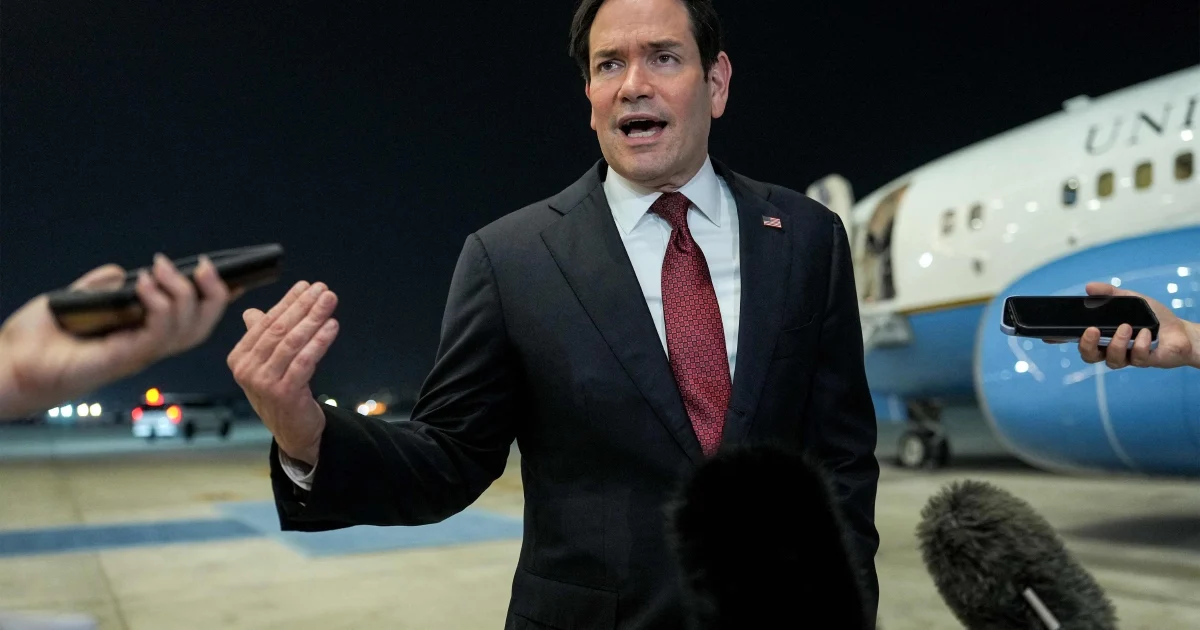
The American government has drawn a firm line against any Iranian levy system governing passage through the Strait of Hormuz, according to remarks from US Secretary of State Marco Rubio on Tuesday. The declaration underscores deepening fractures in preliminary discussions aimed at resolving the ongoing Middle Eastern crisis, with nuclear inspections and military capabilities emerging as equally contentious issues between Washington and Tehran.
The Strait of Hormuz represents one of the world's most strategically important maritime corridors, channelling roughly one-third of global maritime oil trade through its narrow passage separating Iran from Oman. Any attempt by Tehran to institute payment mechanisms for transit would carry immediate consequences for energy markets worldwide and could disrupt supply chains critical to economies across Southeast Asia. For nations like Singapore, Malaysia, and Thailand that depend heavily on stable energy imports and predictable shipping costs, the disagreement carries tangible economic implications that extend far beyond the bilateral US-Iranian relationship.
Rubio's categorical rejection of toll arrangements signals that the incoming American administration intends to maintain absolute freedom of navigation principles in one of the world's most congested shipping lanes. The position reflects longstanding Western security doctrine in the region, though it also demonstrates how quickly negotiating positions have calcified even before substantive talks have advanced significantly. The timing of this statement, delivered early in the discussion phase, suggests both sides are testing red lines and establishing negotiating parameters rather than seeking common ground.
The dispute over Hormuz tolls represents just one element in a constellation of disagreements threatening to derail diplomatic progress. Equally significant are unresolved questions surrounding international nuclear inspections within Iran and the scope of limitations on Iranian missile development programmes. These three issues—maritime commerce, atomic oversight, and weapons capabilities—form the basis of nearly every failed negotiation attempt over the past two decades, suggesting negotiators face formidable structural obstacles rooted in fundamentally incompatible strategic objectives.
For Malaysia and other regional trading nations, the stakes extend beyond theoretical concerns about conflict escalation. Physical disruption to Hormuz shipping would immediately raise insurance costs, lengthen transit times, and force vessels to reroute through alternative passages at significantly increased expense. Malaysian ports, particularly those in the Strait of Malacca, could experience increased congestion as rerouted traffic seeks alternative corridors, potentially straining local infrastructure and increasing port fees. The commercial interdependence created by modern global supply chains means that diplomatic failures in the Middle East translate directly into higher costs for Malaysian consumers and manufacturers.
The nuclear inspection issue carries particular weight in this negotiation framework. International agencies require unfettered access to Iranian nuclear facilities to verify compliance with any agreement, yet Tehran has historically resisted what it characterises as intrusive surveillance masking Western intelligence gathering. This mutual distrust has poisoned negotiations repeatedly, as each side suspects the other of deception. Rubio's apparent unwillingness to compromise on inspection protocols suggests the American position has hardened considerably compared to previous diplomatic initiatives.
Missile capabilities represent another critical friction point. Iran maintains an extensive ballistic missile programme that Western nations view as destabilising to regional security, while Tehran insists the missiles are defensive and necessary given threats from hostile neighbours. The gap between these positions appears nearly unbridgeable without major concessions from one or both parties. For Southeast Asian nations concerned about broader regional stability and weapons proliferation, Iranian missile development raises concerns about potential technology transfer or destabilisation effects that could ripple across South Asian and Southeast Asian security architecture.
The early emergence of these disputes suggests that negotiators have not yet developed sufficient trust or identified creative compromises that might unlock progress. Typically, diplomatic breakthroughs require both sides to discover face-saving formulations that allow them to retreat from maximalist positions without appearing weak to domestic constituencies. The public nature of Rubio's rejection of toll arrangements indicates that American negotiators are constrained by political pressure to maintain tough postures, limiting room for private negotiations and incremental confidence-building measures.
Background tensions between the United States and Iran accumulated over decades of sanctions, military confrontations, and competing regional influence campaigns. The current negotiation attempt occurs within this context of profound mutual suspicion, making even technical discussions about inspection protocols fraught with political significance. Neither side can afford to appear naive or complicit in arrangements their domestic critics will characterise as capitulation, creating perpetual incentives for hardline stances that complicate diplomatic progress.
Observers watching these developments from Southeast Asia should recognise that Middle Eastern conflicts rarely remain geographically contained. Disruptions to Hormuz shipping, escalated regional tensions, or the collapse of diplomatic negotiations could trigger broader instability affecting everything from oil prices to regional security arrangements. Malaysian policymakers monitor these discussions closely because the outcomes will significantly influence regional economic conditions and geopolitical alignments throughout the coming years.
The repetition of familiar negotiating failures suggests that breakthrough progress may require external pressure from international mediators, shifts in leadership priorities, or fundamental changes in the strategic calculations driving current negotiating positions. Absent such developments, the pattern established by Rubio's statements and Iranian counterarguments indicates that talks may cycle through renewed confrontation rather than achieving meaningful resolution. For a region already managing multiple security challenges and economic uncertainties, this prospect remains deeply concerning.

