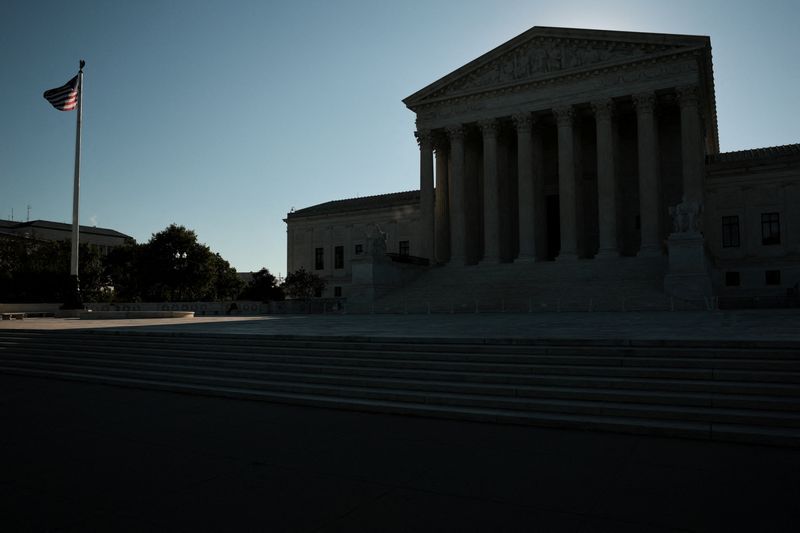
The United States Supreme Court has rejected an appeal by India-based Tata Consultancy Services to overturn a substantial $168 million damages award handed down by a lower court in favour of DXC Technology. The case, which centres on allegations of trade secret theft related to life-insurance software, marks a significant development in intellectual property enforcement against one of the world's largest information technology services firms. The Supreme Court's decision not to review the case leaves the award intact and represents a major legal setback for TCS in the United States.
The dispute originated from the 1990s when Computer Sciences Corporation, which later became DXC Technology and is now based in Ashburn, Virginia, licensed proprietary life-insurance software to the major American insurer Transamerica. According to DXC's 2019 lawsuit filed in Dallas federal court, TCS engaged in a concerted effort to develop a competing platform by recruiting approximately 2,200 employees directly from Transamerica. The central allegation was that these former Transamerica staff members brought with them intimate knowledge of CSC's proprietary systems and trade secrets, which they then leveraged to construct TCS's alternative solution.
TCS mounted a vigorous defence against these accusations, denying that any trade secrets had been appropriated. The company's legal strategy centred on two main arguments: first, that the information in question did not qualify as protected trade secrets under applicable law, and second, that any software access had occurred through legitimate, authorised means. This positioning suggested that TCS believed the intellectual property involved was either not sufficiently confidential or that standard industry practice allowed for such knowledge transfer through employee mobility.
The case proceeded through the American judicial system over several years before reaching a critical juncture in 2023. A jury issued an advisory verdict, a non-binding recommendation to the presiding judge, indicating that TCS should pay DXC $210 million for wilful misappropriation of trade secrets. However, US District Judge Brantley Starr exercised his discretionary authority to reduce this amount substantially, ultimately setting the award at $168 million in 2024. The reduction divided the damages into two components: $56 million in compensatory damages to address DXC's direct losses and $112 million in punitive damages intended to penalise TCS for the severity of the violation.
When TCS appealed to the New Orleans-based 5th US Circuit Court of Appeals in 2025, it sought to overturn Judge Starr's decision. However, that appellate court upheld the lower court's judgment, effectively validating both the amount and the reasoning behind the award. This appellate affirmation paved the way for TCS to seek review from the Supreme Court, arguing that the case raised important questions about the proper application of US trade secret law.
TCS's Supreme Court petition challenged the damages calculation on technical legal grounds. The company argued that under established trade secret law, DXC should not have been entitled to receive unjust enrichment damages without first demonstrating that it had suffered concrete, measurable losses from the alleged theft. This argument represented a sophisticated legal position suggesting that the award was fundamentally improper because it was based on a theory of recovery that had not been properly established. Additionally, TCS contended that the $112 million punitive component was excessive and disproportionate, violating principles of due process.
Understanding the legal framework at issue requires appreciating how American trade secret legislation addresses different categories of harm. US law permits two distinct types of monetary recovery: damages that compensate a plaintiff for actual losses sustained, and damages that address a defendant's unjust enrichment from unlawfully acquiring proprietary information. These represent different legal theories, and TCS argued that the court should not have granted recovery under the second theory without establishing the first. DXC's successful argument, by contrast, positioned unjust enrichment as an independent basis for recovery that did not require proof of corresponding plaintiff losses.
DXC responded to TCS's Supreme Court filing by emphasizing that the appellate court had simply applied well-established legal principles to the particular facts of the case. The company argued that nothing in the 5th Circuit's decision warranted further review by the nation's highest court, suggesting that the lower courts had acted within their proper authority and had not broken new legal ground. This framing sought to portray TCS's petition as merely asking the Supreme Court to second-guess factual findings and settled law applications, rather than to resolve a genuine legal controversy.
The Supreme Court's refusal to accept the case carries substantial implications for both TCS and the broader technology services industry across Asia. For TCS specifically, the decision eliminates a final avenue of legal challenge and means the company must now contemplate other remedies, including potential settlement discussions or compliance with the judgment. The affirmation of such a substantial award sends a powerful signal to multinational firms that American courts will vigorously protect trade secrets and will not hesitate to impose severe penalties for their misappropriation, even against defendants of considerable size and international prominence.
For Malaysia and other Southeast Asian nations home to major technology and business process outsourcing industries, this decision underscores the importance of intellectual property protection in the American market. Many regional companies compete with TCS and other Indian IT service providers for contracts with multinational corporations. The case demonstrates that American legal standards regarding trade secrets are formidable and that companies must maintain strict protocols to ensure that employee recruiting, client transitions, and knowledge transfer all occur within legally defensible boundaries.
The decision also reflects broader global tensions around the mobility of skilled workers in the technology sector. While talent movement between firms is a natural feature of competitive labour markets, the court's validation of a $168 million award shows that American jurisprudence draws a sharp line when that movement is accompanied by alleged misappropriation of proprietary information. This principle will likely influence how multinational technology firms operating in Southeast Asia structure their recruitment practices, confidentiality agreements, and knowledge management systems when engaging with American markets and clients.
The case serves as a cautionary tale for IT service providers and business process outsourcing companies throughout the region. As these firms expand their global footprint and compete more aggressively for contracts with multinational corporations, they must invest substantially in legal compliance infrastructure, employee training on confidentiality obligations, and documentation of legitimate knowledge sources. The scale of damages that American courts are willing to impose—exceeding $160 million—suggests that the stakes of intellectual property litigation in the United States are extraordinarily high and warrant corresponding attention to risk mitigation.
Looking forward, the Supreme Court's decision likely closes an important chapter in one of the largest trade secret disputes involving an Indian technology firm. For TCS, absorbing or settling a $168 million judgment represents a significant financial impact, though manageable for a company of its scale. More importantly for the global technology services industry, the judgment reinforces that American trade secret protections are robust and enforceable, and that courts will support those protections even when doing so adversely affects major international competitors. As regional technology firms continue to grow and expand their international operations, they will need to factor such legal risks prominently into their strategic planning and operational practices.

