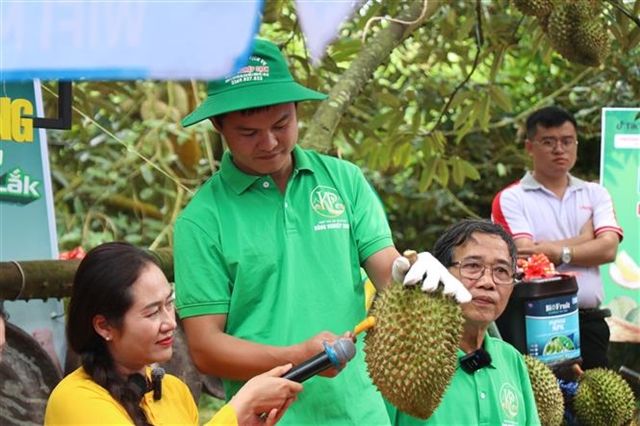
Vietnam's spectacular rise as a global durian powerhouse is being tempered by a sprawling corruption probe that has exposed serious vulnerabilities in how the country certifies and tracks its most valuable agricultural export. The Ministry of Public Security is expanding an investigation into bribery and misconduct linked to the issuance of growing area codes, packing house credentials and laboratory certificates for durian destined for China, Vietnam's primary buyer. At stake is not merely the integrity of individual transactions, but the credibility of an entire certification architecture upon which the country's billion-dollar durian franchise depends.
The investigation has uncovered allegations that officials, including a senior figure within the Ministry of Agriculture and Environment, systematically exploited their authority to create illegal "sub-licences" that generated illicit income for connected interests. By circumventing proper channels, these officials allegedly enabled operators to circumvent genuine traceability requirements that are meant to ensure product safety and prevent contamination from reaching Chinese consumers. The scale of financial impropriety involved is described as exceptionally substantial, suggesting this is not isolated wrongdoing but rather a coordinated network of fraud.
Vietnam's durian sector has experienced meteoric growth, with fruit and vegetable exports reaching an estimated US$4.7 billion during the first seven months of 2026, representing a 23 percent surge compared to the same period the previous year. July alone marked a milestone when exports exceeded US$1 billion in a single month. Durian accounts for more than half of this total, making it the agricultural commodity on which Vietnam's international reputation for produce increasingly rests. This explosive expansion has been driven primarily by ravenous demand from China, where Vietnamese durians command premium prices and occupy a dominant market position.
However, this boom has also created enormous temptation for those seeking to profit through shortcuts. For durian shipments bound for China, a growing area code, an approved packing facility registration, and verified laboratory testing certificates are non-negotiable prerequisites for market access and product traceability. China's intensifying import controls mean that any violation of these requirements can trigger severe penalties: suspension of area codes, revocation of laboratory approvals, enhanced inspection regimes, and ultimately disruption to shipments during critical harvest windows when thousands of containers await processing.
The Vietnam Fruit and Vegetables Association (Vinafruit) has publicly documented how the certification system has been compromised. Some operators have forged authorisation documents and company seals to fraudulently claim rights to growing area and packing facility codes legitimately issued to other businesses. This practice does more than enable individual cheaters to profit; it systematically undermines traceability chains that exist to protect consumers and distinguish genuine producers from counterfeiters. Compliant businesses face reputational damage and commercial risk when fraudulent products contaminate the market under falsified credentials bearing their supposed identity.
Laboratory testing capacity has emerged as another critical bottleneck that corruption has only worsened. Testing facilities authorised to screen for cadmium and Auramine O residues have faced temporary suspensions, repeatedly causing export delays during peak harvest periods when hundreds of containers pile up awaiting inspection clearance. Earlier in 2026, the Ministry of Agriculture and Environment responded by mandating that testing facilities expand staffing, extend operating hours, and enhance procedural transparency to reduce delays and prevent further misconduct. Yet these measures, while necessary, represent reactive rather than preventive solutions.
The Vietnamese government has begun to respond with greater urgency. Last year, the Prime Minister issued orders directing authorities to investigate illegal trading of growing area and packing facility codes, forged export documents, and related violations threatening the reputation of Vietnamese agricultural products. The latest corruption inquiry has triggered even more comprehensive administrative action. The Government Inspectorate has launched a 60-day inspection of growing area and packing facility code issuance and management in Dong Thap, Lam Dong and Dak Lak—three provinces accounting for the bulk of Vietnam's durian production. This review will examine certification procedures spanning from March 2023 through June 2026, attempting to map system failures and identify where safeguards broke down.
Local authorities have begun taking corrective action. In late July, Lam Dong provincial officials revoked seven growing area codes and five packing facility codes that had been granted to two companies operating from neighbouring Dak Lak. The companies in question had allegedly ceased purchasing operations, severed production relationships with growers, and themselves requested that registrations be cancelled to limit legal exposure. This suggests that some fraudulently operating entities recognise that regulatory pressure is mounting and are attempting to liquidate compromised assets before facing formal sanctions.
Industry leaders have begun articulating what many suspected but few publicly acknowledged: that governance quality and production capacity are equally vital to sector sustainability. Nguyen Van Muoi, deputy secretary-general of Vinafruit, has stressed that enhancing product quality must proceed in tandem with constructing a transparent and trustworthy growing area code system. Le Anh Trung, chairman of the Dak Lak Durian Association, has called for accelerated digitalisation of growing area management and traceability infrastructure, noting that despite surging export demand, the number of certified growing areas remains artificially constrained, perhaps reflecting how fraud has crowded out legitimate operators.
Experts argue that comprehensive digitisation of growing area records, integration with traceability databases, and strengthened independent oversight of testing and certification procedures would simultaneously reduce fraud opportunities while protecting compliant businesses. The broader context shaping this challenge is that international markets—particularly China but increasingly others—are continuously tightening food safety and traceability requirements. As these standards evolve, the credibility and sophistication of Vietnam's growing area code system will increasingly determine whether Vietnamese durians retain their market dominance or become subject to trade restrictions that could fundamentally reshape global durian commerce.

