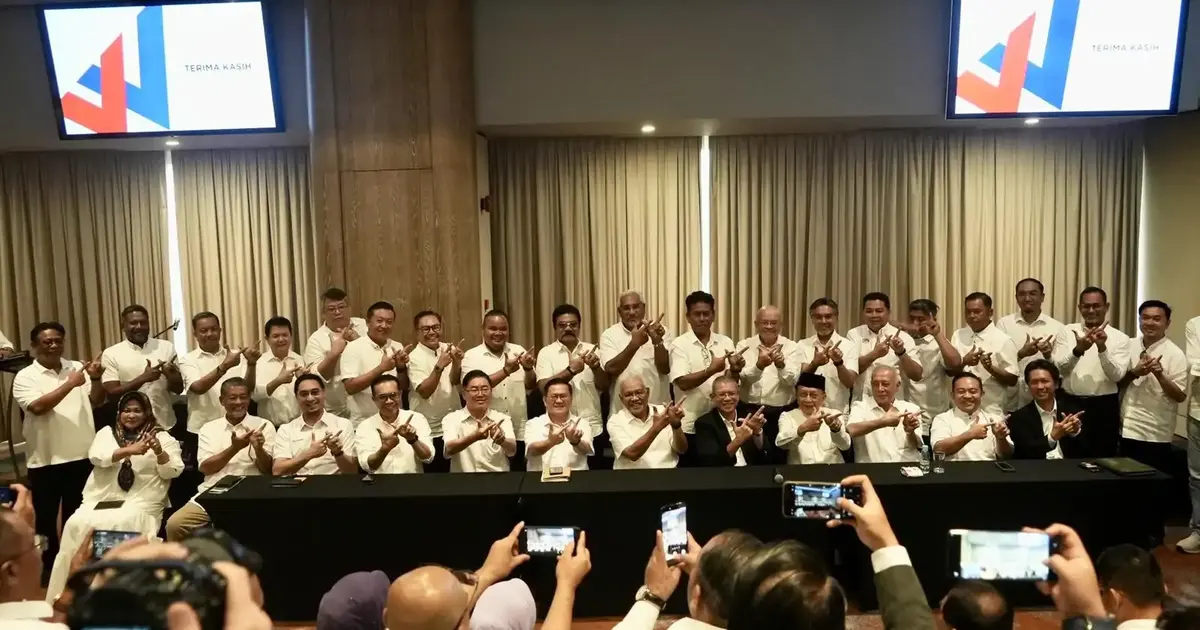
The election director of Perikatan Nasional has put to rest questions surrounding Wawasan's membership in the opposition coalition, confirming that the matter was settled through a formal majority vote at the Supreme Council level. This clarification comes as the PN continues to navigate internal dynamics following the inclusion of the newer political entity, which has drawn scrutiny from some quarters within the alliance.
According to the PN election director, while Bersatu's reservations about Wawasan's entry have been formally acknowledged, the coalition's governing body proceeded with the decision through its established democratic processes. The move underscores how major strategic decisions within opposition pacts are resolved when member parties hold differing positions on expansion or coalition composition. This procedural approach reflects PN's attempts to maintain institutional legitimacy even as it manages competing interests among its constituent parties.
Bersatu's concerns regarding Wawasan's admission reflect broader questions about coalition strategy in Malaysian politics. Political parties often harbour reservations about newcomers, particularly regarding their ideological alignment, organisational capacity, or potential impact on existing power dynamics within the alliance. The fact that Bersatu's objections were noted but not acted upon suggests that other PN member parties saw strategic value in welcoming Wawasan into the fold, perhaps viewing it as a way to broaden the coalition's appeal or geographic reach.
Wawasan's entry into PN carries implications for how the opposition positions itself ahead of major political contests. By expanding its membership base, the coalition aims to present itself as an increasingly inclusive force capable of attracting diverse political actors. This expansion strategy is particularly relevant in Malaysian politics, where coalitions often succeed or fail based on their perceived breadth and representativeness across different communities and regions.
The Supreme Council's authority to make such decisions is central to understanding PN's governance structure. This body typically comprises senior figures from member parties and serves as the decision-making apex for strategic matters affecting the entire coalition. By routing the Wawasan decision through this channel rather than seeking consensus or unanimity, PN demonstrated its reliance on institutional procedures to manage disagreements—a practice that maintains organizational stability even when member parties disagree.
For Malaysian readers, this episode illustrates how opposition coalitions balance inclusion with internal cohesion. Unlike ruling coalitions, which benefit from government resources and ministerial incentives to enforce party discipline, opposition alliances must rely more heavily on procedural legitimacy and shared political objectives. When such coalitions grow to include multiple parties with distinct interests, majority voting becomes a practical necessity for reaching decisions efficiently.
Bersatu's position in this instance is noteworthy given its historical prominence within PN. The party's objections likely stem from concerns about Wawasan's viability, ideological fit, or potential to dilute the coalition's focus. However, the willingness of other PN members to proceed despite Bersatu's reservations suggests that the coalition is confident in managing any resulting tensions. This dynamic reflects a maturing opposition infrastructure capable of handling internal disagreements without fragmenting.
The timing of this clarification is significant for Malaysian political observers tracking PN's evolution. As the coalition prepares for potential electoral contests, decisions about membership directly affect its campaign messaging, candidate selection processes, and resource allocation. Wawasan's formal status within PN enables better coordination on these fronts and provides the party with access to the coalition's organizational machinery and strategic planning.
Regionally, PN's expansion reflects broader trends in Southeast Asian politics where opposition coalitions increasingly compete against entrenched ruling parties by demonstrating adaptability and openness to new partners. Malaysia's complex multi-party landscape means that successful opposition movements must continually refresh their appeal and incorporate emerging political actors. Wawasan's entry, therefore, positions PN as an evolving force rather than a static entity bound by its original membership.
Looking ahead, the precedent set by this majority-vote approach may influence how PN handles future coalition matters. By establishing that the Supreme Council can make significant decisions without requiring unanimity, the leadership has created operational flexibility that could prove valuable as the coalition faces new challenges or opportunities. This procedural clarity reduces ambiguity about how disagreements will be resolved, potentially strengthening PN's organizational coherence.
The acknowledgment of Bersatu's objections, despite overruling them, suggests an attempt to preserve the party's sense of inclusion within coalition decision-making. Such gestures matter in opposition politics, where member parties must feel their voices carry weight even when outvoted. This balancing act between majority rule and minority accommodation will likely continue shaping PN's internal dynamics as it grows and engages with electoral politics in coming months.

