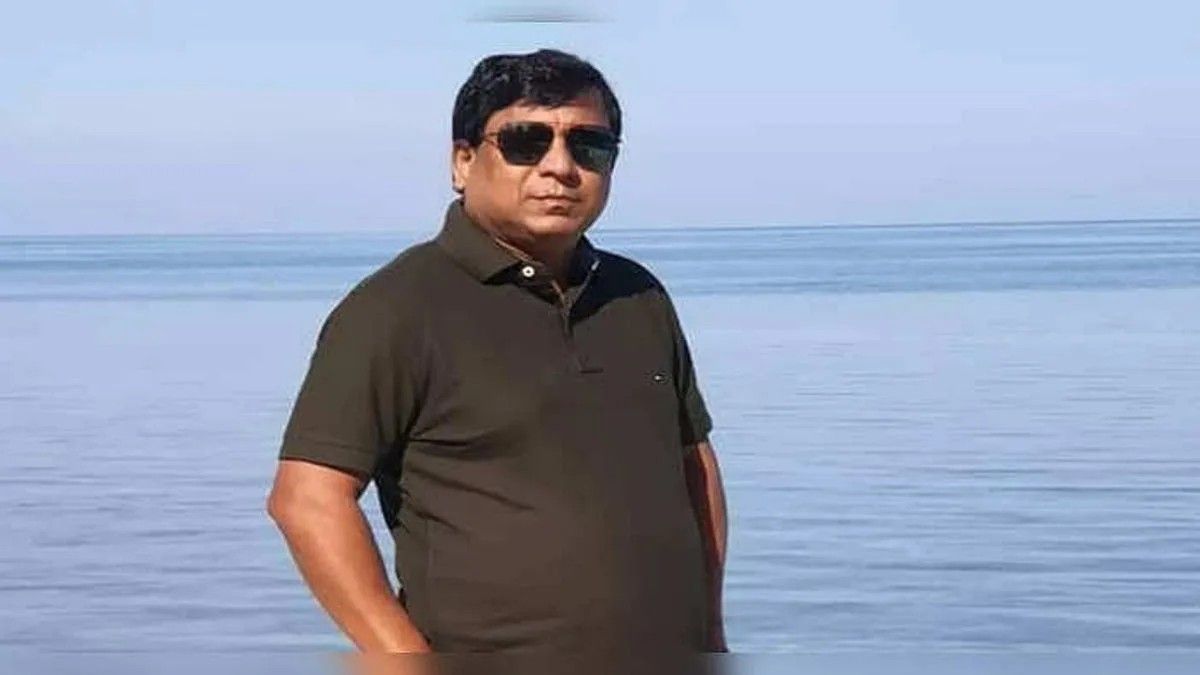
Law enforcement agencies in West Bengal have initiated an aggressive manhunt for local businessman Mohammad Nazibullah, known as Tulu Mondal, following coordinated raids across his sprawling network of luxury properties and commercial establishments. The Birbhum Police have issued a lookout notice for Mondal, who allegedly departed India with his immediate family before the state's assembly election results were declared. Police believe he has fled to Dubai and continues directing his extensive business operations remotely from abroad, presenting a sophisticated case of cross-border financial crime intersecting with political networks.
The scale of the enforcement action underscores the magnitude of Mondal's holdings and the complexity of tracing assets reportedly accumulated through illicit means. Over a grueling 15-hour operation, police sealed his primary residence in Suri, an opulent structure featuring gymnasium and spa facilities, indoor swimming pool, and entertainment lounges. Officers also conducted simultaneous raids at his ancestral property in Sonsthol, multiple petrol station outlets, and a commercial truck parking facility in Mohammad Bazar. The coordinated approach, orchestrated by DSP Surajit Mondal, DSP Sourav Bhattacharya, and Suri Police Station Inspector-in-Charge Shailendra Upadhyay, recovered Rs8 lakh in currency and 150 grams of gold ornaments during the initial phase alone.
The investigation has revealed staggering financial resources under Mondal's control. State authorities have frozen Rs93 crore across multiple bank accounts and confiscated 242 high-end vehicles parked across his residential compounds. Perhaps most dramatically, police have initiated attachment proceedings against 21 immovable properties, including seven residential houses, numerous farmhouses, commercial parking facilities, two petrol stations, two stone crushing operations, and approximately 300 bighas of agricultural land. These asset seizures paint a portrait of extreme wealth accumulation that has attracted both law enforcement attention and public scrutiny across the region.
Mondal's profile gained widespread notoriety following the extraordinarily lavish wedding celebration of his daughter Salma earlier this year, an event that reportedly consumed Rs150 crore and became the subject of intense public discourse across West Bengal. The extravagant ceremony drew prominent Bollywood and Tollywood film personalities, internationally recognized models, celebrated musical artists, and senior political figures to a purpose-built venue designed to replicate the iconic Taj Lake Palace in Udaipur. The spectacle required closure of major thoroughfares in Mohammad Bazar for two consecutive days, with access restricted exclusively to invited guests bearing specially designed security identification. The architectural grandeur, complete with imported international décor specialists and a horse-drawn chariot entrance flanked by costumed security personnel, demonstrated the conspicuous consumption associated with Mondal's lifestyle and raised fundamental questions about wealth origins.
Mondal's connections to alleged criminal networks have deepened investigative focus. He is understood to maintain close associations with the Trinamool Congress political establishment, though the nature and extent of these relationships remain under examination. His alleged associate Abdul Barik Biswas carries a documented history of customs detention in 2014 on gold smuggling charges, with the Enforcement Directorate subsequently attaching his properties valued at Rs20 crore in May 2015. According to law enforcement documentation, Biswas operated an integrated smuggling enterprise spanning gold trafficking from Bangladesh and cattle smuggling across international borders, functioning as a subordinate to Enamul Haque, identified as the principal architect of transnational cattle-smuggling operations who has faced previous arrests by both the Enforcement Directorate and Central Bureau of Investigation.
Recent investigative developments have expanded the scope of criminal allegations. A vehicle intercepted by local residents while transporting document-filled sacks from a farmhouse property revealed attempts to conceal financial records. Upon interrogation, the driver disclosed that Mondal's administrative representative had directed him to hide papers encompassing sand and stone transportation documentation and associated billing records. This evidence suggests deliberate obstruction of investigative processes and destruction of documentary trails potentially illuminating illicit financial mechanisms.
A parallel strand of the investigation has ensnared Minar Mondal, identified as Tulu Mondal's brother-in-law, who was apprehended following residential searches in Deucha village. Police recovered Rs50 crore in currency and precious metals during the operation. Following interrogation, Minar Mondal acknowledged that the seized wealth belonged to Tulu Mondal and had been accumulated through diverse syndicate-based operations, effectively corroborating investigative suspicions about coordinated financial networks. Court proceedings have authorized eight days of police custody for further questioning and asset tracing.
The sophistication of Mondal's asset accumulation becomes evident through the diversity of recovered valuables. During recent enforcement operations, authorities seized 15 kilograms of 24-carat gold bars and biscuits manufactured in Switzerland and Dubai, suggesting international dimensions to his wealth management. The recovered precious metals, combined with the extensive vehicle collection and real estate portfolio spanning agricultural and commercial properties, indicate complex mechanisms for converting alleged smuggling proceeds into legitimized asset holdings. These conversion pathways have created investigative challenges as authorities must establish evidential connections between illicit activities and accumulated wealth.
The case exemplifies broader vulnerabilities within Indian governance systems where substantial wealth accumulation, political proximity, and criminal enterprise can coexist within the same individual or network. For Southeast Asian observers, particularly Malaysian stakeholders, the Mondal investigation illuminates cross-border trafficking mechanisms that operate throughout the region, with cattle smuggling and precious metal trading frequently serving as covers for broader financial crime networks. The alleged involvement of political figures and the difficulties encountered in apprehending fugitive suspects abroad underscore the transnational dimensions of organized crime.
Birbhum Superintendent of Police Vidit Raj Bhundesh has indicated that search operations remain ongoing, with additional asset attachments anticipated as investigative scope expands. The extended timeline for concluding the case reflects the complexity of asset tracing across multiple jurisdictions and the challenges inherent in pursuing suspects who have secured themselves in foreign jurisdictions offering limited extradition cooperation with Indian authorities. Law enforcement agencies continue documenting financial transactions and interviewing associates to establish comprehensive evidence of alleged criminal activities. The investigation's progression will likely determine whether prosecution can successfully establish the comprehensive charge sheet necessary for conviction and asset recovery.

