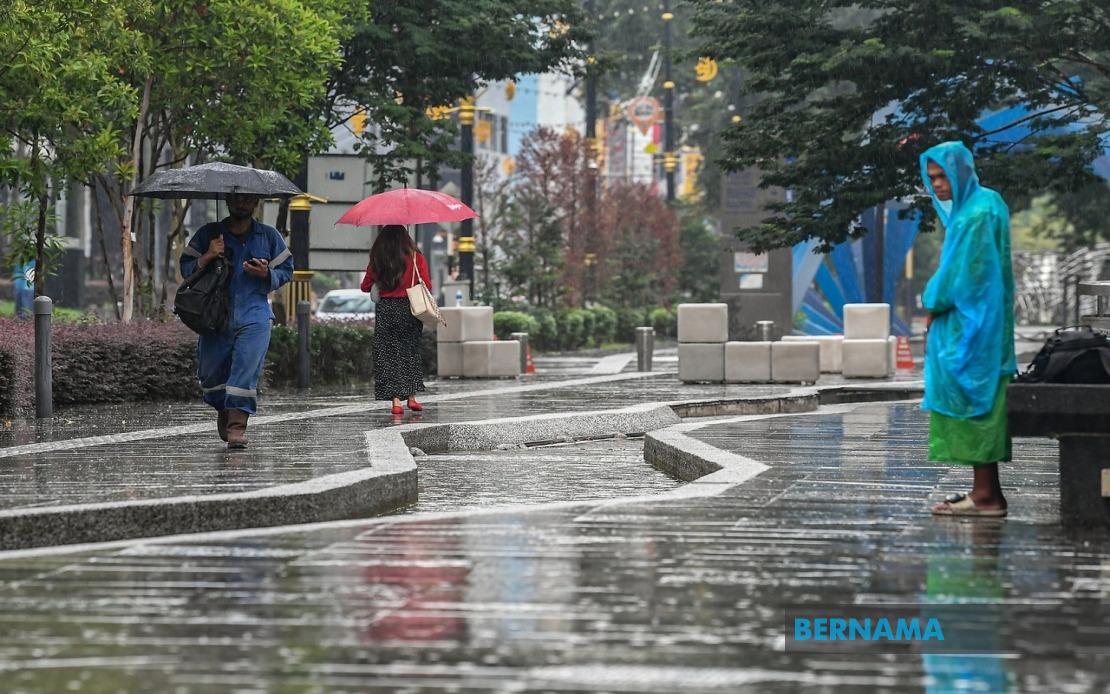
Johor's nomination day tomorrow faces a weather test that could complicate voter engagement and candidate movements across much of the state. The Malaysian Meteorological Department has forecasted rain affecting seven of the ten districts during morning hours, creating logistical hurdles for the concentrated two-hour window when prospective candidates must formally register their candidacy. The affected areas—Johor Bahru, Muar, Batu Pahat, Kota Tinggi, Pontian, Tangkak and Kulai—represent a significant portion of the electoral battleground, encompassing both urban centres and mixed rural constituencies. Only Segamat, Kluang and Mersing are expected to enjoy clear conditions in the morning, offering candidates and their supporters some relief from the inclement weather.
According to Azlai Ta'at, the Johor director of MetMalaysia, the weather pattern poses what he termed a "slight challenge" for the nomination process itself. Temperatures will range from 24 to 25 degrees Celsius at their lowest points, while daytime highs will climb to between 31 and 34 degrees Celsius across the state, with Segamat expected to reach the highest point. Such humidity-laden conditions, combined with rain in multiple districts, create uncomfortable circumstances for candidates coordinating supporters and executing their formal nomination submissions at designated centres. The meteorological department has advised both the public and electoral participants to monitor weather developments closely, acknowledging that conditions could shift unexpectedly during the critical morning hours.
The timing of this wet weather adds another dimension to an already complex electoral logistics challenge. The Johor state election involves 56 seats across the entire state, with 56 nomination centres operating simultaneously from 9 am to 10 am. This two-hour window leaves no margin for delay, and rainy conditions in multiple districts could impede candidate movements between centres and their respective constituencies. For supporters hoping to show solidarity during nomination, the prospect of sustained rainfall may dampen turnout, particularly in areas where enthusiasm traditionally translates into visible public presence at nomination grounds. The compression of this process into such a tight timeframe means that weather disruptions carry outsized consequences.
The afternoon outlook appears even more unsettled. MetMalaysia forecasts thunderstorms developing in Johor Bahru, Segamat, Kluang, Kota Tinggi, Pontian, Mersing and Kulai once the official campaigning period commences immediately after nomination closes. Meanwhile, Batu Pahat and Tangkak can expect rain, while Muar is projected to experience hot and dry conditions. This scattered pattern of thunderstorms will be significant because campaigning is set to begin in earnest just hours after nomination, and candidates will be eager to mobilise supporters and launch initial campaign activities. Heavy afternoon downpours could curtail outdoor campaign events, force reorganisation of scheduled gatherings, and restrict door-to-door canvassing that typically marks the opening phase of electoral competition.
The electoral stakes are substantial, with the Malaysian Meteorological Department's warning coming at a moment when opposition and government-aligned coalitions are positioning themselves for what many analysts view as a critical state-level contest. Pakatan Harapan is fielding candidates across all 56 seats, drawing 20 representatives from PKR, 19 from Amanah and 17 from DAP, representing a united challenge to incumbency. Barisan Nasional has also committed candidates to every seat, deploying 36 UMNO representatives alongside 16 from MCA and four from MIC, underscoring the coalition's determination to retain control of the state assembly. The presence of these established coalitions is being complemented by a fragmented Perikatan Nasional offering, with PAS contesting 11 seats, Bersatu 16, the Malaysian Indian People's Party five and Pejuang one. Beyond these traditional groupings, newer entrants including the Malaysian United Democratic Alliance with four seats, Parti Sosialis Malaysia with one seat, and Parti Bersama Malaysia, making its electoral debut with 15 contested seats, add complexity to what shapes as a multi-cornered contest.
The broader context reveals why even weather complications matter in this particular election cycle. Johor has traditionally been regarded as a Barisan Nasional stronghold, and any Pakatan Harapan gains would signal shifting electoral dynamics in a state that has long been strategically important to Malaysia's political geography. The presence of Perikatan Nasional as a third force, rather than a unified opposition coalition, suggests a divided anti-government vote potentially, though the specific performance of individual components will only become apparent once campaigning commences and voters receive sustained messaging. Early indications in the lead-up to nomination suggest competitive enthusiasm across multiple parties, making the state election a genuinely contested affair rather than a coronation of incumbent forces.
The scale of voter participation represents another dimension shaping the election's significance. The Election Commission has registered 2,727,926 eligible voters in Johor, comprising 2,703,175 ordinary voters, with additional representation from 12,041 military personnel and spouses and 12,710 police personnel and spouses. This voter base exceeds the population of several Malaysian states, underscoring Johor's weight within the national electoral calculus. Early voting is scheduled for July 7, offering voters an alternative to the scheduled polling day of July 11, a provision that could mitigate some impact of potential weather disruptions on overall turnout during the main ballot.
The nomination day weather forecast also carries implications for how local and national media organisations will cover the election's opening moments. Candidates operating in rain-affected areas may struggle to generate the visual spectacle that typically accompanies nomination day—crowds of supporters, campaign banners, and street-level enthusiasm that characterise electoral engagement for many voters. This could inadvertently advantage candidates and parties with stronger institutional capacity to generate coverage through other means, though the democratising effect of social media has reduced traditional parties' monopoly over campaign narrative construction. Nonetheless, the weather presents a genuine logistical complication that no election organiser welcomes.
For electoral officials and returning officers managing the 56 nomination centres simultaneously, rain compounds an already demanding administrative responsibility. Ensuring secure handling of nomination documents, managing crowd flows through indoor spaces, and maintaining the integrity of a process that must be completed within a strict 120-minute window all become more complex when weather systems are active across multiple districts. The Election Commission has presumably factored such scenarios into operational planning, though real-world implementation often reveals unforeseen complications. The nomination process itself, distinct from the actual voting, rarely receives the intensive media scrutiny that polling day generates, yet it remains foundational to electoral legitimacy because it determines which candidates will actually appear on ballots.
As Johor readies itself for what appears to be a genuinely competitive three-way or four-way contest between Pakatan Harapan, Barisan Nasional, Perikatan Nasional components and independent groupings, the meteorological forecast serves as a reminder that electoral outcomes are shaped not only by campaign strategy and voter preference but also by circumstantial factors beyond political actors' control. How parties and candidates adapt their nomination day logistics to accommodate wet weather may provide early signals about their operational preparedness and flexibility—qualities that increasingly matter in contemporary electoral competition where ground-level organisation often determines the difference between victory and defeat in closely contested constituencies.

