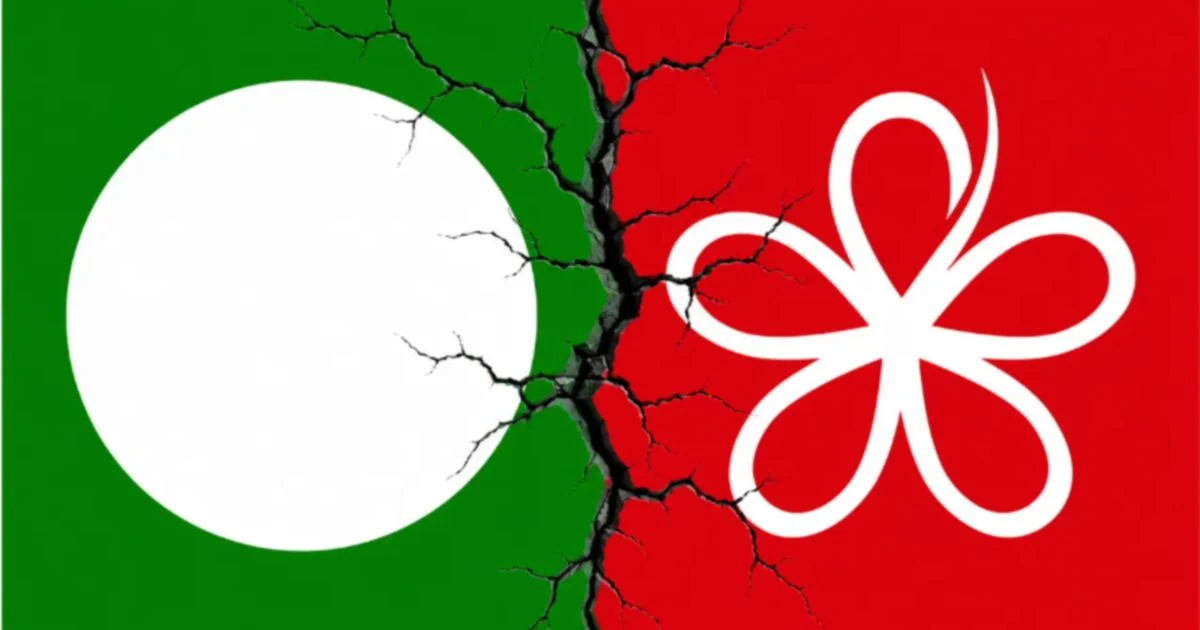
The partnership between Pas and Bersatu, two pillars of the Perikatan Nasional coalition, faces mounting strain that electoral analysts warn could undermine the opposition bloc's competitive position in Malaysia's forthcoming general election. The deteriorating relationship between these ideologically distinct parties threatens to fragment voter support and diminish Perikatan's capacity to mount an effective challenge against the Pakatan Harapan-led government currently in office.
The coalition has operated under considerable internal pressure since its formation, bringing together Bersatu's secular, development-focused platform with Pas's Islamist political agenda. This fundamental doctrinal divide has historically required careful management, but recent friction suggests those diplomatic mechanisms are increasingly strained. Senior figures within both parties have made public statements that, while ostensibly addressing internal party matters, carry unmistakable signals of broader disagreement over coalition strategy and governance priorities.
For Malaysian voters, the implications are significant. Perikatan Nasional has positioned itself as the primary alternative to the current administration, offering a distinct policy vision across economic, religious, and administrative spheres. A coalition weakened by internal conflict risks appearing incoherent to the electorate, unable to present a unified government-in-waiting platform. This vulnerability becomes particularly acute in constituencies where Perikatan's vote share remains competitive with other contenders.
Bersatu, which entered Perikatan after its estrangement from Pakatan Harapan, has long struggled with perceptions of political opportunism. The party's base expects coalition arrangements to serve strategic advancement rather than ideological compromise. Conversely, Pas views the partnership as a vehicle for advancing Islamic governance and protecting Malay-Muslim interests, making policy disagreements over secular frameworks inherently consequential rather than merely tactical.
The electoral mathematics of this rift are particularly unforgiving. In a three-way contest involving Pakatan, Perikatan, and potentially other emerging political forces, vote fragmentation within opposition ranks directly benefits the incumbent coalition. Malaysian voters burned by previous coalition collapses—most notably Pakatan's 2022 dissolution—have grown sceptical of multiparty arrangements. Public evidence of Perikatan dysfunction risks reinforcing perceptions that the bloc cannot deliver stable, consistent governance.
Regional constituency contests prove especially consequential. In Peninsular Malaysia's urban and semi-urban seats where swing voters determine outcomes, coalition disunity translated into confused messaging, inconsistent local endorsements, and conflicting policy positions. Rural and traditionally Pas-strong areas meanwhile witness complicated dynamics where Bersatu's presence challenges long-established voting patterns that have favoured Pas's Islamist agenda for generations.
The timing of these tensions carries acute significance. With general elections potentially approaching within eighteen months to two years, coalition repair requires immediate attention. Historical precedent demonstrates that electoral campaigns amplify internal organisational weaknesses; voter perception of leadership disarray proves difficult to counteract through traditional campaign machinery. Perikatan's window for reconciliation and unified positioning grows narrower as the electoral calendar advances.
Beyond immediate election outcomes, this rift illuminates deeper structural vulnerabilities within Malaysia's opposition landscape. Perikatan Nasional lacks the institutional cohesion that might insulate it from personality-driven conflicts or competition over resource allocation and candidate selection. Unlike ruling coalitions that benefit from incumbency advantages and governmental patronage mechanisms, opposition blocs must function principally through ideological alignment and complementary party strengths—both currently compromised.
For Southeast Asian observers, Malaysia's coalition dynamics reflect broader regional trends. Throughout the region, political alliances between secular nationalist and Islamist parties have proven unstable, particularly when election proximity intensifies competition over candidate nomination and portfolio distribution. The Perikatan experience offers instructive lessons for coalition-building in religiously plural societies where political Islam constitutes a substantial force.
Voter behaviour research indicates that undecided and swing voters—crucial in Malaysia's closely contested three-way political environment—make decisions based partly on perceptions of governmental coherence and leadership unity. Coalition dysfunction, particularly when featuring prominent public disagreements, systematically disadvantages opposition formations competing against established incumbents. This structural bias means Perikatan's internal problems likely translate disproportionately into electoral losses.
The Pas-Bersatu relationship's future trajectory remains uncertain, but the costs of continued deterioration accumulate rapidly. Party leadership within both organisations presumably understand these electoral economics. Yet resolving doctrinal tensions while maintaining distinct party identities and preserving leadership autonomy presents genuine challenges. Coalition management requires compromises that neither party can accept indefinitely without sacrificing core ideological commitments.
As Malaysia moves toward its next general election cycle, the Perikatan coalition faces a critical juncture. Restoration of functional unity demands substantive engagement with the genuine policy differences separating these parties, coupled with transparent negotiation of power-sharing arrangements that respect both Pas and Bersatu constituencies. Without such efforts, voter scepticism about the coalition's viability seems likely to intensify, with corresponding implications for election outcomes and Malaysia's post-election political configuration.

