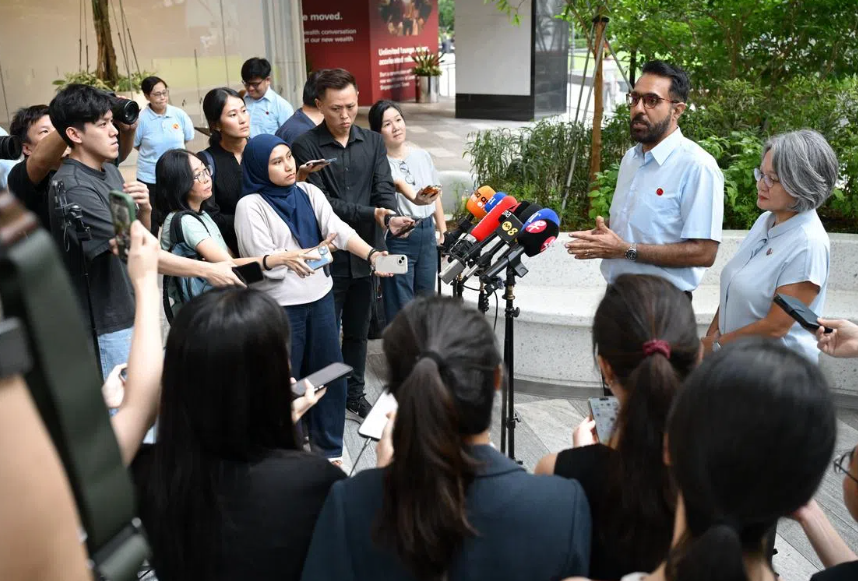
Singapore's Workers Party has moved decisively to put internal turmoil behind it, with party cadres voting by a commanding margin to retain Pritam Singh as their leader following a no-confidence challenge. The outcome of two meetings held on June 28 marks a turning point for the opposition party, which has weathered more than four years of turbulence stemming from a fabricated parliamentary statement by then-MP Raeesah Khan. The supermajority backing—82 of 106 cadres voting in Singh's favour—signals that the party's membership is prepared to weather the political fallout from his conviction, even as observers question whether the decision prioritises internal stability over broader electoral strategy.
Singh's conviction for lying to Parliament arose from his role in Khan's actions, which came to light through Parliament's Committee of Privileges. Khan had fabricated an account of police mistreatment of a sexual assault victim, and Singh subsequently made false statements about his handling of the matter when questioned. The High Court upheld his guilty verdict on appeal in December 2025, triggering a parliamentary motion that deemed him unsuitable for the role of Leader of the Opposition. Prime Minister Lawrence Wong subsequently removed him from that specific post, creating the first serious governance crisis for the party's leadership.
When cadres gathered to hold Singh to account, many expected a robust internal reckoning. Those who triggered the special cadre conference through a formal letter sought to question his judgment and fitness to lead. However, the dynamics that unfolded proved far different from what internal critics anticipated. Party sources indicate that while Singh faced questioning from members, others rose to defend him, creating a more balanced discussion than a disciplinary inquisition. Notably, those pushing for an alternative candidate failed to persuade anyone to challenge Singh directly, leaving the party's membership to choose between the status quo and an uncertain alternative.
Former party chief Low Thia Khiang's public support for Singh proved symbolically significant, lending the weight of the party's institutional history to the decision. As the architect of modern Workers Party strategy, Low's endorsement carries considerable influence among cadres and party loyalists. His backing essentially validated the direction that current leadership was taking, suggesting that even the party's elder statesman believed Singh remained the appropriate choice despite the legal proceedings. This alignment between current and former leadership provided an almost unassailable foundation for Singh's retention.
The party's disciplinary machinery, meanwhile, treated Singh with measured restraint. Although a WP disciplinary panel concluded that he had breached the party Constitution, the party's top governing body issued only a formal letter of reprimand rather than imposing stricter sanctions. To observers and critics, the penalty appeared modest relative to the severity of the underlying conduct, raising questions about whether internal accountability mechanisms had teeth. The decision to avoid harsher measures suggested that the party's leadership had already calculated that Singh remained too valuable to the organisation's future prospects to face consequences that might signal weakness.
Singh's retention comes at a time when the Workers Party faces mounting pressure to expand beyond its traditional base and appeal to swing voters in the political centre. The party has made notable gains in recent years, consolidating its existing strongholds while gaining additional Non-Constituency MP seats in the May 2025 general election—results that came even after Singh's conviction in the lower court. Yet the conviction saga, rather than fading from public consciousness, threatens to become a defining issue that influences how mainstream voters perceive the party's judgment and integrity. For middle-ground voters who might otherwise consider opposition representation, Singh's legal troubles and the party's response create complications that were previously absent.
The Workers Party's strategy appears to rest on several interconnected assumptions. First, party leaders believe that the May 2025 election results demonstrate that voters have moved past the scandal as a decisive factor in their political calculations. Second, they appear confident that as the political underdog against the People's Action Party, the party faces less intense voter scrutiny than the ruling coalition would experience in similar circumstances. Third, they are betting that internal party discipline and unity will provide sufficient buffer against criticism about the conviction. These assumptions may hold in contests for parliamentary seats, where local constituency factors and opposition consolidation matter significantly, but they may prove more fragile in broader efforts to persuade swing voters to support opposition governance.
Party chair Sylvia Lim's comments about leadership renewal suggest that the Workers Party recognises the long-term need to develop alternative figures who can eventually assume senior positions. After 23 years in the chairperson role, Lim herself appears cognisant that institutional sustainability requires grooming younger leaders. Yet the failure of cadres to recruit a credible challenger to Singh in the recent internal elections underscores the party's current talent constraints. No other figure within the Workers Party possesses Singh's combination of parliamentary experience, public visibility, and institutional authority—a reality that both strengthens his position in the short term and highlights a potential vulnerability for the party's long-term trajectory.
Singh's deflection of questions about his conviction—directing inquirers to his website rather than engaging substantively—indicates a strategic choice to avoid reopening internal wounds. From a party management perspective, this approach makes sense; any detailed reengagement with the facts of the case risks reigniting internal divisions or providing ammunition to critics. However, for voters evaluating whether Singh and the Workers Party warrant their political support, the refusal to address the matter directly may reinforce perceptions of evasiveness or unwillingness to account for conduct that a court has found wanting. The contrast between the party's internal willingness to absorb the conviction and its reluctance to defend it publicly to outsiders reveals the tension between managing internal cohesion and building broader electoral appeal.
The months ahead will test whether the Workers Party can translate internal unity into sustained electoral growth. The party's parliamentary footprint has expanded despite the scandal, suggesting that opposition consolidation and constituency-level factors may outweigh voter concerns about Singh's conviction. Yet national elections are ultimately about broader judgments regarding which party deserves the trust to form government. On that wider canvas, questions about leadership integrity and accountability remain potent, and Singh's conviction will likely continue to feature in opposition figures' and commentators' calculations about whether the Workers Party can convincingly present itself as a responsible alternative executive.
Looking forward, the Workers Party's decision to stand by Singh represents a calculated risk that assumes voter forgiveness and the primacy of anti-incumbent sentiment over concerns about opposition credibility. If this calculation proves correct, the party may consolidate its position as a credible parliamentary force while building toward deeper electoral challenges. If it proves incorrect, the party may find itself having sacrificed long-term legitimacy for short-term internal stability—a trade-off that could constrain its ability to appeal precisely to the moderate, middle-ground voters who hold the balance in competitive electoral systems.

