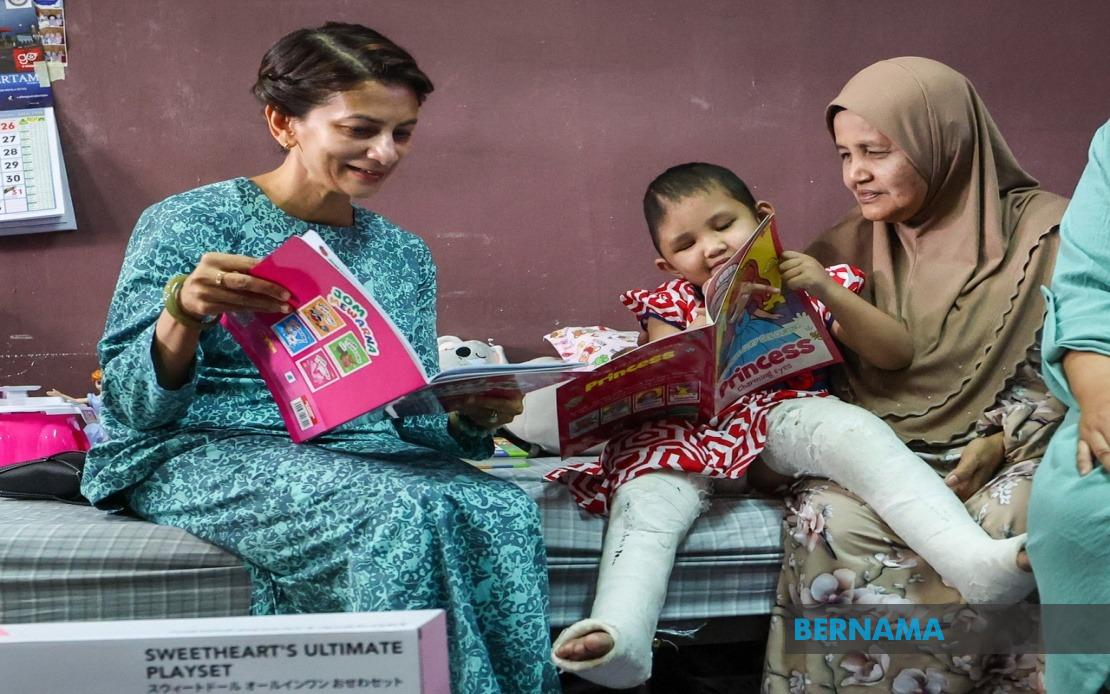
A three-year-old girl who miraculously survived one of Kedah's deadliest recent road accidents is making encouraging progress in her physical and emotional recovery, nearly six weeks after the tragedy claimed the lives of her entire immediate family. Aulia Sofea Ahmad Shafiq was discharged from Sultanah Bahiyah Hospital in Alor Setar on July 2 following nearly a month of intensive treatment for injuries sustained in the collision, and is now under the watchful care of her paternal aunt, Siti Nor Atikah Ahmad Syukri, 32, in the Bertam neighbourhood. The child's resilience has been described as remarkable by her caregivers, who initially held grave concerns about her prospects for survival given the severity of injuries inflicted during the impact.
The devastating accident occurred on June 7 at approximately 3.50 pm when a newly purchased Proton X50 sport utility vehicle collided with a heavy lorry while traveling from Penang toward Merbok. The vehicle carried Aulia Sofea and seven other family members, of whom only the young girl survived. Those who perished in the crash included her parents, Ahmad Shafiq Ahmad Shukri, 27, and Jamaliah Sannusi, 29; her two-month-old brother Ahmad Mikail; her paternal grandmother Nora Mhd Husin, 55; her uncle Ahmad Fahim Ahmad Shukri, 27; and her cousin Iskandar Affan Ibrahim, 7. The tragedy left a profound void not only in her immediate and extended family but within the wider community, as such multi-fatality accidents remain uncommon despite Malaysia's significant road safety challenges.
Despite her recovery trajectory, Aulia Sofea faces ongoing physical obstacles that will require sustained medical intervention and rehabilitation. Both of her legs sustained fractures during the impact, leaving her currently unable to walk or bear weight independently. Her aunt reported that the child remains scheduled for orthopaedic specialist appointments, with the next follow-up examination set for July 26, to assess the healing progress and determine the timeline for mobility restoration. The extended hospitalization and immobility have nonetheless not dampened her spirits, as caregivers note she displays the energy and playfulness typical of children her age when in the company of her cousins and family members.
Beyond the fractures, Aulia Sofea sustained severe injuries to her head and left eye that carry more uncertain long-term implications for her quality of life. Medical staff performed emergency surgery to preserve the eye itself following rupture of the eyeball during the collision, a procedure that may have prevented complete loss of the organ. However, the degree to which her vision will be restored remains undetermined, dependent upon further specialized assessments and the body's capacity to heal neurological damage. Her aunt explained that physicians have cautioned that the girl's sight could fully return, remain significantly impaired, or be lost entirely, with clarity on this critical question only emerging after comprehensive eye examinations are completed. This uncertainty adds a layer of anxiety for caregivers navigating both the immediate recovery phase and the prospect of potential lifelong sensory challenges.
The psychological dimensions of Aulia Sofea's recovery constitute another crucial dimension of her healing journey. She regained consciousness approximately two weeks after the crash, at which point medical and family authorities faced the delicate task of informing her that her parents had died in the accident. The child's comprehension of this loss at such a young age, combined with the physical limitations imposed by her injuries, presents significant emotional and developmental considerations for her caregivers. That she has maintained her cheerful demeanor and engagement with family members suggests resilience, though the full psychological impact of the trauma may unfold gradually over months and years, potentially warranting professional counseling and support.
In a gesture that underscored the significance accorded to the child's recovery by state leadership, the Raja Muda of Kedah, Tengku Sarafudin Badlishah ibni Al Aminul Karim Sultan Sallehuddin, accompanied by the Raja Puan Muda of Kedah, Che Puan Muda Zaheeda Mohamad Ariff, and their daughter Tunku Zara Bahiyah, visited Aulia Sofea at her aunt's residence. During the visit, the royal delegation presented both immediate material assistance to aid the family's caregiving responsibilities and a National Education Savings Scheme account established to secure the girl's educational future. Such interventions reflect a recognition within the state's highest echelons that individual tragedies arising from road accidents warrant compassionate response and institutional support for affected families navigating their aftermath.
Aulia Sofea's custodial arrangements reflect the determined commitment of her extended family to provide her with stability, security, and love despite the shattering loss of her parents. Her uncle Ibrahim Ghazali, 39, a lorry driver, and his wife Siti Nor Atikah intend to raise Aulia Sofea as their daughter, a decision rooted not merely in obligation but in the pre-existing bonds between the cousins. The couple are actively pursuing the legal guardianship procedures necessary to formalize this arrangement and ensure Aulia Sofea's protection and inheritance rights going forward. Ibrahim noted that his children and Aulia Sofea have always shared a particularly close relationship, and that the girl has already adapted well to her new home environment, surrounded by familiar faces and established familial connections that may ease the trauma of her loss.
The convergence of these circumstances—remarkable survival against overwhelming odds, ongoing physical rehabilitation with uncertain outcomes, psychological processing of profound family loss, and a supportive family structure stepping into the breach—places Aulia Sofea's story within the broader context of Malaysia's persistent road safety crisis. That a collision claiming six lives yet permitting one young survivor's recovery illustrates the arbitrary nature of automotive accidents and their capacity to devastate families in moments. While much attention flows toward vehicle safety technology and infrastructure improvements, the human dimension of accident recovery—the years of medical treatment, rehabilitation, emotional healing, and family reorganization that follows impact—remains less visible in policy discussions. Aulia Sofea's gradual return to function offers hope tempered by the knowledge that her family's suffering extends far beyond the hospital discharge date, encompassing the permanent loss of beloved members and the long road of adjustment ahead.

