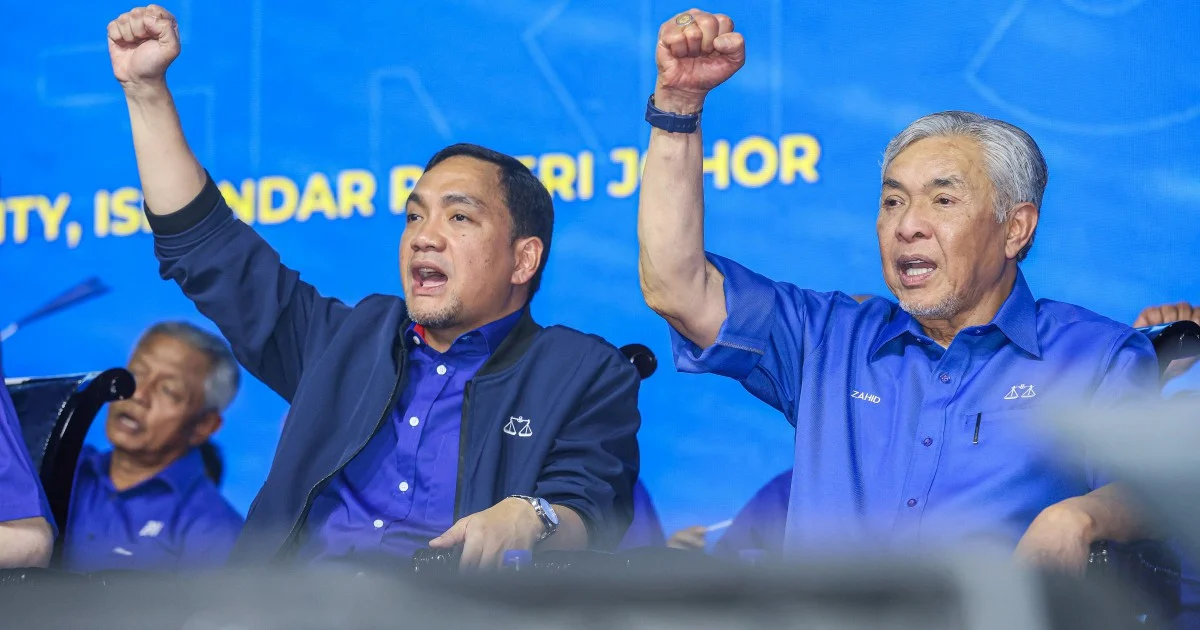
Barisan Nasional chairman Datuk Seri Dr Ahmad Zahid Hamidi has signalled a willingness to explore potential cooperation arrangements involving Pas and Parti Wawasan Negara (Wawasan) as the coalition prepares for the Johor state election, though he has stopped short of confirming any formal negotiations. Speaking in Simpang Renggam, Zahid acknowledged that ground-level discussions between the three political entities remain a viable option, even as BN maintains its public position of contesting independently in the southern state.
The cautious tone reflects the delicate political calculations facing Malaysia's ruling coalition as it navigates an increasingly fragmented electoral landscape. Johor remains a strategic battleground where BN's traditional support base continues to erode, with both Pas and newer entrants like Wawasan drawing voter attention through different political narratives. By keeping diplomatic channels open to lower-level engagement, Zahid appears to be hedging against the possibility that BN alone may struggle to secure the legislative majority needed to form government in the state.
Wawasan Negara, founded by former prime minister Mahathir Mohamad, has sought to position itself as a centrist alternative within Malaysia's polarized political environment. The party has gradually expanded its organizational footprint since its establishment, attracting dissidents from both BN and Pakatan Harapan-aligned parties who feel alienated by contemporary political dynamics. Its potential inclusion in coalition discussions would fundamentally alter the competitive dynamics in Johor, potentially fragmenting the opposition vote while simultaneously complicating BN's internal consensus.
Pas, by contrast, has transformed into a formidable political force over the past decade, particularly in rural and semi-urban constituencies where its Islamic messaging and grass-roots network have proven effective. The party's participation in the Perikatan Nasional federal arrangement has normalized cooperation across traditional ideological boundaries, creating precedent for pragmatic political arrangements that would have seemed unthinkable in Malaysia's earlier political era. From Zahid's perspective, engaging Pas at lower organizational levels allows BN to test compatibility without committing to formal pacts that could alienate its urban, secular-leaning supporters.
The distinction between formal party-level negotiations and informal ground-level discussions carries considerable significance in Malaysian political culture. Official coalition arrangements require transparency and internal party approval, opening leadership to criticism from party members and rival coalitions. Conversely, allowing local leaders and machinery operators to coordinate independently provides plausible deniability while enabling pragmatic vote management. This approach has been employed successfully in previous state elections where BN faced formidable challenges.
Johor's political situation has grown increasingly complicated following recent state elections elsewhere in Malaysia. BN's performance has been inconsistent, with some states showing resilience while others witnessed significant seat losses to either Pakatan Harapan or Perikatan Nasional. For Johor specifically, internal BN divisions have occasionally surfaced, with component parties occasionally pursuing divergent strategies. A broader coalition incorporating Pas and Wawasan could theoretically maximize vote consolidation among conservative and Malay-Muslim demographics while maintaining moderate voices through Wawasan's centrist positioning.
The timing of Zahid's statement suggests BN is actively exploring multiple scenarios for Johor. By publicly indicating openness to lower-level cooperation, the BN chairman signals to party cadres and potential partners that tactical flexibility remains available, potentially encouraging constructive engagement. Simultaneously, the non-committal language provides room to retreat if circumstances change or if BN's internal stakeholders object strenuously to any specific arrangement.
Such an approach carries risks, however. Opposition parties could exploit apparent BN indecision as evidence of weakness or lack of clear vision. Voters seeking clarity about government composition may find such ambiguity frustrating. Additionally, informal arrangements can create resentment among excluded parties or factions, potentially triggering defections or conflict within constituent organizations. The success of any lower-level coordination depends significantly on organizational discipline and shared strategic objectives.
For Malaysian voters and observers, particularly those in Johor, this development underscores the fluid nature of contemporary political alignments. The era of relatively rigid coalition blocks has given way to more flexible arrangements reflecting changing voter preferences and demographic shifts. Understanding these possibilities becomes essential for citizens seeking to anticipate election outcomes and comprehend post-election government formation scenarios.
The broader regional context matters as well. Electoral dynamics in Johor often influence political calculations across Southeast Asia's Malay-majority populations, with observers in neighboring Indonesia and Brunei sometimes looking to Malaysian developments for indicators of changing political trends. A successful BN-Pas-Wawasan coordination in Johor could establish templates applicable elsewhere, while failure might discourage similar experiments.
Looking ahead, Zahid's positioning allows BN considerable strategic flexibility as campaign preparations accelerate. The coalition can assess voter sentiment and ground conditions before committing to specific arrangements. If BN's own machinery proves sufficient to recapture lost ground, formal alliances become unnecessary. Conversely, if preliminary assessments suggest vulnerabilities, prior cultivation of lower-level relationships with Pas and Wawasan representatives would facilitate rapid coalition formation. This calculated ambiguity reflects mature political strategy in an environment where electoral outcomes remain genuinely unpredictable.

