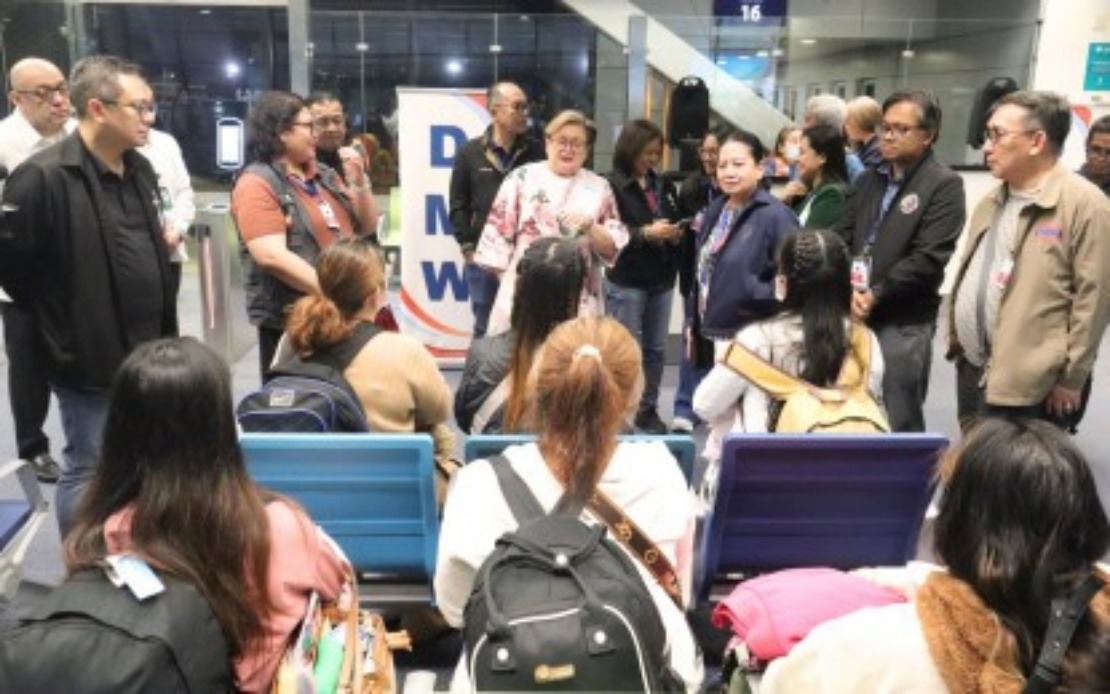
President Ferdinand R. Marcos Jr's direct intervention with Russian counterpart Vladimir Putin during a bilateral summit has yielded tangible results, with 24 Filipinos who spent roughly nine months in Russian custody arriving back home early Sunday. The repatriation marks a significant diplomatic win for Manila's efforts to protect its citizens abroad and underscores the utility of high-level engagement on migrant welfare issues. The returnees landed at Ninoy Aquino International Airport in two separate waves, having travelled via Bangkok, with Philippine Airlines operating both repatriation flights. The coordinated effort reflected government determination to address what officials characterised as a humanitarian concern affecting vulnerable overseas workers.
The group's detention in Irkutsk, a city in southeastern Siberia, had extended through nine months without formal charges being laid against them. This extended custody without specification of allegations raised concerns about procedural fairness and the individuals' legal protections. Initial investigations by Philippine authorities suggested that the detainees may have fallen victim to unlicensed labour recruiters who falsely promised employment opportunities before arranging their transport to Russia under circumstances that ultimately resulted in their apprehension. The circumstances paint a troubling picture of how vulnerable Filipinos seeking overseas employment can be exploited by networks operating across borders with limited accountability.
Marcos broached the matter with Putin during the ASEAN-Russia Commemorative Summit held in Kazan, treating the detainees' situation as a bilateral priority despite the geopolitical complexities characterising Russia's international standing. The Philippine president publicly acknowledged Putin's cooperation in facilitating the release, extending diplomatic courtesy in recognition of the Russian government's willingness to engage constructively on the issue. This approach, emphasising direct dialogue and personal intervention at the presidential level, proved effective in resolving a situation that might otherwise have languished in bureaucratic channels. The success demonstrates that diplomatic channels can remain functional even amid broader international tensions, particularly when humanitarian concerns are at stake.
The repatriation operation required coordination across multiple Philippine agencies, reflecting the whole-of-government approach adopted toward migrant welfare. The Department of Foreign Affairs, Department of Migrant Workers, and Overseas Workers Welfare Administration combined efforts to process the returnees and arrange their passage home. Foreign Affairs Secretary Maria Theresa Lazaro and Migrant Workers Secretary Hans Cacdac personally attended the airport reception, signalling the importance placed on the repatriates' safe arrival. Such high-level engagement during reception sends a message to Filipinos abroad that their government prioritises their wellbeing and will mobilise resources to assist those in distress.
The broader context of this case touches on vulnerabilities within Philippine migration systems that expose workers to exploitation. Illegal recruitment networks continue to operate across Southeast Asia and beyond, preying on individuals desperate for employment opportunities. These schemes typically exploit information asymmetries, with recruiters providing false promises about working conditions, wages, and legal status. Once workers are transported to foreign destinations, they become vulnerable to various forms of abuse, ranging from wage theft to trafficking situations. The detention of these 24 individuals appears connected to their unwitting involvement in such arrangements, making them victims of criminal networks rather than violators of law.
The investigation into their recruitment and travel to Russia continues as Philippine authorities seek to dismantle the networks responsible for their exploitation. Such investigations are crucial not only for holding perpetrators accountable but also for developing intelligence that protects future migrant workers. Coordination with Russian authorities and international law enforcement agencies may be necessary to trace the chain of actors involved in arranging these illegal movements. Understanding recruitment methods and identifying intermediaries can help agencies issue warnings and disseminate information about known operators within communities where recruitment occurs.
The returnees will receive reintegration support from government agencies, addressing immediate needs ranging from medical assessment to financial assistance and livelihood support. The trauma of nine months' detention, separation from family, and uncertainty about legal status can create lasting psychological and economic hardship. Counselling services and job placement assistance can help individuals rebuild their lives and restore confidence in seeking legitimate overseas employment. This support reflects a government commitment to treating these individuals not as security threats but as victims requiring assistance in recovery.
For Malaysian observers, the Filipino experience carries instructive lessons about migrant worker vulnerabilities in the region. Malaysia hosts one of Southeast Asia's largest populations of foreign workers, including many Filipino citizens employed in various sectors. The mechanisms that enabled 24 Filipinos to be trafficked to Russia operate similarly in Southeast Asia, where desperation for employment can override caution about legitimate credentials and employer backgrounds. Strengthening mechanisms to verify recruitment agents, enhance worker education about legitimate employment pathways, and create accessible complaint channels can reduce vulnerability across the region.
The diplomatic resolution also highlights how bilateral relationships and diplomatic engagement can serve practical purposes beyond ceremonial functions. Putin's cooperation in facilitating the release, despite international pressures and sanctions regime complications, suggests that humanitarian issues can remain depoliticised in certain contexts. Regional summits like the ASEAN-Russia Commemorative Summit provide forums where bilateral concerns can be raised constructively. For countries like the Philippines and Malaysia with significant diaspora populations, maintaining such diplomatic channels serves concrete national interests in protecting citizens abroad.
Looking forward, sustained attention to preventing illegal recruitment and protecting vulnerable workers will be essential. The return of these 24 individuals provides closure to one chapter of exploitation but represents a broader pattern affecting thousands. Regional cooperation on labour migration standards, better information sharing about known trafficking networks, and stronger penalties for illegal recruiters could collectively reduce the incidence of such situations. Philippine authorities' continued investigation into this case may generate intelligence valuable not only domestically but across the region, supporting collective efforts to protect migrant workers throughout Southeast Asia.