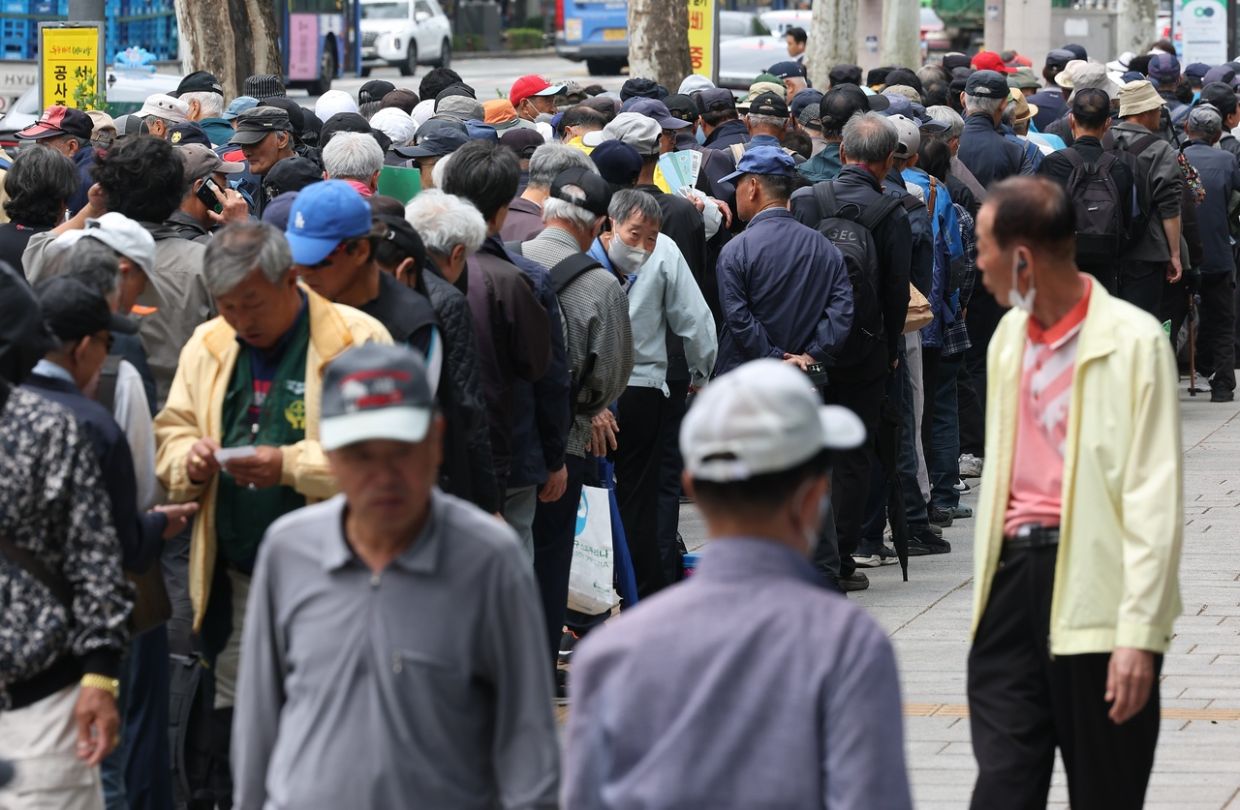
Seoul is stepping closer to expanding welfare benefits for its rapidly ageing population by considering free or subsidised bus travel for seniors aged 70 and older, complementing the existing decades-long system of free subway access for those aged 65 and above. The proposal has advanced through a Seoul Metropolitan Council committee and is headed for a full council vote this month, marking the latest round in an increasingly contentious debate over what the city can realistically afford as demographic shifts reshape its fiscal landscape.
Mayor Oh Se-hoon's administration, which championed the measure during June's local elections, frames the initiative as a logical extension of existing entitlements and a response to genuine inequities in how seniors access the city's transport network. The current system creates disparities whereby residents aged 65 and above enjoy free metro travel but must pay full fares on buses, placing particular hardship on elderly citizens living distant from subway corridors or dependent on bus networks for daily mobility. Under the proposed ordinance introduced by Seoul Metropolitan Council Transportation Committee Chair Lee Byeong-yoon, the city would gain the legal framework to establish a comprehensive senior bus-fare support scheme covering municipal and neighbourhood services, though express and intercity buses would remain excluded.
The financial calculus, however, reveals why scepticism persists among policy analysts and fiscal watchdogs. Seoul Metropolitan Council Secretariat projections estimate that universal free bus rides for all residents aged 70 and above would cost approximately 104.7 billion won in the first year alone, assuming a 2027 implementation date. More troublingly, these figures are expected to balloon significantly as Seoul's elderly demographic continues expanding. The city's population aged 70 and above is forecast to grow from roughly 1.27 million currently to 1.63 million by 2031, pushing annual programme costs toward 127.5 billion won. Over a five-year window, cumulative expenditure could reach nearly 579 billion won—a staggering commitment for a single demographic benefit in a city already facing substantial fiscal pressures from other sources.
These new costs would layer atop existing transportation subsidies that already consume enormous municipal resources. Seoul operates a semi-public bus system where the city compensates private operators for operating losses, with the municipal budget providing more than 450 billion won in annual support to bus companies. Simultaneously, Seoul Metro has for years highlighted the financial strain imposed by free transit for seniors, people with disabilities, and national merit recipients, claiming these exemptions generate transportation losses averaging 364.5 billion won annually. In 2025 alone, this figure reached 448.8 billion won, underscoring the magnitude of the city's existing commitment to subsidised travel for vulnerable groups.
Regional precedent suggests both the political appeal and the practical feasibility of such programmes. Daegu commenced free bus rides for seniors in 2023 and is gradually lowering the eligibility threshold from 75 to 70 by 2028, demonstrating a measured approach to implementation. Daejeon already offers free bus rides to residents aged 70 and older, while Incheon is launching similar provisions for those aged 75 and above this year. These neighbouring municipalities have essentially validated the concept, even if implementation timelines and eligibility thresholds vary. For Malaysian policymakers observing Seoul's experience, the proliferation of such benefits across major Asian cities signals a broader regional trend toward redistributing transport costs toward public budgets as populations age and income disparities widen.
yet the sustainability question remains acute. Recent court rulings on ordinary wages across South Korea are expected to significantly increase labour costs throughout the bus industry, adding fresh budgetary pressure precisely when the city contemplates expanding subsidies. Critics worry that the government cannot simultaneously maintain free subway rides for seniors, argue that it lacks capacity to fund those losses adequately, and then introduce equally expensive bus subsidies without confronting fundamental structural questions. The contradiction suggests either that Seoul's budgetary constraints have been overstated or that the city is prepared to absorb substantially higher transport spending without corresponding reductions elsewhere.
Policy experts caution that once implemented, such welfare programmes prove extraordinarily difficult to curtail, creating long-term fiscal commitments difficult to reverse. Sohn Jong-pil, a senior researcher at the Fiscal Reform Institute, emphasises that cash-type welfare programmes generate path dependency once established, meaning policymakers should approach such measures with considerable caution. He also notes that simply expanding support without strengthening the public accountability of the semi-public bus system—which operates under opaque cost structures and loss-absorption mechanisms—represents an incomplete solution that may perpetuate underlying inefficiencies rather than addressing them directly.
Proponents of the measure counter that doomsday scenarios regarding costs may reflect worst-case assumptions rather than likely implementation scenarios. The ordinance, they note, does not mandate unlimited free rides for all qualifying seniors. Instead, it grants Seoul's administration considerable discretion in determining eligibility criteria, benefit levels, and benefit delivery mechanisms. The city could, for instance, prioritise low-income seniors initially, cap the number of subsidised trips per person monthly, restrict support to off-peak travel times, or offer partial fare discounts rather than complete exemptions. This flexibility transforms the ordinance from a mandate for universal free bus travel into a more modest institutional framework establishing the legal basis for senior-focused transport support.
A Seoul city official reinforced this interpretation, characterising the measure as creating an enabling structure rather than prescribing immediate universal programmes. This framing matters considerably because it suggests the council's vote would not automatically trigger expensive system-wide implementation but rather establish tools for future policymakers to deploy as fiscal circumstances and demographic needs warrant. Such flexibility could allow the city to expand benefits gradually, testing cost impacts and operational implications before committing to full citywide programmes, a approach that balances Mayor Oh's campaign commitment against legitimate fiscal caution.
For Southeast Asian observers, Seoul's deliberations carry instructive lessons about managing elderly welfare in rapidly ageing urban societies. Malaysia's own ageing demographic—with projections suggesting steady growth in the senior population through coming decades—will similarly prompt questions about transport affordability and accessibility for older residents. Seoul's experience demonstrates both the genuine equity arguments for comprehensive senior transport benefits and the formidable fiscal challenges such expansion entails. The city's wrestling with these tensions suggests that regional policymakers must think carefully about sustainability, cost-control mechanisms, and phased implementation rather than pursuing comprehensive programmes that assume unlimited government capacity.
The Seoul Metropolitan Council's upcoming vote will likely provide approval, reflecting the political appeal of elderly welfare expansion in cities where seniors constitute 21.2 per cent of the population and hold significant voting power. But whether the ordinance ultimately proves to be a genuine policy reform or merely a symbolic gesture whose implementation remains indefinitely deferred depends on subsequent decisions about programme design and funding mechanisms. Seoul's experience highlights that legal frameworks for welfare expansion constitute merely the beginning of policy implementation, not its conclusion, and that the truly consequential fiscal decisions lie ahead.