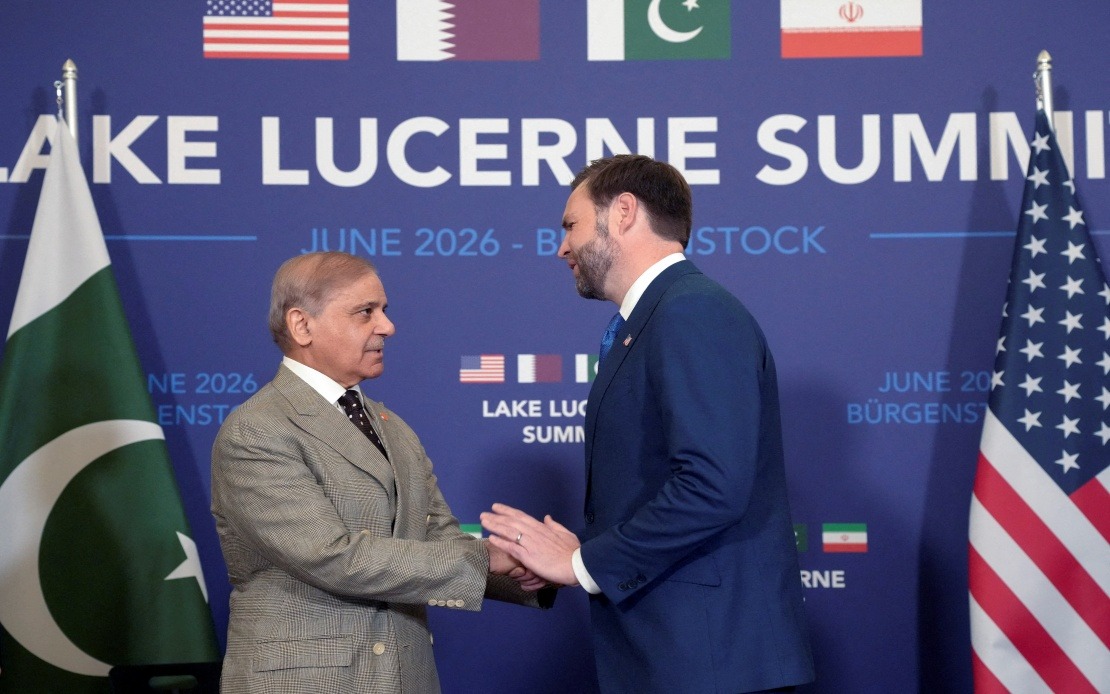
Diplomatic efforts to resolve the Iranian nuclear crisis intensified in Switzerland when high-level delegations from the United States and Pakistan convened at a resort in Burgenstock. The gathering brought together Vice President JD Vance, special envoys Steve Witkoff and Jared Kushner, alongside Pakistan's Prime Minister Shehbaz Sharif and Pakistan Army Chief Field Marshal Asim Munir. The bilateral engagement occurred on the sidelines of broader multinational nuclear negotiations involving Iran, the United States, and mediator nations Pakistan and Qatar.
The timing of the US-Pakistan meeting underscores the geopolitical complexity surrounding attempts to stabilise regional tensions through a comprehensive agreement on Iran's nuclear programme. Pakistan's presence as both a mediator and party to separate discussions reflects its strategic position in South and Central Asian affairs. As a nation sharing borders with Iran and maintaining deep security ties with the United States, Pakistan occupies a delicate diplomatic position where its interests span energy security, regional stability, and alliance commitments.
Preceding this gathering, Washington and Tehran had taken a significant step by executing a memorandum of understanding that established parameters for ending military hostilities that commenced on February 28. The framework represents the culmination of months of indirect negotiations channelled through intermediary states. The agreement's scope extends beyond mere ceasefire provisions to encompass concrete steps for confidence-building measures between two long-standing adversaries whose tensions have repeatedly threatened to destabilise global energy markets and regional security architecture.
Central to the memorandum are provisions addressing the Strait of Hormuz, one of the world's most critical maritime chokepoints through which approximately one-third of seaborne traded oil transits annually. The accord mandates that the United States will lift its naval blockade restricting Iranian shipping, whilst Tehran commits to restoring maritime commerce through the strategic waterway. For Southeast Asian economies including Malaysia, which rely heavily on consistent energy supplies and unimpeded maritime trade routes, resolution of this dispute carries substantial implications for regional prosperity and supply chain stability.
The nuclear dimension of the broader accord requires separate treatment through dedicated negotiations scheduled to conclude within sixty days. Under the tentative framework, Iran formally renounces any intention to pursue nuclear weapons development, addressing longstanding international concerns about Tehran's atomic ambitions. This commitment, however contingent upon further agreements, represents a significant concession by the Iranian government and signals potential movement on the nuclear file that has deadlocked international diplomacy for over a decade.
From Tehran's perspective, the anticipated payoff for compliance involves comprehensive sanctions relief. The economic isolation imposed through successive rounds of international and unilateral American penalties has severely constrained Iran's oil exports, banking access, and technology transfers. Normalisation of trade relationships and restoration of Iran's capacity to export hydrocarbons globally would provide substantial economic stimulus to a nation experiencing persistent inflation and currency depreciation. However, the reciprocal American demand for verified nuclear constraint suggests that trust remains tenuous and verification mechanisms will require rigorous implementation.
Pakistan's role in this negotiating architecture warrants particular attention for regional observers. Islamabad's participation as a mediator reflects both its diplomatic standing and its vested interests in preventing escalation that could destabilise its own western border regions. Pakistani officials maintain concerns about terrorist organisations operating across the Iran-Pakistan frontier and recognise that sustained conflict between Iran and external powers could create ungoverned spaces exploited by extremist groups. Furthermore, Pakistan's energy security depends partly on potential gas imports from Iran through proposed pipeline infrastructure, making normalisation of US-Iran relations strategically important.
The technical-level negotiations scheduled to proceed in Burgenstock represent the granular work of translating high-level political commitments into operational realities. These sessions, deliberately conducted away from public scrutiny, involve specialists examining verification protocols, sanctions unwinding mechanisms, and sequencing of reciprocal obligations. The presence of both mediator nations alongside the primary parties suggests a multilateral framework designed to ensure mutual accountability and prevent either side from unilaterally claiming compliance disputes.
For Malaysia and broader Southeast Asia, the prospective stabilisation of Iran-US relations carries several implications. Reduced Middle Eastern volatility would moderate global crude oil price volatility, benefiting energy-importing economies throughout the region. Enhanced Iranian economic integration could expand trade opportunities for Southeast Asian manufacturers and service providers previously constrained by sanctions restrictions. Simultaneously, any agreement reducing military tensions in the Middle East frees resources and attention for major powers to engage more constructively on Indo-Pacific security issues where Southeast Asian nations have direct stakes.
The diplomatic engagement in Burgenstock demonstrates how regional powers like Pakistan maintain relevance in twenty-first century international affairs by positioning themselves as bridge-builders between antagonistic major powers. Pakistan's ability to host American and Iranian officials simultaneously, despite historical tensions with both, reflects sophisticated diplomatic balancing. For other Southeast Asian nations, Pakistan's example illustrates the strategic value of cultivating relationships across competing international blocs whilst maintaining principled stances on core regional concerns.
The coming weeks will reveal whether the framework established through these negotiations can withstand implementation pressures and domestic political opposition on both sides. The sixty-day timeline for nuclear agreement negotiations suggests deliberate urgency, whilst the staged approach to sanctions relief implies mutual suspicion requiring verification confidence-building. Success would mark a significant geopolitical recalibration with reverberations extending throughout Asia, whilst failure could reignite regional conflicts with consequences affecting global energy markets and maritime security upon which Southeast Asia depends.
%22%2F%3E%3C%2Fpattern%3E%3C%2Fdefs%3E%3Crect%20width%3D%22100%25%22%20height%3D%22100%25%22%20fill%3D%22url(%23ph29hsg)%22%2F%3E%3Crect%20width%3D%22100%25%22%20height%3D%22100%25%22%20fill%3D%22url(%23ph29hsp)%22%2F%3E%3Ctext%20x%3D%2250%25%22%20y%3D%2250%25%22%20text-anchor%3D%22middle%22%20dominant-baseline%3D%22central%22%20fill%3D%22rgba(255%2C255%2C255%2C0.95)%22%20font-family%3D%22Georgia%2C%20'Times%20New%20Roman'%2C%20serif%22%20font-weight%3D%22700%22%20font-size%3D%22272%22%20letter-spacing%3D%22-0.02em%22%3EMITRA%3C%2Ftext%3E%3C%2Fsvg%3E)
%22%2F%3E%3C%2Fpattern%3E%3C%2Fdefs%3E%3Crect%20width%3D%22100%25%22%20height%3D%22100%25%22%20fill%3D%22url(%23phvxcwg)%22%2F%3E%3Crect%20width%3D%22100%25%22%20height%3D%22100%25%22%20fill%3D%22url(%23phvxcwp)%22%2F%3E%3Ctext%20x%3D%2250%25%22%20y%3D%2250%25%22%20text-anchor%3D%22middle%22%20dominant-baseline%3D%22central%22%20fill%3D%22rgba(255%2C255%2C255%2C0.95)%22%20font-family%3D%22Georgia%2C%20'Times%20New%20Roman'%2C%20serif%22%20font-weight%3D%22700%22%20font-size%3D%22320%22%20letter-spacing%3D%22-0.02em%22%3ERim%3C%2Ftext%3E%3C%2Fsvg%3E)