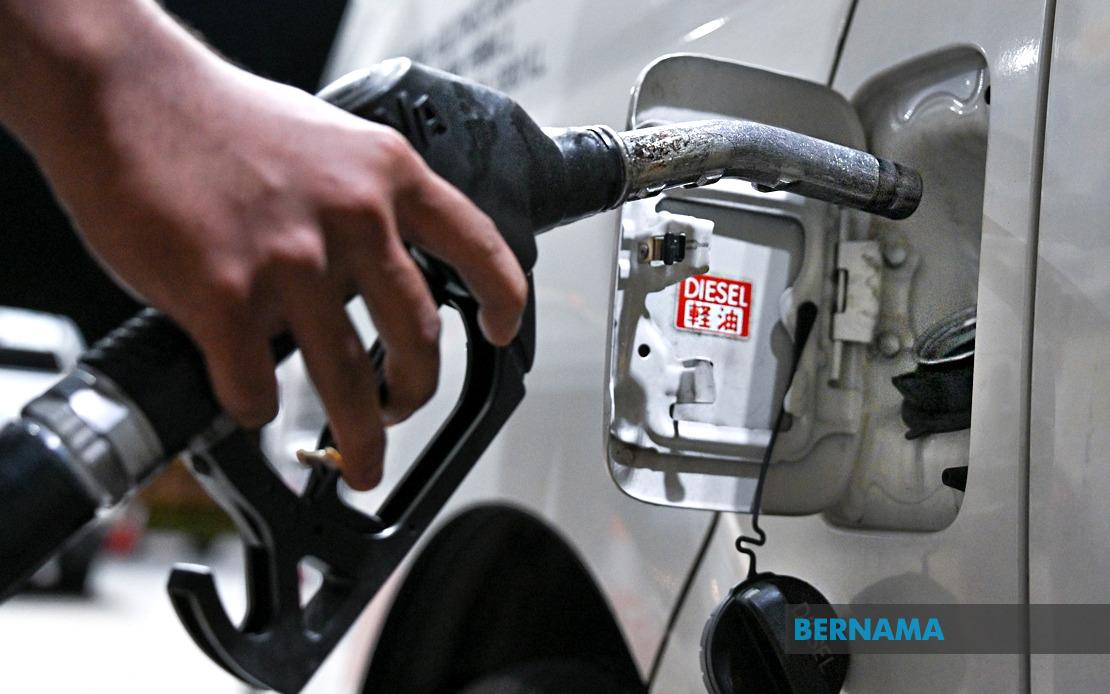
Prime Minister Datuk Seri Anwar Ibrahim has announced a reduction in subsidised diesel pricing to RM2.10 per litre beginning July 2026, marking a significant adjustment to the nation's fuel subsidy framework. The announcement, made during a government briefing, positions this measure as part of the broader MADANI Government's approach to fuel reform, mirroring the verification mechanism already established under the BUDI MADANI RON95 (BUDI95) petrol subsidy programme. Eligibility for the cheaper diesel will be determined through MyKad verification, ensuring the subsidy benefits only Malaysian citizens.
The new pricing structure represents a departure from the current patchwork system where different regions pay varying amounts for diesel. Peninsular Malaysia currently faces unsubsidised retail prices of RM4.37 per litre, whilst Sabah, Sarawak, and Labuan enjoy subsidised rates of RM2.15 per litre. Under the reformed system announced today, all Malaysians nationwide will have access to identical subsidised diesel pricing of RM2.10 per litre, effectively creating a uniform fuel subsidy policy across the federation. The Ministry of Finance confirmed that this harmonisation extends to the eastern Malaysian states, narrowing the regional pricing gap that has long existed.
For Malaysia's transport and logistics sectors, which have grappled with volatile fuel costs, the announcement offers tangible relief. Tan Chee Keong, a small-scale contractor from Johor Bahru who operates a four-wheel drive vehicle for maintenance and construction material delivery, views the measure as both positive and equitable. He emphasised that fuel constitutes one of his largest operational expenditures, and a structured subsidy system with safeguards against abuse would contribute meaningfully to his business sustainability. His perspective reflects widespread concerns among proprietors of small and medium-sized enterprises that fuel cost volatility directly erodes profit margins and competitiveness.
The agriculture sector, equally dependent on fuel for daily operations, stands to benefit considerably from the pricing adjustment. R. Mageswaran, a vegetable farm operator from Sungai Siput, Perak, relies on van transportation to distribute produce to markets and food establishments nearly every day. Lower diesel costs directly translate to reduced logistics expenses for agricultural businesses like his, potentially allowing savings to be passed downstream to retailers and consumers. The stability offered by a fixed subsidised price provides predictability for farming operations typically characterised by thin margins and seasonal revenue fluctuations. Agricultural stakeholders have historically advocated for fuel subsidy protections, recognising that transport costs represent a critical factor in the viability of farm-to-market supply chains.
Night market traders and urban small-business operators constitute another constituency likely to experience material benefits from the price reduction. Mohd Faizal Ahmad, a 43-year-old night market trader based in Shah Alam, Selangor, described the announcement as long-awaited news providing relief for fuel-dependent workers. He specifically welcomed the restriction of subsidies to Malaysian citizens verified through MyKad, viewing this targeting mechanism as ensuring assistance reaches genuinely eligible beneficiaries rather than leaking to ineligible users or being diverted through fraudulent channels. His comments underscore public appetite for subsidy programmes designed with robust eligibility controls that prevent abuse whilst maintaining accessibility for those truly dependent on subsidised fuel.
The implementation timeline of July 2026 provides the government and relevant agencies several months to operationalise the MyKad verification system across petrol stations nationwide. Second Finance Minister Datuk Seri Amir Hamzah Azizan is scheduled to elaborate on operational details the following day, addressing questions regarding how verification will function at point-of-sale, whether technological infrastructure requirements exist, and how the transition from the current system will be managed. The sequencing of announcements suggests careful coordination between the Prime Minister's office and the Finance Ministry to ensure comprehensive communication of policy intent and implementation mechanics.
The subsidised diesel programme aligns conceptually with the existing BUDI95 petrol subsidy framework, which has successfully implemented MyKad-based eligibility verification for unleaded petrol prices. Extending a parallel system to diesel leverages institutional knowledge and existing technological infrastructure, theoretically reducing implementation complexity. However, diesel's broader user base—encompassing commercial vehicles, agricultural machinery, generators, and industrial equipment—may present verification challenges distinct from the primarily personal-vehicle focus of petrol subsidies. Ensuring seamless implementation across this diverse range of diesel applications represents a key operational consideration for authorities.
Regional implications merit consideration, particularly for Sabah and Sarawak, where diesel subsidies have historically been maintained to support economic development and reduce cost-of-living pressures. The harmonisation of prices whilst actually lowering the Peninsular Malaysia unsubsidised rate of RM4.37 to the subsidised rate of RM2.10 represents substantial relief for peninsular users, though eastern Malaysian states will transition from their existing RM2.15 subsidised rate to RM2.10. This modest downward adjustment for Sabah and Sarawak maintains their subsidy advantage whilst creating nationwide pricing equity, potentially serving as a diplomatic balancing measure.
Industrial and commercial sectors reliant on diesel for electricity generation merit attention, as fuel cost reductions typically flow through to electricity prices in states dependent on diesel-fired generation capacity. Rural electrification schemes and off-grid communities in Sabah, Sarawak, and Peninsular Malaysia may experience downstream benefits from lower diesel costs affecting power generation expenses. The long-term macroeconomic implications of harmonised fuel pricing extend to transportation corridors, logistics hubs, and manufacturing clusters where diesel represents a significant input cost affecting overall competitiveness and consumer pricing.
The subsidy mechanism's sustainability depends on government fiscal capacity and international petroleum price movements. The announcement does not address whether the RM2.10 price point represents a long-term target or a transitional figure, nor does it clarify contingency arrangements should global crude prices spike significantly. The MADANI Government's commitment to fuel subsidy reform whilst maintaining accessible pricing for ordinary Malaysians reflects the political reality that fuel costs remain acutely sensitive to public sentiment and electoral considerations.
Stakeholder reception thus far emphasises the programme's equity dimensions and targeting precision. Business operators across diverse sectors have welcomed the measure's recognition that fuel constitutes a fundamental business input requiring price stability and affordability protections. The MyKad verification approach addresses fraud concerns whilst maintaining accessibility, theoretically ensuring subsidies benefit intended populations rather than generating windfall gains for ineligible users or creating arbitrage opportunities through cross-border fuel purchases. Public confidence in the programme's fairness and effectiveness will ultimately depend on transparent, efficient implementation and demonstrated protection of the subsidy from abuse.