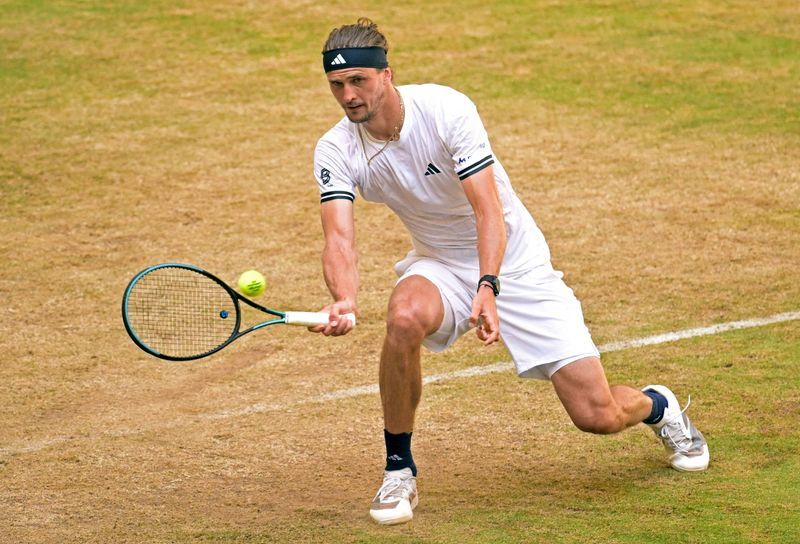
World number three Alexander Zverev has attributed his semi-final exit from the Halle Open to a malfunctioning glucose sensor that severely compromised his physical condition during the match against American Taylor Fritz on Saturday. The German tennis star went down 6-7(4) 6-4 7-5 in a closely contested encounter that stretched beyond two hours and thirty-nine minutes, with the technical failure creating a cascade of complications that left him struggling to maintain his energy levels throughout the opening stages of the contest.
Zverev, who arrived at the prestigious German grass-court tournament carrying a difficult personal record against Fritz—having lost their previous six encounters—explained that the malfunction created a dangerous miscalculation in his insulin management. The faulty sensor delivered grossly inflated glucose readings, falsely indicating dangerously high blood sugar levels when in fact they were substantially lower. Acting on these erroneous signals, Zverev administered significantly more insulin than his condition actually warranted, creating a genuine medical crisis that manifested physically on court.
The consequences of this miscalculation became immediately apparent once play commenced. During the opening forty-five minutes of the match, Zverev found himself forced to consume approximately three hundred and fifty grams of sugar in a desperate attempt to stabilise his blood glucose levels. Despite these interventions, he continued experiencing profound physical distress, with the young champion describing his sensation during this period in blunt terms. The sustained physiological challenge of managing an unfolding medical emergency whilst simultaneously competing at elite professional level against a formidable opponent left him feeling acutely unwell throughout critical phases of the encounter.
Despite the significant handicap imposed by his medical situation, Zverev demonstrated characteristic sportsmanship in his post-match remarks, generously acknowledging Fritz's superior performance on the day. Rather than dwelling exclusively on the circumstances that undermined his own display, the German competitor recognised that his American opponent had earned the victory through genuinely effective tennis. This measured perspective reflects the maturity with which Zverev has approached his long-standing Type 1 diabetes diagnosis, received when he was merely four years old, and his determined integration of sophisticated medical management into his professional athletic career.
For nearly a decade, Zverev has relied upon advanced Medtronic glucose monitoring technology to maintain metabolic stability during the extreme physical and mental demands of professional tennis competition. The sensor-based system has proven sufficiently reliable that this represents an unprecedented failure in his experience. Zverev emphasised that across approximately nine years of continuous usage beginning around 2016 or 2017, he had never previously encountered such a significant deviation between sensor readings and actual glucose values. The magnitude of the error caught him entirely unprepared, despite his customary diligence in managing his condition.
The incident raises important questions about the reliability margins built into medical devices, particularly those deployed in high-stakes athletic environments where accuracy carries direct consequences for performance and player welfare. Zverev's experience—where the sensor produced readings indicating the opposite physiological status from reality—suggests potential failure modes that manufacturers and users may not have fully anticipated or addressed. For other athletes managing chronic conditions through wearable medical technology, the case underscores the necessity of maintaining backup systems and alternative monitoring methods to catch such critical failures before they escalate into dangerous situations on the competitive stage.
Looking ahead to the grass-court season's marquee event, Zverev appeared unconcerned about the implications of this technical failure for his participation at Wimbledon, scheduled to commence on June 29 and conclude on July 12. He expressed confidence that the sensor malfunction represented an isolated incident rather than evidence of systemic problems with his monitoring apparatus. This measured optimism appears justified given the device's lengthy history of reliable performance prior to the Halle tournament, and presumably Medtronic will have investigated the root cause of the failure to prevent recurrence.
The Halle defeat marks a significant interruption in Zverev's trajectory following his triumph at the French Open, one of the sport's four major championships. Coming to Halle ranked third globally and carrying recent momentum from his Grand Slam success, the German was positioned among the tournament's strongest contenders. His loss to Fritz, whilst disappointing, gains somewhat different interpretative weight when properly contextualised within the extraordinary medical circumstances that compromised his preparation and physical capacity during the semi-final encounter.
Fritz's victory also carries significance beyond the immediate tournament context, representing a decisive win against one of the world's most accomplished active competitors and further establishing the American's credentials as a rising force within men's professional tennis. The thirty-eight minute tiebreaker victory in the opening set proved decisive in determining the match's trajectory, giving Fritz the psychological advantage that carried through the subsequent two sets. For Fritz's career progression, the Halle triumph constitutes a marquee scalp that strengthens his standing within the sport's upper echelon.
Zverev's composed handling of the situation—refusing to make excuses while simultaneously explaining the genuine medical factors that contributed to his defeat—reflects his maturation as a player and as a public figure. Many competitors might have permitted legitimate frustration with equipment failure to dominate their immediate post-match commentary. Instead, Zverev maintained perspective, acknowledged his opponent's superior play, and provided transparent information about the medical crisis he navigated. This approach reinforces his standing as someone who has successfully integrated chronic disease management into the most demanding professional sporting environment.
%22%2F%3E%3C%2Fpattern%3E%3C%2Fdefs%3E%3Crect%20width%3D%22100%25%22%20height%3D%22100%25%22%20fill%3D%22url(%23phtw8wg)%22%2F%3E%3Crect%20width%3D%22100%25%22%20height%3D%22100%25%22%20fill%3D%22url(%23phtw8wp)%22%2F%3E%3Ctext%20x%3D%2250%25%22%20y%3D%2250%25%22%20text-anchor%3D%22middle%22%20dominant-baseline%3D%22central%22%20fill%3D%22rgba(255%2C255%2C255%2C0.95)%22%20font-family%3D%22Georgia%2C%20'Times%20New%20Roman'%2C%20serif%22%20font-weight%3D%22700%22%20font-size%3D%22151%22%20letter-spacing%3D%22-0.02em%22%3EMalaysian%3C%2Ftext%3E%3C%2Fsvg%3E)
%22%2F%3E%3C%2Fpattern%3E%3C%2Fdefs%3E%3Crect%20width%3D%22100%25%22%20height%3D%22100%25%22%20fill%3D%22url(%23ph2lji3g)%22%2F%3E%3Crect%20width%3D%22100%25%22%20height%3D%22100%25%22%20fill%3D%22url(%23ph2lji3p)%22%2F%3E%3Ctext%20x%3D%2250%25%22%20y%3D%2250%25%22%20text-anchor%3D%22middle%22%20dominant-baseline%3D%22central%22%20fill%3D%22rgba(255%2C255%2C255%2C0.95)%22%20font-family%3D%22Georgia%2C%20'Times%20New%20Roman'%2C%20serif%22%20font-weight%3D%22700%22%20font-size%3D%22320%22%20letter-spacing%3D%22-0.02em%22%3ECare%3C%2Ftext%3E%3C%2Fsvg%3E)
%22%2F%3E%3C%2Fpattern%3E%3C%2Fdefs%3E%3Crect%20width%3D%22100%25%22%20height%3D%22100%25%22%20fill%3D%22url(%23ph3rh1xg)%22%2F%3E%3Crect%20width%3D%22100%25%22%20height%3D%22100%25%22%20fill%3D%22url(%23ph3rh1xp)%22%2F%3E%3Ctext%20x%3D%2250%25%22%20y%3D%2250%25%22%20text-anchor%3D%22middle%22%20dominant-baseline%3D%22central%22%20fill%3D%22rgba(255%2C255%2C255%2C0.95)%22%20font-family%3D%22Georgia%2C%20'Times%20New%20Roman'%2C%20serif%22%20font-weight%3D%22700%22%20font-size%3D%22320%22%20letter-spacing%3D%22-0.02em%22%3EIran%3C%2Ftext%3E%3C%2Fsvg%3E)