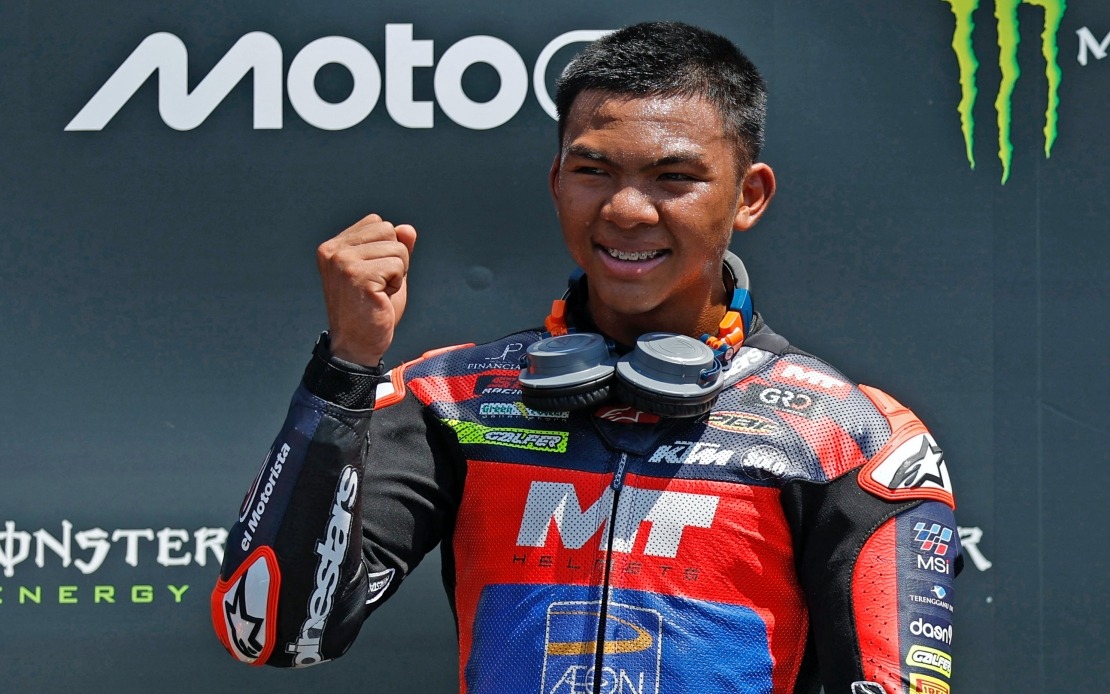
Malaysian motorsport achieved a significant milestone on the international stage when 18-year-old Hakim Danish Ramli secured victory at the Czech Moto3 Grand Prix held at Brno Circuit, prompting Prime Minister Datuk Seri Anwar Ibrahim to publicly acknowledge the achievement. The success represents a watershed moment for Malaysian two-wheeled racing, breaking a ten-year drought in the Moto3 category at the highest levels of international competition.
Riding for the AEON Credit-MT Helmets-MSi outfit, Hakim Danish's triumph at Brno carries particular significance given the scarcity of Malaysian representations on podium finishes in recent seasons. The teenager's performance underscores the depth of talent emerging from Malaysia's motorsport academies and development programmes, despite the country's relatively limited resources compared to established racing nations. His win signals that Malaysian riders possess the technical acumen and competitive drive necessary to succeed in World Championship racing.
Prime Minister Anwar took to social media to commend the young rider, stating "Congratulations Hakim Danish! The journey is still long, carry on with more wins," reflecting the government's recognition of sporting excellence as a source of national pride. The message extends beyond mere ceremonial acknowledgement, indicating official support for grassroots motorsport development in the country. Such endorsements from the highest political office can bolster funding and sponsorship opportunities for aspiring riders.
Prior to his Czech victory, Hakim Danish had demonstrated consistent competitive form during the season, securing a podium finish at the Italian Grand Prix held at Mugello circuit where he concluded in third position. That result suggested the rider possessed the potential to challenge for wins, with the Brno triumph validating his progression towards becoming a race winner rather than merely a points-scorer. The ability to translate mid-pack performances into victories typically marks the transition from competitive newcomer to established contender.
The significance of this achievement becomes apparent when examining Malaysia's recent record in Moto3 competition. The nation's previous success in the category came through Khairul Idham Pawi, who won races at the Argentina and German Grand Prix in 2016. A decade-long absence from the Moto3 winner's circle reflects broader challenges facing Malaysian motorsport in maintaining representation at elite levels. Infrastructure limitations, financial constraints, and the gravitational pull of established racing programmes in Europe and Asia have collectively made it difficult for Malaysian riders to sustain competition at the world championship level.
Hakim Danish's achievement therefore represents more than an individual triumph; it demonstrates that Malaysian riders remain capable of breaking through at the highest tiers of international motorsport. At just eighteen years old, he has already surpassed many of his peers in terms of tangible results, suggesting potential for further progression through the traditional pathway of Moto3 towards Moto2 and eventually MotoGP. The development trajectory established by successful predecessors provides a roadmap for sustained involvement in world championship racing.
The structural support surrounding a rider of Hakim Danish's calibre typically extends beyond his immediate team. National motorsport federations, private sponsors, and increasingly government backing play crucial roles in enabling young talents to access the financial and logistical resources necessary for competition at this level. His victory may catalyse increased investment in Malaysian motorsport infrastructure and talent development programmes, creating a multiplier effect that produces additional competitive riders in subsequent years.
Regionally, Malaysia's resurgence in Moto3 carries implications for Southeast Asian motorsport broadly. The region has historically produced competitive riders, yet Malaysia specifically has struggled to maintain consistent presence in world championships across multiple categories. This win provides ammunition for advocates seeking to expand racing academies and attract international teams to establish bases in Malaysia. The country's existing infrastructure, relative stability, and geographic location between Europe and Asia offer compelling arguments for such investment.
Looking forward, the immediate focus will be Hakim Danish's continued performance trajectory throughout the remainder of the Moto3 season. Sustaining competitiveness and adding further victories would consolidate his credentials as a prospect worthy of elevation to higher categories. The pathway to MotoGP typically requires demonstration of consistency across multiple seasons, suggesting that one victory, however historic, represents merely the commencement of what should ideally become an extended competitive career. Malaysian motorsport observers will monitor his development closely as indicators of the country's future potential.