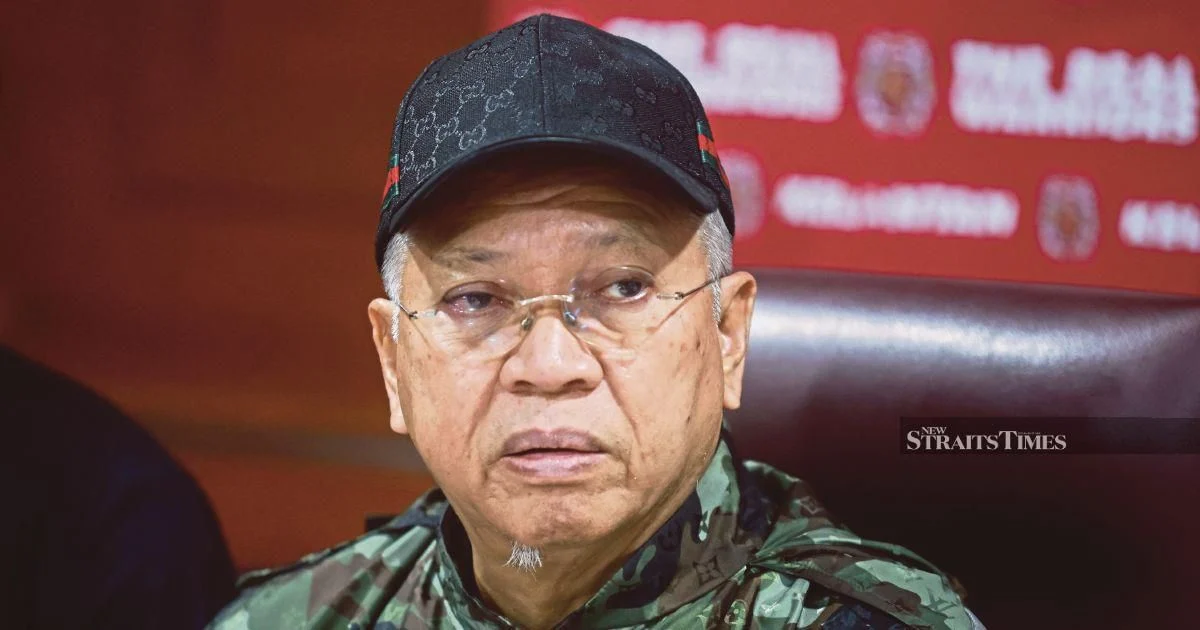
Tan Sri Annuar Musa acknowledged in Kota Baru that he had undertaken several personal initiatives to bridge the increasingly acrimonious divisions separating PAS from the competing camps within Bersatu, attempts ultimately unsuccessful in stabilising the Perikatan Nasional coalition. The admission underscores mounting tensions that have plagued the political alliance, with internal schisms threatening to undermine a bloc that has wielded significant influence in Malaysian politics since 2020.
The Perikatan Nasional has long positioned itself as a unifying force bringing together conservative and Malay-Muslim centric parties under a single banner. Yet the relationship between its heavyweights—particularly the Islamic religious party PAS and the Bersatu splinters—has grown increasingly fraught, with ideological differences and competing leadership ambitions creating fault lines difficult to mend. Annuar's public concession that reconciliation attempts had failed represents a rare moment of candour from coalition leadership regarding the severity of these internal strains.
Annuar's role as a senior figure within the coalition gave him credibility as a potential mediator. His background spanning multiple political parties and his reputation for pragmatic deal-making positioned him well to navigate the complex dynamics between PAS's religious-nationalist orientation and the various factions within Bersatu that have emerged following the party's internal upheavals. The fact that even his intervention proved insufficient speaks to the depth and structural nature of the disagreements at hand.
The friction between PAS and Bersatu extends beyond mere personality clashes or tactical disagreements. Fundamental questions about the coalition's strategic direction, the distribution of ministerial positions, and contested interpretations of Islamic governance principles have created substantive policy divergences. PAS has historically advocated for implementation of stricter religious laws and greater Sharia jurisprudence, while certain Bersatu factions have championed more pluralistic approaches, creating inherent tension within a supposedly unified platform.
Bersatu's own structural instability has compounded difficulties in forging consensus. The party has fractured into competing power centres, with different leaders commanding distinct constituencies and resources. This fragmentation makes coalition management exponentially more complicated, as no single interlocutor can deliver unified agreement on Bersatu's behalf. Annuar's failure to reconcile differences may therefore reflect not simply obstinacy from any single party but rather the multiplication of veto players whose individual consent becomes necessary for any accommodation.
The broader Malaysian political landscape has provided additional context for these tensions. The shifting dynamics between government and opposition, changing electorate preferences, and the ongoing influence of factional competition within UMNO have all affected Perikatan Nasional's operational environment. Coalition partners find themselves constantly recalibrating their positioning in response to these external pressures, often at the expense of internal solidarity.
For Malaysian political observers, the significance of Annuar's disclosure lies partly in what it reveals about governance challenges in coalition politics. Malaysia's multi-ethnic and multi-religious society requires governing arrangements capable of accommodating diverse perspectives while maintaining functional coherence. The Perikatan Nasional's struggles illustrate how nationalist or religiously-anchored coalitions can develop their own internal contradictions, particularly when partner organisations maintain divergent institutional interests and ideological commitments.
The implications extend across regional politics as well. Southeast Asia has watched Malaysian coalition dynamics with considerable interest, as the region grapples with similar tensions between religious nationalism and democratic pluralism. How Malaysian political actors manage these divisions offers lessons—and warnings—for neighbouring countries navigating comparable ideological and structural pressures within their own political systems.
Annuar's admission suggests the coalition may be entering a new phase. Rather than attempting to paper over differences with carefully managed statements and theatrical displays of unity, senior figures now acknowledge the reality of fundamental disagreement. This transparency, while damaging to the coalition's public image, may eventually prove necessary for developing more sustainable approaches to managing internal diversity. Whether such acknowledgment translates into structural reforms or merely signals an impending breakdown remains to be determined.
The coming months will test whether the Perikatan Nasional can develop new institutional mechanisms for managing partner conflicts, or whether the coalition will fragment further. Other coalition members—including the various component parties that have remained peripheral to headline coverage—may find their roles becoming increasingly pivotal as the major players attempt to navigate these treacherous political waters. The success or failure of these realignments will significantly influence Malaysia's political trajectory heading into future electoral cycles and governance arrangements.