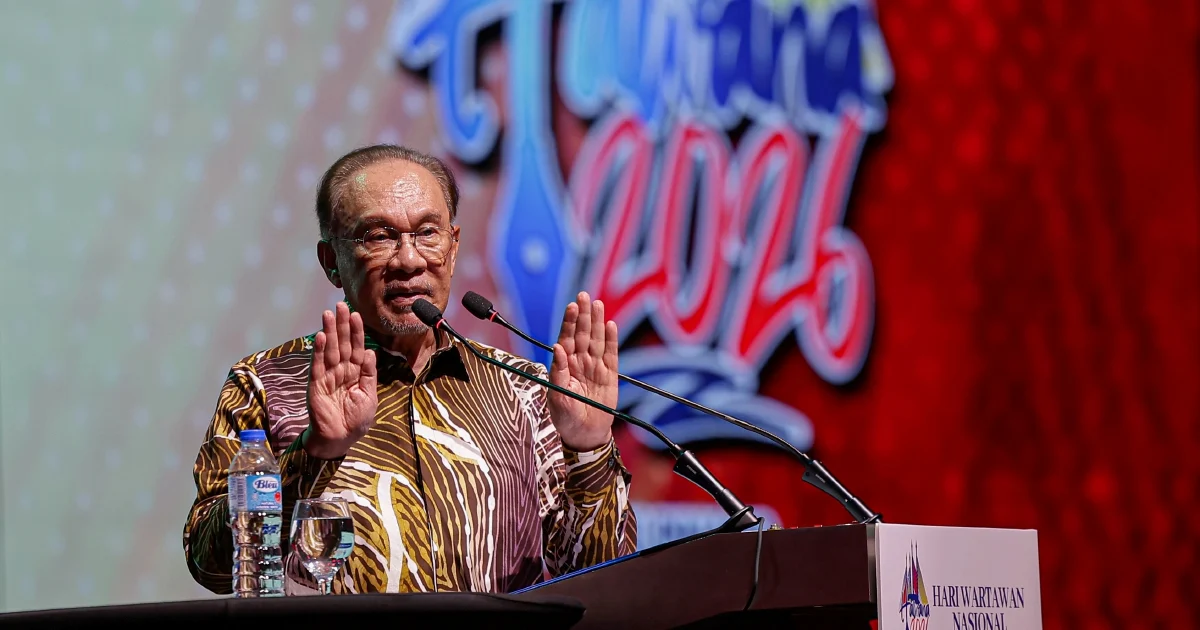
Prime Minister Datuk Seri Anwar Ibrahim has voiced optimism regarding the leadership transition at the Malaysian Media Council (MMC), signalling that the appointment of former Federal Court judge Tan Sri Nallini Pathmanathan as its chairman represents a significant step toward restoring institutional credibility. Addressing supporters in Butterworth, Anwar suggested that Nallini's trajectory and standing within the legal profession position her well to elevate the council's reputation and deepen public trust in a body historically tasked with balancing press freedom with regulatory oversight.
The move reflects the current government's broader strategy to strengthen Malaysia's institutional framework through appointments grounded in professional credentials and public respect. Nallini's background as a sitting member of the country's apex court brings a dimension of judicial authority and impartiality that MMC officials and government planners believe can insulate the council from perceptions of political interference or institutional capture. In Malaysia's media ecosystem, where questions about regulatory independence frequently surface during political transitions, such appointments carry weight beyond the immediate operational scope of the role.
The Malaysian Media Council operates at a critical juncture in the nation's information landscape. Established under a regulatory mandate, the MMC is responsible for maintaining professional standards within the media industry while navigating complex questions about editorial freedom, ownership transparency, and the boundaries of responsible reporting. Public trust in such bodies remains uneven across Malaysia's diverse population, with some communities expressing confidence in regulatory mechanisms while others voice concerns about how oversight actually functions in practice.
Nallini's judicial experience suggests an institutional familiarity with principles of natural justice, precedent, and reasoned decision-making that the MMC will need to demonstrate consistently. Her track record on the Federal Court, where she would have encountered constitutional law, administrative fairness, and the interpretation of media-related legislation, theoretically positions her to understand the nuanced legal terrain in which the council operates. For industry observers, her appointment signals that the government intends to anchor the council's leadership in someone whose decisions have been subject to rigorous appellate scrutiny and whose judicial reasoning is a matter of public record.
From a regional perspective, Malaysia's approach to media regulation sits within broader Southeast Asian patterns of negotiating state oversight and editorial autonomy. Neighbouring countries employ different models, ranging from more libertarian frameworks to tightly controlled systems. Malaysia's middle path—regulatory bodies like the MMC, coupled with legal statutes governing publication and broadcast—requires consistent demonstration of fairness and competence to maintain legitimacy. Leadership appointments become symbolic moments in this larger conversation about institutional trustworthiness.
The timing of Nallini's appointment warrants consideration alongside Malaysia's evolving political dynamics and media landscape. Since the 2022 general election and the formation of the current cabinet, there has been heightened public attention to how state institutions are staffed and whether leadership transitions reflect genuine merit-based advancement or factional political interests. By selecting someone from the judiciary—a branch of government theoretically removed from day-to-day political machinations—the appointment sends a message about prioritising institutional independence, though actual perception will depend heavily on how the MMC functions under her leadership.
The media industry itself has watched such institutional appointments with varying degrees of concern. Publishers, broadcasters, and digital platforms operating in Malaysia maintain complex relationships with regulators like the MMC. Some view robust regulatory bodies as necessary safeguards against monopolistic practices or editorial abuses, while others worry that regulators can become tools for suppressing legitimate reporting or enforcing narrow definitions of acceptable speech. Nallini's appointment will be tested against these competing expectations from day one.
Public trust in media institutions—and the regulatory bodies overseeing them—fluctuates with concrete actions and visible outcomes. Anwar's confidence in Nallini's ability to strengthen MMC credibility will be substantiated through specific decisions the council makes regarding complaints, investigations, disciplinary matters, and guidance to the media industry. Transparency in the council's deliberative processes, timeliness of rulings, and consistency of standards across different media outlets and political contexts will ultimately determine whether institutional prestige translates into genuine public confidence.
The appointment also reflects a broader conversation within Malaysia about women in senior institutional roles. Nallini's elevation to a prominent position within media governance represents advancement of female leadership in regulatory spaces historically dominated by male appointments. Beyond symbolic value, her presence may influence how the council approaches issues that affect women differently—from coverage of gender-based violence to representation in newsrooms to gendered patterns in media ownership.
For stakeholders across Malaysia's media landscape, the crucial period lies ahead. Nallini's incoming leadership at the MMC will be measured against whether the council becomes more responsive to industry concerns, whether its decision-making processes become more transparent and accessible to public scrutiny, and whether it successfully navigates the inherent tension between facilitating a free press and maintaining professional standards. Her judicial background provides theoretical grounding, but translating that into practical institutional reform will determine whether Anwar's confidence proves justified.
%22%2F%3E%3C%2Fpattern%3E%3C%2Fdefs%3E%3Crect%20width%3D%22100%25%22%20height%3D%22100%25%22%20fill%3D%22url(%23ph5shalg)%22%2F%3E%3Crect%20width%3D%22100%25%22%20height%3D%22100%25%22%20fill%3D%22url(%23ph5shalp)%22%2F%3E%3Ctext%20x%3D%2250%25%22%20y%3D%2250%25%22%20text-anchor%3D%22middle%22%20dominant-baseline%3D%22central%22%20fill%3D%22rgba(255%2C255%2C255%2C0.95)%22%20font-family%3D%22Georgia%2C%20'Times%20New%20Roman'%2C%20serif%22%20font-weight%3D%22700%22%20font-size%3D%22170%22%20letter-spacing%3D%22-0.02em%22%3EJudicial%3C%2Ftext%3E%3C%2Fsvg%3E)
%22%2F%3E%3C%2Fpattern%3E%3C%2Fdefs%3E%3Crect%20width%3D%22100%25%22%20height%3D%22100%25%22%20fill%3D%22url(%23ph4twxvg)%22%2F%3E%3Crect%20width%3D%22100%25%22%20height%3D%22100%25%22%20fill%3D%22url(%23ph4twxvp)%22%2F%3E%3Ctext%20x%3D%2250%25%22%20y%3D%2250%25%22%20text-anchor%3D%22middle%22%20dominant-baseline%3D%22central%22%20fill%3D%22rgba(255%2C255%2C255%2C0.95)%22%20font-family%3D%22Georgia%2C%20'Times%20New%20Roman'%2C%20serif%22%20font-weight%3D%22700%22%20font-size%3D%22320%22%20letter-spacing%3D%22-0.02em%22%3E95%3C%2Ftext%3E%3C%2Fsvg%3E)