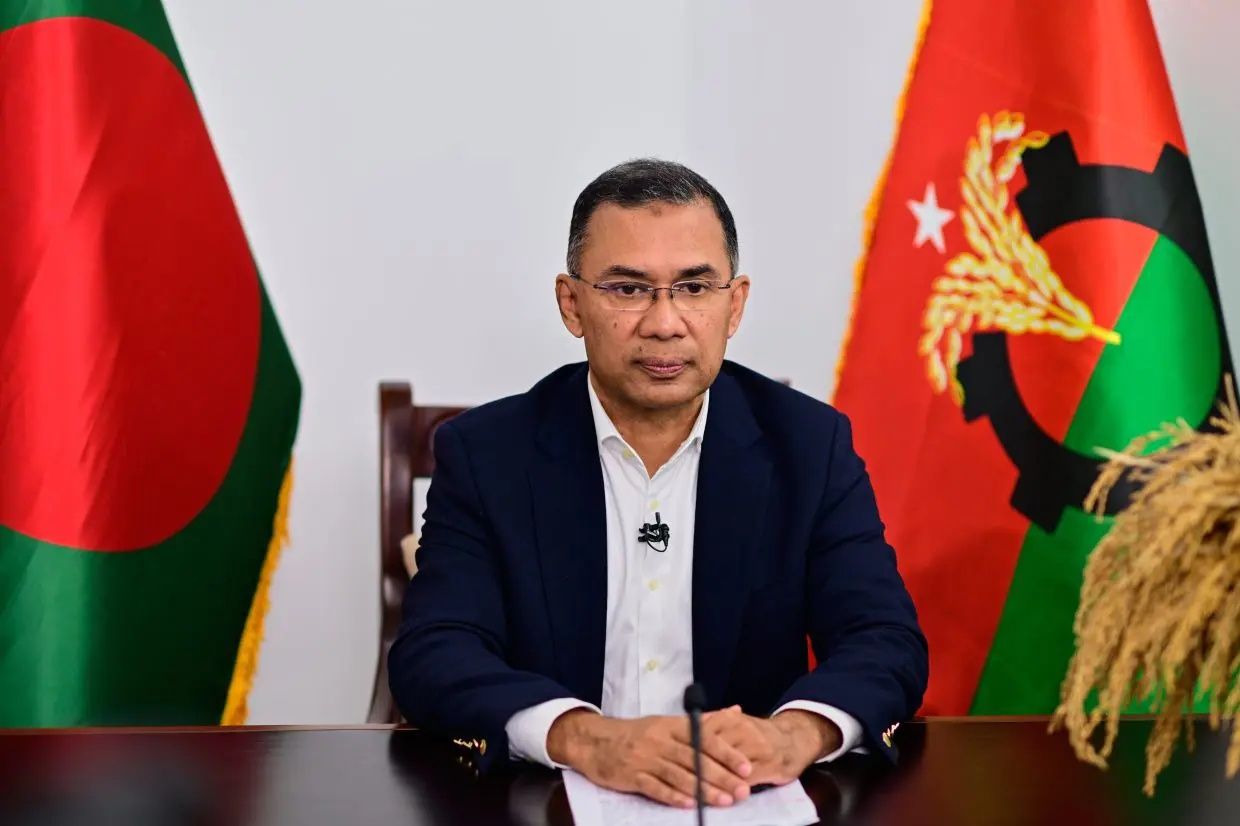
Bangladesh Prime Minister Tarique Rahman is embarking on his maiden international tour as head of government, visiting Malaysia on Sunday followed by China on Monday, according to announcements from Dhaka's foreign ministry. The choice of destinations for this symbolically significant first overseas trip—notably excluding immediate neighbour India—underscores a deliberate recalibration of Bangladesh's diplomatic positioning as the country navigates fresh geopolitical terrain following last year's tumultuous political transition.
The scheduling of back-to-back visits to Kuala Lumpur and Beijing reflects Rahman's administration's determination to diversify Bangladesh's external economic engagement and strengthen ties with key regional powers beyond the Indian subcontinent. Officials have characterised these missions as substantial diplomatic undertakings aimed at cementing economic partnerships that could prove crucial to Bangladesh's development trajectory. The sequencing itself carries diplomatic weight, with the Malaysian leg providing an opportunity to address the immediate welfare concerns of a substantial diaspora before pivoting to discussions of major infrastructure and trade frameworks in China.
Malaysia hosts approximately 800,000 Bangladeshi workers, representing more than one-third of the nation's foreign labour force. This population forms a critical economic link between the two countries, remitting significant funds back to Bangladesh and constituting an important constituency for bilateral relations. Rahman's early attention to Malaysia signals sensitivity to these grassroots connections and suggests his government intends to prioritise the interests and working conditions of its citizens abroad, an increasingly important diplomatic consideration for labour-sending nations in South Asia.
In Beijing, trade discussions will take centre stage alongside infrastructure development initiatives. Among the projects likely to feature prominently is Chinese involvement in the long-stalled Teesta River project, an ambitious scheme encompassing river restoration, embankment development, and irrigation infrastructure across this critical waterway. The Teesta's management has long been complicated by transnational dimensions and the project's advancement would represent a significant infrastructure achievement for Bangladesh, potentially demonstrating the benefits of Beijing's engagement in the region.
The decision to prioritise China and Malaysia over India in Rahman's inaugural foreign engagement reflects the complicated legacy of Bangladesh's recent political upheaval. The February 2024 uprising that toppled Prime Minister Sheikh Hasina's government and its subsequent replacement by Rahman's administration created a palpable shift in Dhaka's geopolitical orientation. Hasina, who maintained notably warm ties with New Delhi, fled the country as the uprising intensified and has remained in hiding in India since her departure, creating an ongoing diplomatic irritant between Dhaka and New Delhi.
Bangladesh's request for India to extradite Hasina remains unresolved, exemplifying the lingering tensions between the two countries. Beyond this high-profile issue, bilateral relations have deteriorated along the shared frontier, with India repeatedly transferring individuals it classifies as undocumented migrants across the border into Bangladesh. These border management disputes have compounded political friction and contributed to a coolness in official ties despite the historical proximity and deep cultural connections between the nations.
While ties between Dhaka and New Delhi have improved incrementally since Rahman assumed office in February following the interim administration's stewardship, significant friction persists beneath the surface. Bangladesh's geographic position—largely surrounded by Indian territory—has historically made relations with New Delhi central to Bangladeshi policymaking. However, the current administration appears determined to establish greater strategic autonomy, a positioning that necessarily involves cultivating alternative partnerships and reducing overdependence on any single neighbour.
China's ascendant regional influence represents both opportunity and challenge for Bangladesh's strategic calculus. As India has long remained cautious about Beijing's expanding footprint across South Asia, Bangladesh's engagement with China signals Dhaka's intent to balance its partnerships rather than remain locked into a traditional India-centric framework. For the Chinese government, strengthened ties with Bangladesh offer opportunities to expand economic influence and infrastructure projects throughout the region, complementing Beijing's broader Belt and Road Initiative activities across South and Southeast Asia.
The geopolitical context underlying Rahman's tour reflects deeper shifts in South Asian international relations. With India and China competing for regional influence as the world's two most populous nations, medium-sized powers like Bangladesh increasingly possess leverage to pursue more independent foreign policies. Rahman's administration appears intent on capitalising on this space, using the country's strategic location, substantial labour resources, and infrastructure needs to secure partnerships that advance Bangladesh's economic interests without sacrificing its autonomy.
For Malaysian readers and policymakers, Rahman's visit carries significance beyond diplomatic courtesy. The substantial Bangladeshi workforce in Malaysia constitutes an important economic resource, and strengthened official ties could facilitate improved labour protections, skills development programmes, and investment flows between the two nations. Southeast Asia's growing economic importance to South Asian countries suggests that partnerships like Malaysia-Bangladesh will likely deepen across multiple dimensions in coming years as the region's countries seek to engage with emerging economic powerhouses and diversify their international relationships.