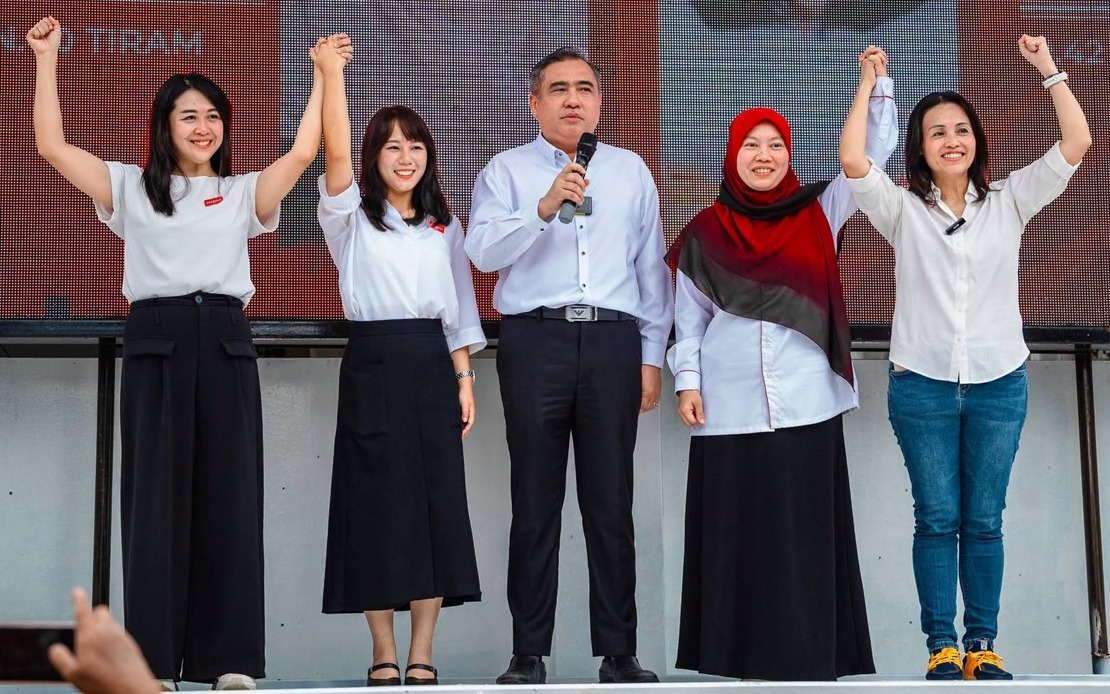
The Democratic Action Party has unveiled its slate of four candidates for the upcoming Johor state election scheduled for July 11, signalling the party's determined push to expand its footprint across constituencies that have traditionally presented challenges. The announcement, made by party secretary-general Anthony Loke Siew Fook at a ceremony in Johor Bahru, represents a calculated move to strengthen Pakatan Harapan's position in the state assembly while consolidating existing strongholds.
Nor Zulaila Abd Ghani, a 38-year-old private secretary to the Deputy Finance Minister, will represent DAP in the Tiram state seat, marking a significant milestone for the party. The decision to contest Tiram, a mixed constituency with a significant Malay-majority voter base, represents a deliberate effort to broaden DAP's appeal beyond its traditional support base. Loke expressed confidence in the candidate's ability to secure voter support, acknowledging the strategic importance of this particular seat in the party's overall campaign architecture.
Lee Wern Yiing, the 30-year-old chief of Johor DAP Socialist Youth (DAPSY), will contest the Johor Jaya state seat, bringing youthful energy and grassroots credibility to the campaign. The selection of DAPSY's leader underscores the party's emphasis on mobilising younger voters and energising its organisational structures at the ground level. His candidacy reflects DAP's broader strategy of blending experienced leadership with fresh generational perspectives.
Moving into Bukit Permai, DAP has fielded Mohamad Shafwan Ani, a 33-year-old special assistant to the Kulai Member of Parliament. Shafwan's nine years of on-the-ground involvement in the constituency positions him as an experienced local figure rather than a parachuted outsider. This appointment demonstrates DAP's preference for rooting its candidates within established community networks and demonstrating genuine commitment to constituency development prior to electoral contests.
The party will also defend the Senai state seat through incumbent Wong Bor Yang, a 40-year-old assemblyman seeking re-election. His continuation as the party's standard-bearer reflects incumbent advantage and recognition of his performance in the previous term. The retention of experienced legislators serves as a stabilising force amid the party's expansion into new electoral territory.
Loke elaborated on the strategic rationale underlying these candidacies, explaining that Pakatan Harapan's objective centres on securing all three state assembly seats that comprise the Kulai parliamentary constituency. With PKR contesting Bukit Batu and DAP defending Senai as incumbent seats, the field placement of Shafwan in Bukit Permai represents a calculated effort to create a unified coalition presence across the entire parliamentary division. This coordinated approach reflects coalition discipline and a recognition that state-level success requires coherent parliamentary-level strategies.
The decision to contest Tiram with a Malay-majority voter demographic holds particular significance for DAP, a party historically perceived as Chinese-centric despite its multiracial ideology. By fielding Nor Zulaila, the party sends a message about its commitment to representing diverse communities and transcending narrow communal boundaries. Success in Tiram would represent a symbolic breakthrough demonstrating that DAP has broadened its electoral coalition beyond traditional strongholds.
Johor DAP chairman Teo Nie Ching and her deputy Wong Shu Qi attended the announcement ceremony, providing organisational endorsement and highlighting the internal party consensus surrounding candidate selection. Their presence underscores that these selections reflect considered deliberation rather than arbitrary decisions, with senior party figures lending credibility to the slate.
The election calendar provides candidates with a compressed campaign timeline. Nomination day falls on June 27, offering only a week for formal candidacy registration. Early voting has been scheduled for July 7, with polling day following on July 11. This condensed schedule requires efficient campaign mobilisation and strategic deployment of party resources across four distinct constituencies with varying demographic profiles and electoral dynamics.
For Malaysian political observers, DAP's candidate announcements reveal broader patterns in how opposition coalitions are restructuring state-level competition. The emphasis on fielding experienced local figures rather than external arrivals, the strategic coordination with coalition partners, and the calculated expansion into ethnically diverse constituencies all reflect lessons learned from previous electoral cycles. The Johor contest will serve as a barometer for whether Pakatan Harapan can translate its federal-level coalition arrangements into consistent state-level electoral performance.
The four-person slate demonstrates DAP's commitment to treating the Johor election as a serious competitive endeavour rather than a ceremonial participation. Each candidate brings distinct professional credentials and community credentials, suggesting the party views these contests as genuine opportunities for representation rather than symbolic gestures. Whether this translated experience and strategic positioning will convert into electoral gains remains contingent on campaign execution, broader political currents, and voter receptiveness to coalition messaging during the campaign period ahead.
%22%2F%3E%3C%2Fpattern%3E%3C%2Fdefs%3E%3Crect%20width%3D%22100%25%22%20height%3D%22100%25%22%20fill%3D%22url(%23ph5bdxzg)%22%2F%3E%3Crect%20width%3D%22100%25%22%20height%3D%22100%25%22%20fill%3D%22url(%23ph5bdxzp)%22%2F%3E%3Ctext%20x%3D%2250%25%22%20y%3D%2250%25%22%20text-anchor%3D%22middle%22%20dominant-baseline%3D%22central%22%20fill%3D%22rgba(255%2C255%2C255%2C0.95)%22%20font-family%3D%22Georgia%2C%20'Times%20New%20Roman'%2C%20serif%22%20font-weight%3D%22700%22%20font-size%3D%22194%22%20letter-spacing%3D%22-0.02em%22%3EBernama%3C%2Ftext%3E%3C%2Fsvg%3E)