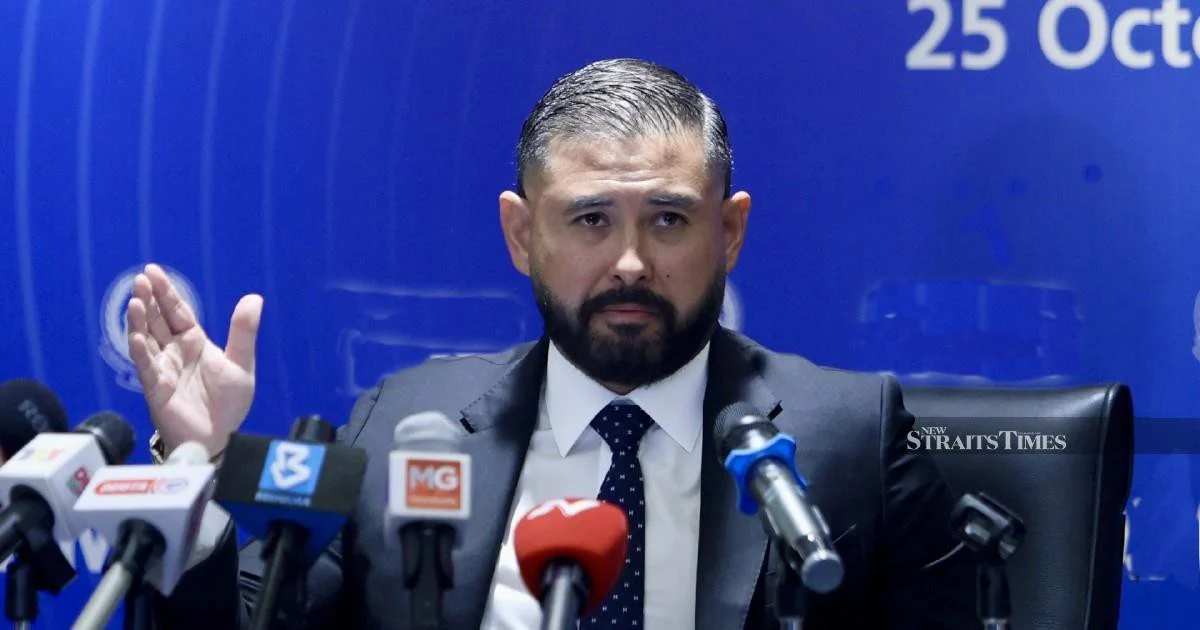
Johor's Regent Tunku Ismail Sultan Ibrahim has pushed back sharply against characterisations of his state as a prosperous region undermined by wasteful internal spending, reframing the conversation around fiscal fairness between state and federal authorities. Speaking in Johor Baru, the Regent rejected the premise underlying recent statements from the Prime Minister, which had portrayed the state as suffering primarily from operational inefficiencies and budgetary leaks at the subnational level. Instead, he pivoted the discussion toward what he views as systemic imbalance in how revenue collected or generated within Johor is allocated between the state administration and federal coffers.
The Regent's intervention represents a notable escalation in the ongoing debate over Johor's fiscal position and its relationship with the federal government under the current administration. This discourse has gained momentum as states across Malaysia increasingly scrutinise the mechanisms through which their economic contributions are shared with Kuala Lumpur, particularly given the varied prosperity levels across the peninsula and Sabah and Sarawak. Johor, as one of the wealthier states with significant industrial, commercial, and port-related activity, finds itself at the centre of this broader conversation about resource distribution and federalism.
The disagreement hinges on two fundamentally different diagnoses of Johor's financial health. The federal narrative, as articulated by the Prime Minister, identifies leakage—understood as money that should reach state coffers but instead disappears through inefficient spending, corrupt practices, or mismanagement—as the primary impediment to the state's development. This framing suggests that Johor's administrators bear principal responsibility for any shortfalls in funding available for infrastructure, public services, and welfare spending. Conversely, the Regent's position contends that even if internal leakages exist, they are not the decisive factor constraining the state's ability to invest in its future. Rather, the structure of federal-state fiscal arrangements itself limits how much of Johor's generated wealth ultimately remains under state control.
This distinction matters considerably for how policymakers and the public should understand Johor's governance challenges and prospects. If leakages are the dominant problem, then the solution lies primarily in tightening administrative controls, strengthening audit mechanisms, and rooting out corruption or inefficiency within state institutions. However, if the federal system of revenue distribution is the core issue, then reforms would need to address the constitutional and statutory arrangements governing how states remit taxes, receive allocations, and exercise fiscal autonomy. The Regent's framing suggests that Johor might be capable of substantially more ambitious development if permitted to retain a larger share of its own wealth.
For Malaysian readers and observers, the significance of this debate extends beyond Johor's specific circumstances. The tension between state and federal revenue claims reflects longstanding constitutional questions about federalism in Malaysia that have never been entirely settled. States historically enjoyed greater fiscal independence, but the post-independence period has seen gradual centralisation of taxation and spending power. Johor, as a major economic engine with its own port infrastructure, manufacturing base, and commercial hubs, has perhaps more reason than many states to question whether the current allocation serves its development interests optimally.
The Regent's position also carries implications for other prosperous states contemplating their own fiscal relationships with the federal government. If Johor successfully makes the case that federal arrangements inadequately account for state-level wealth generation and contribution, other states like Selangor, Penang, and Sabah might echo similar concerns. This could eventually force a broader reckoning with Malaysia's federal fiscal architecture, which has evolved substantially since independence but has never undergone comprehensive reform addressing modern economic realities.
The Prime Minister's framing of the issue as primarily a leakage problem also warrants scrutiny in context. While no government administration operates with perfect efficiency, and vigilance against wasteful spending is always warranted, the emphasis on state-level leakages can sometimes serve to deflect attention from questions about whether federal-level allocation mechanisms are themselves equitable or efficient. It positions the federal government in an oversight and auditing role rather than subjecting federal fiscal management to equivalent scrutiny.
The dispute also illuminates broader governance debates in Southeast Asia, where questions about the proper balance between central and subnational authority remain contested across the region. Malaysia's particular constitutional framework grants significant powers to states, yet the practice of fiscal federalism has increasingly concentrated resources at the centre. Understanding how these tensions play out in Malaysian context provides insights relevant to neighbouring countries grappling with similar federalism questions.
Looking forward, the disagreement between the Regent and federal authorities may serve as a catalyst for more substantive discussion about Johor's fiscal future and the principles that should guide state-federal revenue sharing. Whether the dispute prompts genuine policy reform or remains confined to public rhetoric will reveal much about the current administration's willingness to reconsider established arrangements. For Johor specifically, the Regent's assertion that federal structures rather than internal management constitute the primary constraint on state resources suggests he envisions a path toward greater fiscal autonomy and control over the state's economic trajectory.