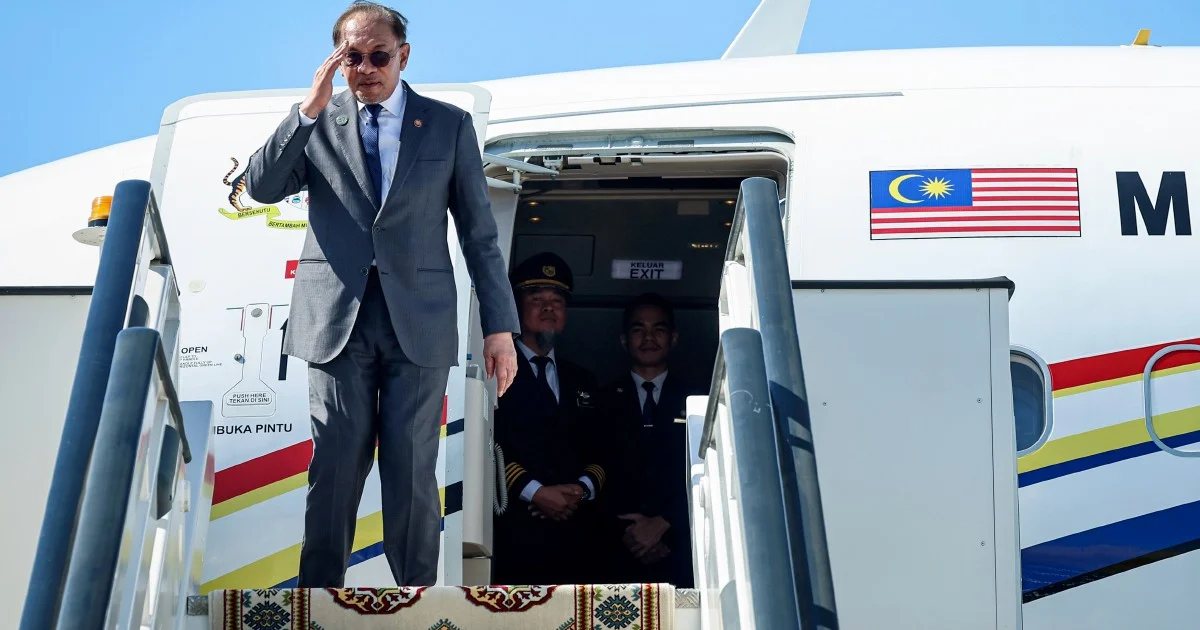
Prime Minister Datuk Seri Anwar Ibrahim touched down in Penang on Wednesday, marking the conclusion of his official diplomatic mission to Turkmenistan and the beginning of a series of high-profile engagements in Malaysia's northern industrial heartland. His swift transition from Central Asian affairs to domestic commitments underscores the government's balancing act between international relations and regional economic development, a particularly pertinent concern for the northern corridor states.
The timing of Anwar's Penang visit carries significance beyond mere scheduling logistics. By arriving immediately after his Turkmenistan engagement, the Prime Minister demonstrates continuity in the administration's diplomatic and economic agenda. Turkmenistan, a substantial energy-producing nation in the Caspian region, represents potential opportunities for Malaysian businesses and investment partnerships—particularly in petrochemicals, liquefied natural gas, and infrastructure development. The swift pivot suggests that discussions conducted in Ashkhabad are being channelled directly into domestic investment announcements and policy rollouts, maximising the momentum generated by such state visits.
Anwar's participation in the National Journalists' Day (Hawana) 2026 grand finale represents a significant platform for government-media relations, an area that has drawn considerable scrutiny under his administration. Hawana, the annual celebration of Malaysian journalism, serves as both a recognition of the media profession and an opportunity for political leadership to engage with the fourth estate. The Prime Minister's physical presence at the flagship event signals the government's commitment to press freedom and media engagement, particularly important given ongoing discussions about media regulation and digital information governance in Southeast Asia.
The Penang leg of his itinerary aligns with the state's positioning as Malaysia's premier investment destination and innovation hub. Home to the Penang Free Industrial Zone, semiconductor manufacturing clusters, and emerging technology sectors, the state has become increasingly central to the government's economic diversification strategy. Investment events scheduled alongside the media conference suggest that targeted sector development—potentially in advanced manufacturing, green technology, or digital economy—features prominently in the administration's current priorities.
Geographically, Penang's location at the northern tip of the Malaysian peninsula makes it a natural focal point for cross-border regional economic cooperation. The state's ports and logistics infrastructure create natural advantages for companies seeking to establish operations across Southeast Asia. By hosting investment events in this locale, the government may be targeting both domestic investors seeking to scale operations regionally and international companies exploring strategic entry points into Southeast Asian markets. This positioning becomes increasingly crucial as regional supply chain reconfiguration continues following global trade tensions.
The convergence of media engagement and investment promotion during this Penang visit suggests a carefully orchestrated communication strategy. Government announcements regarding economic initiatives and foreign investment tend to gain broader traction when accompanied by structured media engagement. By bringing journalists into dialogue during Hawana proceedings and simultaneously presenting investment opportunities, the administration creates multiple communication channels for messaging about economic progress and regional opportunities.
From a diplomatic perspective, Anwar's Turkmenistan visit itself carries weight for Malaysian foreign policy objectives. Central Asian nations, though geographically distant, represent emerging markets with growing demand for Malaysian products and services, particularly in palm oil, rubber, and manufactured goods. Strengthening bilateral relations through prime ministerial engagement opens channels for trade expansion and potential partnerships in renewable energy and infrastructure sectors—areas where both nations can contribute complementary expertise.
The northern states, particularly Penang, Kedah, and Perlis, have articulated concerns about economic opportunities and investment concentration. By bringing high-level investment events to Penang, the federal government addresses these regional development concerns while also leveraging the state's existing industrial base and global connectivity. This approach benefits from Penang's track record as a successful foreign investment magnet, potentially catalysing further inflows when promoted at the prime ministerial level.
The back-to-back scheduling of international diplomacy and domestic economic engagement reflects contemporary governance demands. Malaysian leaders must simultaneously manage intricate international relationships, maintain regional competitiveness, and deliver tangible economic benefits to domestic constituencies. Anwar's compressed itinerary demonstrates the constant pressure to optimize time and generate cascading announcements that build political momentum.
Looking forward, the substance of announcements emerging from these Penang events will be closely monitored by international investors, regional governments, and domestic stakeholders. Investment commitments, sector-specific initiatives, or policy announcements made during this visit may set trajectories for Malaysia's economic direction through the remainder of the year. The media focus generated by Hawana proceedings provides an ideal platform for such announcements to achieve maximum visibility and credibility.
The intersection of journalistic recognition, investment promotion, and diplomatic momentum during this Penang visit encapsulates the multifaceted demands of modern political leadership in Southeast Asia. Anwar's presence serves multiple constituencies simultaneously—acknowledging the media's societal role, showcasing government economic achievements, and potentially unveiling new opportunities for growth that benefit both national development objectives and regional economic positioning.

%22%2F%3E%3C%2Fpattern%3E%3C%2Fdefs%3E%3Crect%20width%3D%22100%25%22%20height%3D%22100%25%22%20fill%3D%22url(%23ph4dnbsg)%22%2F%3E%3Crect%20width%3D%22100%25%22%20height%3D%22100%25%22%20fill%3D%22url(%23ph4dnbsp)%22%2F%3E%3Ctext%20x%3D%2250%25%22%20y%3D%2250%25%22%20text-anchor%3D%22middle%22%20dominant-baseline%3D%22central%22%20fill%3D%22rgba(255%2C255%2C255%2C0.95)%22%20font-family%3D%22Georgia%2C%20'Times%20New%20Roman'%2C%20serif%22%20font-weight%3D%22700%22%20font-size%3D%22170%22%20letter-spacing%3D%22-0.02em%22%3EMalaysia%3C%2Ftext%3E%3C%2Fsvg%3E)