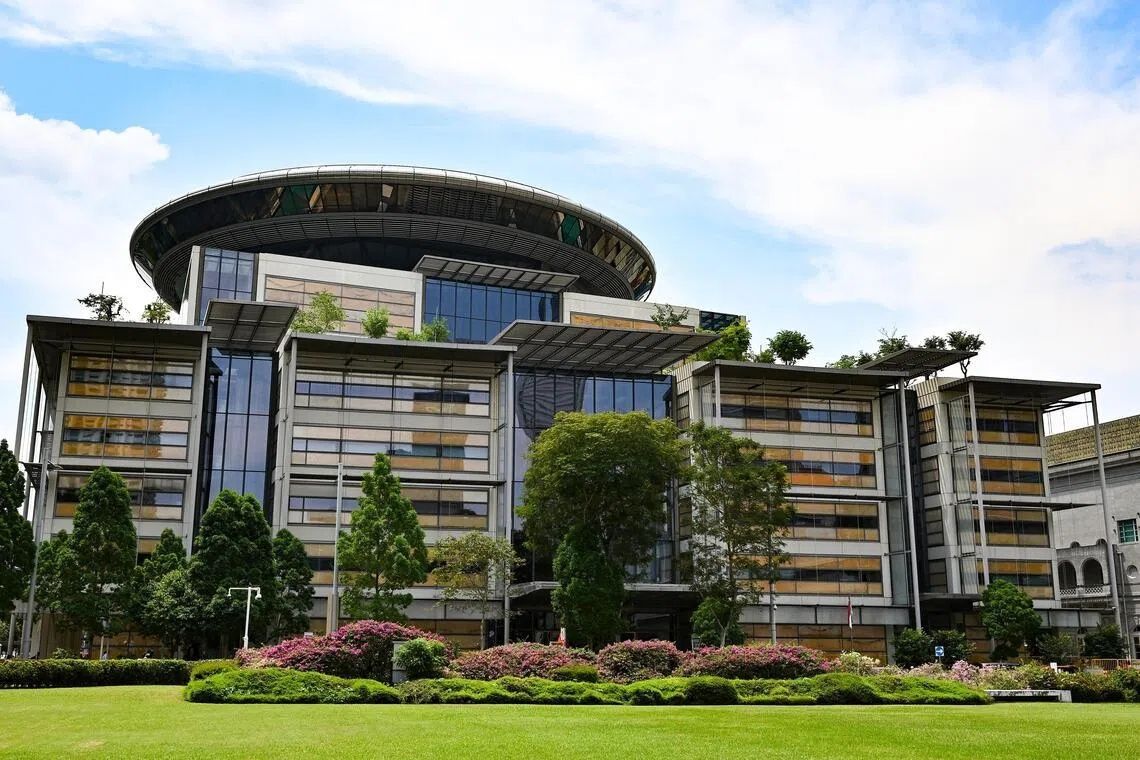
Three Singapore-based obstetricians and gynaecologists have been dealt a significant legal defeat in their attempt to challenge the Inland Revenue Authority of Singapore (IRAS) over the way they structured their medical practices to minimise personal tax obligations. Justice Alex Wong dismissed the trio's High Court application on June 18, upholding the tax authority's position that their business arrangement was designed primarily to obtain unjustified tax advantages. The case represents another cautionary tale for medical professionals in the region about the increasingly sophisticated approaches by tax authorities in scrutinising aggressive income minimisation strategies.
Adrian Tan Chek Jin, Caroline Khi Yu May, and Jocelyn Wong Sook Miin were colleagues at KK Women's and Children's Hospital before establishing themselves in private gynaecological practice. Their strategy involved setting up multiple corporate entities through two rounds of restructuring, deliberately paying themselves minimal salaries whilst extracting substantially larger sums as tax-exempt dividends and interest-free shareholder loans. The arrangement was designed to take advantage of tax exemption and rebate schemes intended to support startup enterprises, even though the doctors were established medical professionals with substantial income. IRAS, following a routine tax audit, reassessed the doctors' tax liability for the years 2013 to 2018 by attributing business income directly to them in their individual capacities, whilst also clawing back corporate tax benefits previously granted to the various companies involved.
The three doctors initially sought review through the Income Tax Board of Review, where they were unsuccessful. Their subsequent court challenge centred on whether IRAS possessed the legal authority to disregard their carefully constructed business arrangement under the provisions of the Income Tax Act. The fundamental issue was whether the tax authority could pierce through formal corporate structures to assess the substance of the arrangement and determine if tax avoidance constituted a dominant purpose. This question carries broader implications for Malaysian practitioners, as similar anti-avoidance provisions exist under Malaysia's own tax legislation, and the reasoning applied by Singapore's courts often influences how Malaysian authorities and judges interpret comparable statutory powers.
Tan, the most senior of the three doctors, proved particularly vulnerable to judicial scrutiny. Before entering private practice, he earned SGD45,600 monthly as a salaried specialist. Yet when establishing the joint medical clinic, he assigned himself a monthly salary of just SGD5,000 despite the practice becoming increasingly profitable. Over the assessment period from 2013 to 2018, Tan extracted SGD5.14 million and SGD2.35 million in dividends from two separate entities, plus loans totalling approximately SGD830,000 and SGD2.1 million from these same companies. Justice Wong noted that whilst Tan's claim about being new to private practice might partially explain the initial modest salary, it entirely failed to account for why the salary never increased as revenues surged, nor why the mounting profits were systematically channelled as dividends and loans rather than reasonable remuneration adjustments.
The judge's reasoning focused on the complete absence of commercial coherence in the arrangement. In any genuine medical practice, one would expect salary levels to reflect increasing seniority, expanding responsibilities, and growing profitability. The fact that this trio maintained artificially depressed salaries whilst extracting equivalent amounts through tax-advantaged mechanisms pointed inescapably to tax minimisation as a primary driver. The judge articulated this through the lens of the anti-avoidance provision, which grants tax authorities power to disregard arrangements whose principal purpose involves obtaining tax advantages. The court rejected Tan's assertion that tax considerations played no meaningful role when the practice was established, finding instead that the entire structure bore the hallmarks of intentional tax planning rather than organic business development.
The corporate restructuring timeline reveals the calculated nature of the arrangement. When the three doctors first incorporated ACJ Women's Clinic in 2004, each held equal shares and drew identical SGD5,000 monthly salaries. However, as the practice grew, they established separate medical companies—Tan with AT OG Services from 2005, Khi with CKYM Holdings from 2007, and Wong with JW Medical Holdings from 2007—each structured to access specific tax exemptions available to startup enterprises. These entities subsequently underwent further reorganisation in 2014, when the doctors created individually owned surgical companies to bifurcate their business activities, allowing inpatient surgical fees to be directed through one tax vehicle and outpatient services through another. This layering of corporate structures, combined with the strategic timing of company registrations to maximise tax incentive eligibility, demonstrated planning sophistication that belied any claim of casual or accidental tax benefit-seeking.
The distinction between inpatient and outpatient revenue streams merits particular attention, as it illustrates how the doctors weaponised operational reality to achieve tax objectives. By establishing separate surgical companies solely for inpatient procedures whilst channelling outpatient work through the original clinic entity, the doctors created apparent business justifications for their corporate fragmentation. Yet this operational separation aligned suspiciously with the tax incentive schemes available at the time, suggesting that operational decisions followed tax planning rather than the reverse. Such scenarios present significant challenges for tax authorities across Southeast Asia, where the line between legitimate tax-efficient structuring and impermissible avoidance can appear blurred in individual cases but becomes clear when examined through holistic lenses examining dominant purposes and commercial rationality.
Margins for what constitutes acceptable tax planning have narrowed considerably across the region, reflected in increasingly interventionist judicial decisions and more assertive revenue authority positions. The Singapore High Court's ruling sends clear signals that professional persons—particularly those in high-income brackets—cannot rely upon formal corporate structures to circumvent the substance-based assessment principles that modern tax systems employ. Malaysia's own anti-avoidance framework under the Income Tax Act contains comparable provisions enabling the Director General to disregard or re-characterise arrangements designed principally to obtain tax advantages. Practitioners in Malaysia, particularly medical professionals and other specialist service providers, should recognise that IRAS's success in defending its position against sophisticated taxpayers with substantial legal resources indicates that comparable aggressive strategies would face stern resistance from Lembaga Hasil Dalam Negeri Malaysia.
The case carries particular relevance for Malaysian medical practitioners operating through private practice entities. Many establish multiple corporate structures spanning clinic operations, surgical facilities, diagnostic centres, or related professional ventures, sometimes with legitimate operational rationales but frequently with significant tax planning components. This decision illustrates that revenue authorities will increasingly examine whether salary levels remain anomalously depressed despite business profitability, whether distributions are extracted through tax-advantaged mechanisms rather than salary increases, and whether the overall arrangement exhibits coherence with genuine commercial norms or instead bears hallmarks of purposeful tax engineering. Medical professionals contemplating corporate restructuring should seek comprehensive advice ensuring that any tax benefits obtained constitute genuine incidental advantages flowing from legitimate operational choices rather than primary purposes driving business design.
The implications extend beyond individual practitioners to professional associations and tax advisors offering structuring services. The judgment suggests that advisors cannot shelter behind their clients' assertions about non-tax motivations when objective evidence points elsewhere. Courts and tax authorities will increasingly examine whether purported commercial reasons withstand scrutiny against actual practice patterns. The fact that the other two doctors declined to give evidence before the board, potentially fearing further self-incrimination, underscores how difficult it becomes to defend tax positions once arrangements begin unravelling under official scrutiny. For Malaysian taxpayers contemplating similar structures, the message is unambiguous: revenue authorities possess robust legal tools to challenge aggressive arrangements, courts will enforce these tools with increasing confidence, and the financial and reputational consequences of failed challenges extend well beyond additional tax assessments.
Moving forward, both Singapore's experience and Malaysia's comparable legislative framework suggest that the era of relatively permissive corporate income splitting through salary minimisation and dividend maximisation has substantially concluded. Professional service providers, whether in medicine, law, accounting, or consulting, should anticipate that transactions exhibiting inconsistency between size and complexity of business operations versus total compensation structures will face heightened scrutiny. Tax planning advisors must increasingly engage in robust substance-over-form analysis, ensuring that any recommended structures would withstand judicial examination of their dominant purposes. The Singapore judgment demonstrates that even wealthy, sophisticated taxpayers with capable legal representation cannot reliably challenge revenue authority positions when the underlying arrangements lack coherent business rationales independent of tax considerations. For Malaysian professionals in comparable positions, the prudent course involves transparent engagement with tax authorities during implementation, seeking advance rulings or guidance rather than assuming arrangements will survive later challenge, and ensuring that tax efficiencies constitute secondary benefits of genuinely optimal business structures rather than primary driving forces.