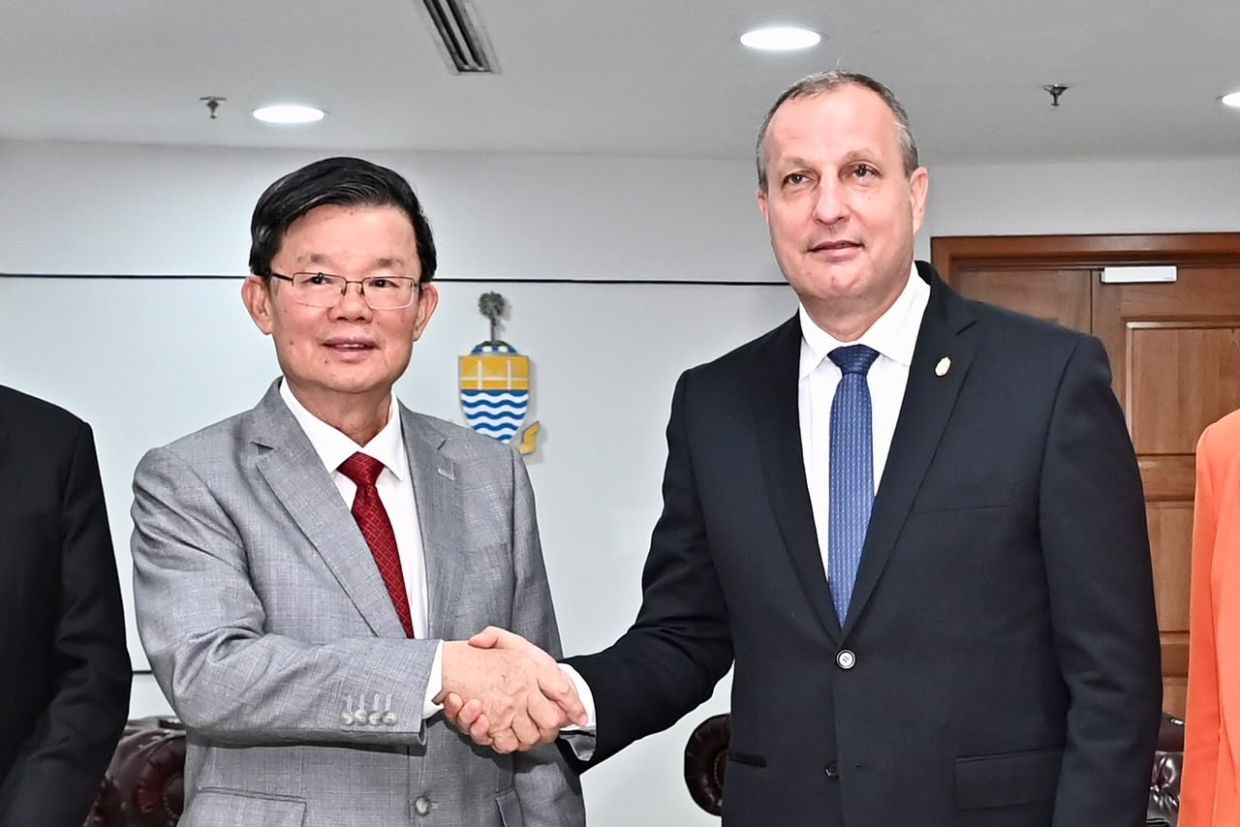
Penang is positioning itself as a regional hub for international cooperation by forging deeper ties with Hungary across multiple sectors, from higher education and technological advancement to environmental stewardship and water security. The foundation for expanded collaboration was laid during recent discussions between state leadership and a delegation from the Hungarian Embassy, signalling mutual commitment to addressing shared development priorities. Chief Minister Chow Kon Yeow, who met Hungarian Ambassador to Malaysia Dr Sándor Sipos, highlighted the strategic value of engaging with one of Europe's more advanced economies, particularly for a state that aspires to regional leadership in innovation and sustainability.
The scope of potential collaboration extends well beyond traditional bilateral arrangements. During the diplomatic visit, officials explored avenues for cooperation spanning heritage preservation, academic partnerships, commercial investments, water resource management, renewable energy adoption, tourism promotion and cultural initiatives. Both sides recognised that meaningful progress requires sustained engagement among universities, private enterprises and government bodies at multiple levels. This multifaceted approach reflects a broader understanding that modern state-to-state relationships must address interconnected challenges—from climate resilience to skills development—rather than operating in isolated silos.
Education emerged as a cornerstone of the proposed partnership. Hungary's existing scholarship programme, which allocates 40 fully funded places annually to Malaysian students, represents a concrete mechanism for human capital development. Sipos emphasised the programme's openness to applicants throughout Malaysia, with particular encouragement for Penang-based candidates. For a state that has invested heavily in developing a knowledge economy, access to advanced European educational institutions offers tangible benefits. Students pursuing studies in Hungarian universities gain exposure to Central European research methodologies, technologies and perspectives, creating networks that can facilitate future business and innovation partnerships.
Chow articulated a vision where education transcends its traditional role as a service and becomes a bridge for fostering deeper institutional and cultural connections. The emphasis on talent development suggests Penang sees in Hungary a model for how smaller regional economies can punch above their weight through strategic investment in human capital and research capacity. The scholarship initiative thus functions as both an immediate opportunity for individual students and a long-term investment in building a generation of professionals with firsthand knowledge of Hungarian innovation ecosystems.
Water security and green technology represent areas where Hungary's experience holds particular relevance for Southeast Asia. These sectors demand sophisticated technical expertise, regulatory frameworks and long-term planning—precisely where Central European nations have developed considerable institutional competence. As Penang grapples with the dual imperatives of sustaining rapid economic growth while managing environmental constraints, access to Hungarian expertise in water management could yield practical solutions. Similarly, collaboration on renewable energy transitions would position the state at the forefront of regional efforts to decarbonise industry and infrastructure.
The discussions also touched on heritage conservation, a domain where both jurisdictions face similar pressures to balance development with cultural preservation. Penang's Georgetown has established itself as a conservation success story within Southeast Asia, while Hungary boasts extensive experience protecting medieval and cultural sites across Central Europe. Knowledge exchange in this arena could benefit both regions, offering methodologies for managing historic districts as living communities rather than museum exhibits, thereby supporting local economies whilst maintaining cultural authenticity.
Trade and investment discussions featured prominently during meetings between the Hungarian delegation and Penang's executive councillors. These conversations likely explored opportunities for Hungarian firms to establish regional operations or partnerships in Penang, whilst simultaneously creating avenues for Penang-based enterprises to access European markets and supply chains. For a state competing for foreign direct investment against other regional hubs, securing commitments from strategically important European countries strengthens its investment proposition and diversifies economic risk.
Sports cooperation represents an unexpected but potentially valuable dimension of the partnership. State executive councillor Gooi Zi Sen's proposal to conduct studies on suitable sports disciplines for bilateral exchanges reflects recognition that athletic collaboration can generate soft power benefits whilst nurturing young talent. Hungary's strong sporting traditions, particularly in wrestling, fencing, swimming and volleyball, provide potential models for capability development in Penang. Youth sports exchanges could create lasting personal connections among citizens of both jurisdictions, building grassroots foundations for sustained cooperation.
The timing of this diplomatic engagement carries significance within Malaysia's broader foreign policy context. As the nation navigates increasingly complex geopolitical dynamics, state-level initiatives that strengthen ties with established democratic economies and innovation leaders serve national interests. Penang's proactive diplomacy demonstrates how sub-national governments can contribute meaningfully to Malaysia's international relationships whilst advancing their own development agendas. This model of decentralised foreign engagement, where states actively cultivate bilateral relationships, has become increasingly important in an era of regional economic competition and multilayered governance.
Chow's comments on sustainable development reflect a strategic alignment between Penang's development trajectory and Hungary's policy priorities. Both jurisdictions face pressure to balance economic expansion with environmental responsibility, demographic changes requiring workforce renewal, and heritage protection amid modernisation. This convergence of challenges and aspirations creates genuine common ground upon which substantive partnerships can be built, extending beyond ceremonial exchanges to produce measurable outcomes in research, innovation and talent development.
The commitment to translating discussions into concrete projects suggests both sides view this engagement as substantive rather than symbolic. Success will depend on effective implementation mechanisms, including institutional frameworks that move beyond high-level political declarations to enable operational cooperation among universities, research institutes and businesses. For Malaysian stakeholders monitoring Penang's international strategy, the Hungary initiative exemplifies how regional governments can leverage diplomatic relationships to address specific development priorities whilst contributing to the nation's broader engagement with the international community.

%22%2F%3E%3C%2Fpattern%3E%3C%2Fdefs%3E%3Crect%20width%3D%22100%25%22%20height%3D%22100%25%22%20fill%3D%22url(%23ph49t16g)%22%2F%3E%3Crect%20width%3D%22100%25%22%20height%3D%22100%25%22%20fill%3D%22url(%23ph49t16p)%22%2F%3E%3Ctext%20x%3D%2250%25%22%20y%3D%2250%25%22%20text-anchor%3D%22middle%22%20dominant-baseline%3D%22central%22%20fill%3D%22rgba(255%2C255%2C255%2C0.95)%22%20font-family%3D%22Georgia%2C%20'Times%20New%20Roman'%2C%20serif%22%20font-weight%3D%22700%22%20font-size%3D%22272%22%20letter-spacing%3D%22-0.02em%22%3EAnwar%3C%2Ftext%3E%3C%2Fsvg%3E)