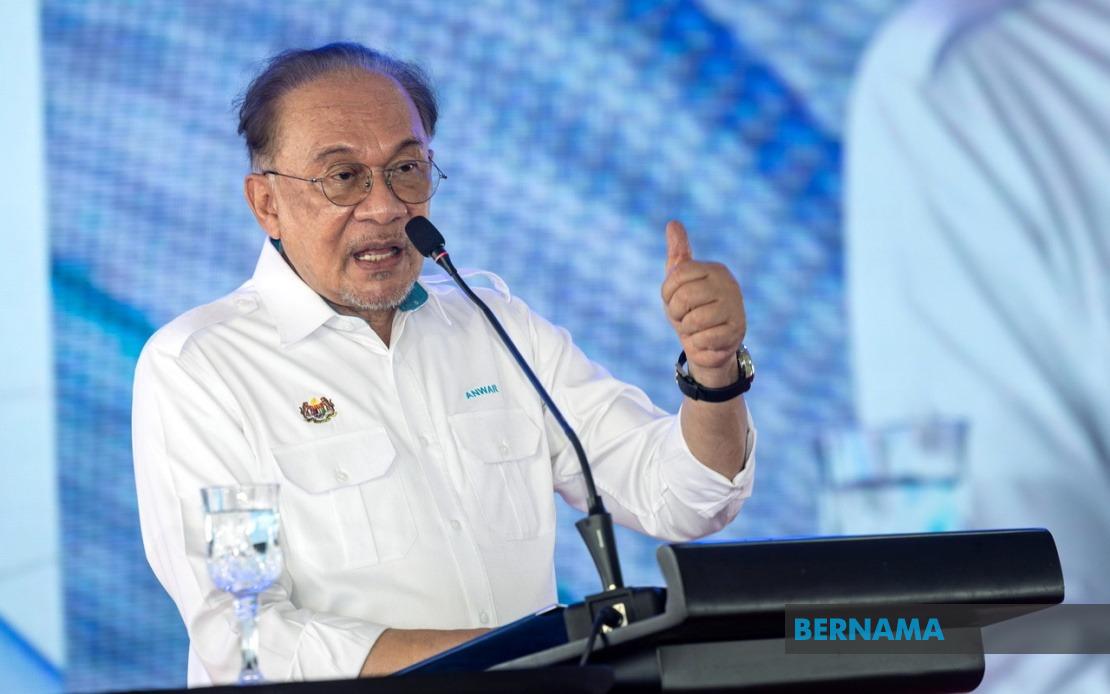
Prime Minister Datuk Seri Anwar Ibrahim has unveiled strategic energy partnerships with Russia and Turkmenistan that are expected to fortify Malaysia's energy security for the coming decades. Speaking at a groundbreaking ceremony for the Setia Fontaines Industrial Park in Kepala Batas, Anwar outlined how these bilateral arrangements represent a significant shift in the nation's approach to diversifying and stabilising long-term fuel supplies. The agreements underscore Malaysia's broader strategy to leverage international relations as a means of protecting critical national interests.
During his recent official visit to Russia, Anwar engaged in discussions with President Vladimir Putin in Kazan, where the Russian leader committed to supplying Malaysia with oil, gas, and diesel under a long-term agreement spanning at least twenty years. This assurance comes against a backdrop of growing global energy volatility and underscores the deepening relationship between Kuala Lumpur and Moscow. The Prime Minister framed the commitment as a reflection of robust bilateral ties, indicating that energy cooperation has become a cornerstone of Malaysia-Russia relations. Such extended supply agreements are critical for nations seeking to hedge against price fluctuations and geopolitical uncertainties in global commodity markets.
The developments with Turkmenistan appear even more consequential for Malaysia's strategic positioning. Following his state visit to the Central Asian nation, Anwar announced that Turkmenistan has granted Malaysia expanded access to its oil and gas sector. This breakthrough is particularly significant given that Turkmenistan possesses some of the world's largest proven natural gas reserves, a resource that has largely remained concentrated in serving regional markets and select international partners. By securing this access, Malaysia has essentially unlocked a gateway to reserves that could sustain the nation's energy requirements well into the distant future.
The progression of these agreements reflects methodical diplomatic efforts extending back several months. The partnership with Turkmenistan built momentum following the December 2024 visit of Turkmenistan President Serdar Berdimuhamedov to Malaysia, during which both nations explored mechanisms for deeper economic and energy cooperation. This diplomatic groundwork demonstrates how sustained high-level engagement can translate into tangible outcomes that benefit both parties. For Malaysia, such patient diplomacy has yielded arrangements that address one of the economy's most pressing long-term requirements.
Beyond securing domestic supply, the agreements open substantial opportunities for Malaysia to enhance its position as a regional energy trader. Anwar highlighted that Malaysia can leverage its newly secured access to Turkmen gas resources to boost exports to high-demand markets across East Asia, particularly China, Japan, and South Korea. These nations face mounting energy pressures as they pursue industrial expansion and transition toward cleaner energy frameworks. Malaysia's ability to serve as an intermediary supplier could generate significant revenue streams and strengthen its standing as a critical energy hub within the Asian supply chain. This export dimension transforms energy security from a purely defensive posture into an economic growth engine.
The timing of these announcements reflects Malaysia's recognition that energy infrastructure and supply chains have become intertwined with broader economic competitiveness. As manufacturing and industrial sectors across Asia compete for secure, affordable energy inputs, nations that can guarantee reliable supply enjoy a substantial advantage in attracting foreign direct investment and sustaining operational efficiency. By cementing partnerships with Russia and Turkmenistan, Malaysia is essentially building a competitive moat around its industrial base.
Anwar's statements emphasise a philosophy of deploying international relations strategically to advance multiple national objectives simultaneously. Energy security, economic development, and employment generation are positioned not as separate concerns but as interconnected elements of a coherent strategy. This integrated approach recognises that securing stable, affordable energy underpins job creation in energy-intensive industries and enables broader economic expansion. When Malaysia can assure companies that fuel costs will remain predictable and supplies reliable, it becomes a more attractive destination for capital and talent.
The geographic diversity of Malaysia's new energy partnerships merits consideration. By cultivating supply relationships spanning from Russia across to Central Asia, Malaysia is reducing its dependence on any single supplier or region. This geographic distribution provides resilience against regional disruptions and geopolitical tensions that might affect any particular corridor. The arrangement reflects lessons learned from global supply chain vulnerabilities exposed in recent years, where over-reliance on narrow supplier networks created acute vulnerabilities.
For Southeast Asia more broadly, Malaysia's energy diplomacy carries significant implications. As the region's second-largest economy and a major energy producer and consumer, Malaysia's energy security directly influences regional stability and prosperity. Successful long-term supply agreements reduce the likelihood of energy shortages that could trigger competition among regional peers or force nations to accept unfavourable terms from suppliers. Malaysia's success in securing twenty-year commitments may also encourage other Southeast Asian nations to pursue similarly structured partnerships, strengthening the region's collective energy resilience.
The agreements also signal Malaysia's willingness to maintain pragmatic relationships with diverse international partners regardless of geopolitical alignments. This approach aligns with ASEAN's doctrine of non-alignment and strategic autonomy, positioning Malaysia as a nation that prioritises national interests through flexible diplomacy rather than ideological commitments. In an era of great-power competition, such independent positioning allows Malaysia to extract maximum value from its strategic location and economic significance.
Looking forward, the success of these energy partnerships will depend on smooth implementation of supply contracts and maintenance of the political relationships underpinning them. Malaysia will need to ensure that infrastructure investments in terminals, pipelines, and processing facilities keep pace with supply availability. Simultaneously, the government must continue nurturing the diplomatic channels through which these agreements were negotiated, recognising that long-term contracts require ongoing relationship management at all levels.
The energy security arrangements with Russia and Turkmenistan represent a watershed moment for Malaysia's long-term planning. By extending visibility into fuel supplies across two decades, the nation gains the confidence to pursue ambitious industrial and economic objectives. Infrastructure projects, manufacturing investments, and export strategies can now proceed with greater certainty regarding input costs and availability. This confidence translates into tangible benefits for Malaysian workers, businesses, and households, making energy diplomacy far more than an abstract concern of policymakers.