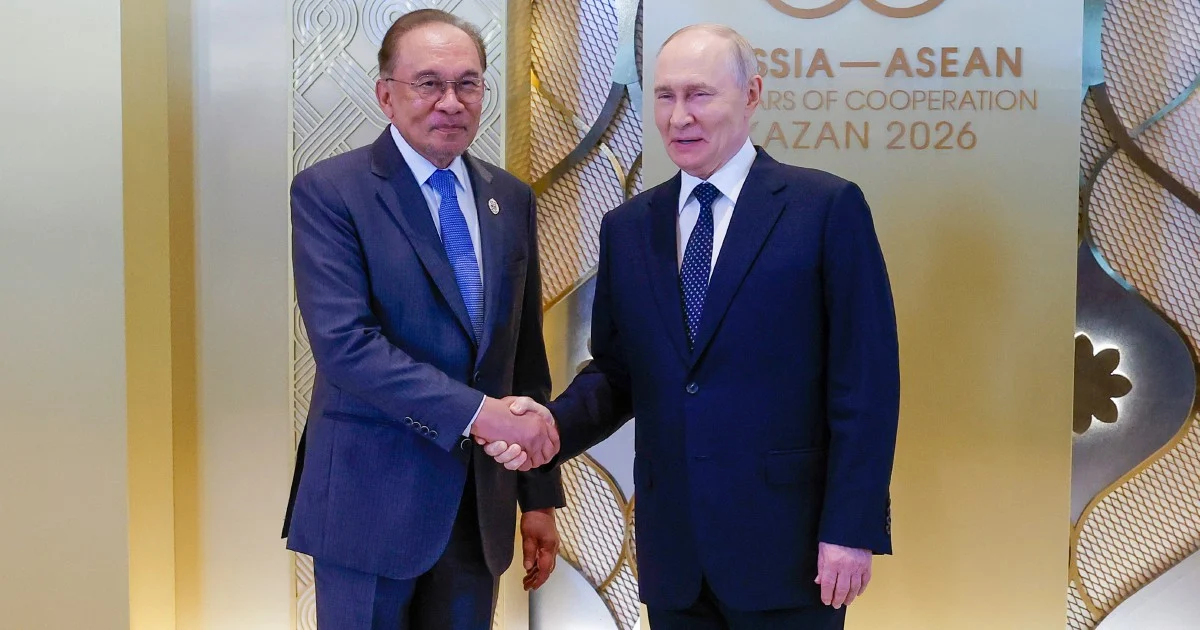
Prime Minister Datuk Seri Anwar Ibrahim's official travels to Russia and Turkmenistan have drawn supportive commentary from BRICS International Malaysia, which characterizes the missions as substantive moves to fortify the country's energy foundations. The diplomatic undertaking signals Malaysia's intention to broaden its hydrocarbon sourcing networks and forge deeper bilateral relations with energy-rich nations in Central Asia and Eastern Europe—a strategic recalibration that comes as regional energy dynamics continue to shift in response to global market pressures and geopolitical realignment.
The visits carry particular weight given Malaysia's historical dependence on conventional oil and gas supplies from established trading partners. By engaging directly with Russia and Turkmenistan, both significant producers with substantial proven reserves, Anwar's government is pursuing what amounts to a pragmatic diversification strategy. This approach reflects the administration's broader philosophy of maintaining multiple economic partnerships rather than concentrating resource vulnerability in any single relationship—a posture increasingly recognized as prudent in an era of supply chain fragmentation and sanctions-driven market disruptions.
Turkmenistan's position as Central Asia's second-largest natural gas exporter makes it a particularly attractive partner for Malaysia's medium and long-term energy planning. The country's vast reserves remain substantially underutilized in global markets, with considerable capacity for expanded production and export arrangements. Similarly, Russia's hydrocarbon infrastructure, despite international headwinds, continues to represent a substantial resource base that neighboring and distant trading partners seek to access through alternative commercial pathways. For Malaysia, establishing or deepening ties with both nations creates optionality in procurement strategies while demonstrating independence in foreign policy decision-making.
The timing of Anwar's missions coincides with Malaysia's ongoing assessment of how best to position itself within competing regional and international frameworks. Southeast Asia faces persistent energy demand growth driven by industrialization and rising living standards, yet traditional suppliers cannot indefinitely satisfy regional appetite. By pursuing direct government-to-government engagement with Central Asian producers, Malaysia signals to the international business community that it is serious about sourcing security and willing to navigate complex diplomatic terrain to achieve it. This positioning also reinforces Malaysia's membership and alignment with organizations like BRICS, which champion multipolar approaches to international commerce and reduce reliance on Western-dominated trade architecture.
Energy cooperation arrangements between Malaysia and Turkmenistan could encompass multiple modalities, from direct procurement contracts to joint venture participation in upstream development projects or downstream processing facilities. Turkmenistan has demonstrated interest in expanding its customer base beyond traditional pathways through the Caucasus and Russia, making Southeast Asian markets increasingly relevant to Caspian energy strategies. Malaysia, conversely, benefits from engaging in these emerging supply chains before they become fully locked into competing arrangements or subject to restrictive protocols that might limit access.
Russia's involvement in Malaysia's energy calculations reflects both pragmatism and the reality that major commodity markets ultimately transcend political friction. Despite sanctions and international pressures, Russian energy continues flowing to global consumers through multiple channels, and Malaysia's willingness to explore these relationships demonstrates the government's commitment to serving national energy interests above ideological positioning. This pragmatism aligns with Malaysia's historical non-aligned tradition and its preference for balancing great power relationships rather than committing exclusively to any single bloc.
The economic partnerships emerging from these visits extend beyond simple commodity purchases. Joint ventures, technology transfer arrangements, and financial collaborations in energy infrastructure development could generate employment, develop technical expertise among Malaysian workers and engineers, and create pathways for Malaysian companies to participate in projects beyond the region. Such collaborative models have historically proven durable across political cycles and changing international conditions, making them valuable long-term assets for any developing economy.
For BRICS International Malaysia, endorsement of these diplomatic initiatives reflects the organization's broader advocacy for South-South cooperation and resistance to what members characterize as asymmetrical international trading relationships. From this perspective, Malaysia's engagement with Russia and Turkmenistan represents not merely transactional energy deals but rather participation in a wider reconfiguration of global economic power. The organization sees such relationships as gradual components of a transition away from structures that historically concentrated control of critical resources among a narrow set of Western-aligned actors.
Domestically, Malaysia's strengthened energy security arrangements carry implications for long-term economic planning and industrial competitiveness. Reliable access to affordable hydrocarbon supplies underpins manufacturing costs, electricity generation, and petrochemical production—industries fundamental to Malaysia's export capacity and employment creation. By securing additional sourcing options and creating redundancy in supply chains, the government reduces vulnerability to supply shocks or price volatility that could destabilize the broader economy.
The visits also demonstrate Anwar's personal commitment to hands-on engagement with strategic partnerships—a leadership style that emphasizes direct relationship-building with foreign counterparts over purely institutional channels. This approach has historically yielded tangible commercial outcomes and cultivated goodwill that persists even during periods of international tension. By personally investing diplomatic capital in Russia and Turkmenistan, Anwar signals to both governments and Malaysian stakeholders the seriousness with which these relationships are regarded.
Looking forward, the fruits of these missions will likely unfold gradually through technical delegations, contract negotiations, and joint working groups focused on specific energy projects or procurement frameworks. The diplomatic groundwork laid during high-level visits typically generates years of subsequent commercial activity. For Malaysian observers and policymakers, the key metrics of success will involve the durability of arrangements negotiated, the competitive terms secured relative to alternative suppliers, and the degree to which new energy sources contribute meaningfully to the nation's long-term resource security and economic resilience.
%22%2F%3E%3C%2Fpattern%3E%3C%2Fdefs%3E%3Crect%20width%3D%22100%25%22%20height%3D%22100%25%22%20fill%3D%22url(%23ph3eq5fg)%22%2F%3E%3Crect%20width%3D%22100%25%22%20height%3D%22100%25%22%20fill%3D%22url(%23ph3eq5fp)%22%2F%3E%3Ctext%20x%3D%2250%25%22%20y%3D%2250%25%22%20text-anchor%3D%22middle%22%20dominant-baseline%3D%22central%22%20fill%3D%22rgba(255%2C255%2C255%2C0.95)%22%20font-family%3D%22Georgia%2C%20'Times%20New%20Roman'%2C%20serif%22%20font-weight%3D%22700%22%20font-size%3D%22320%22%20letter-spacing%3D%22-0.02em%22%3ETwo%3C%2Ftext%3E%3C%2Fsvg%3E)