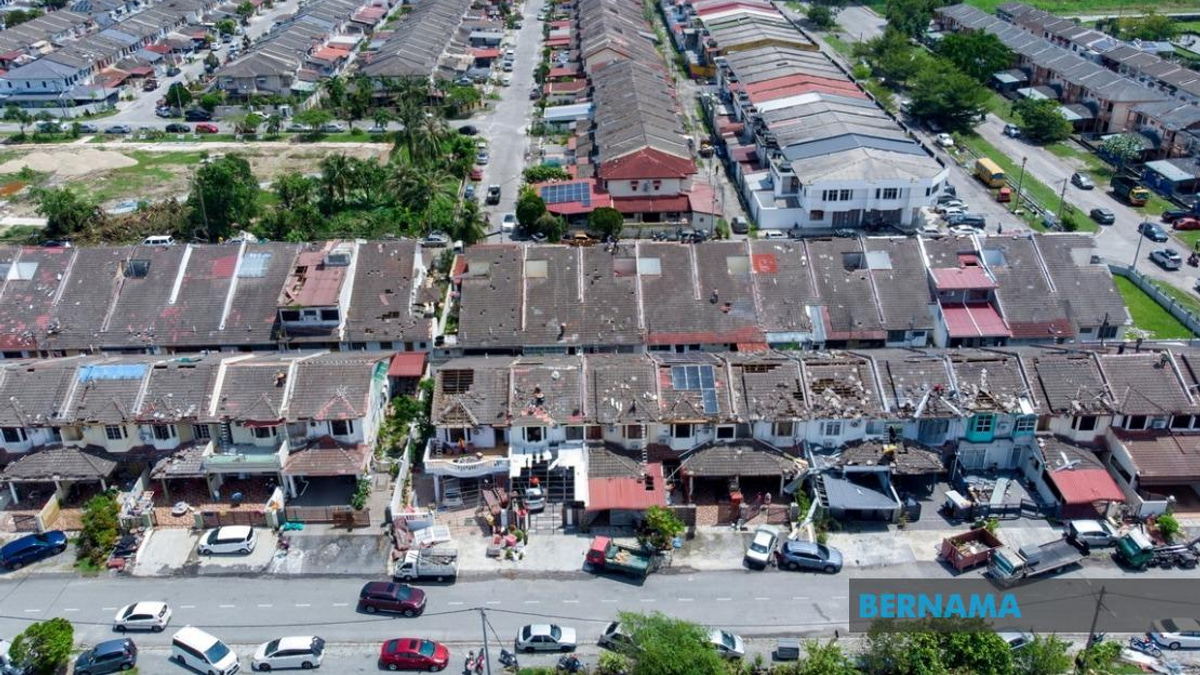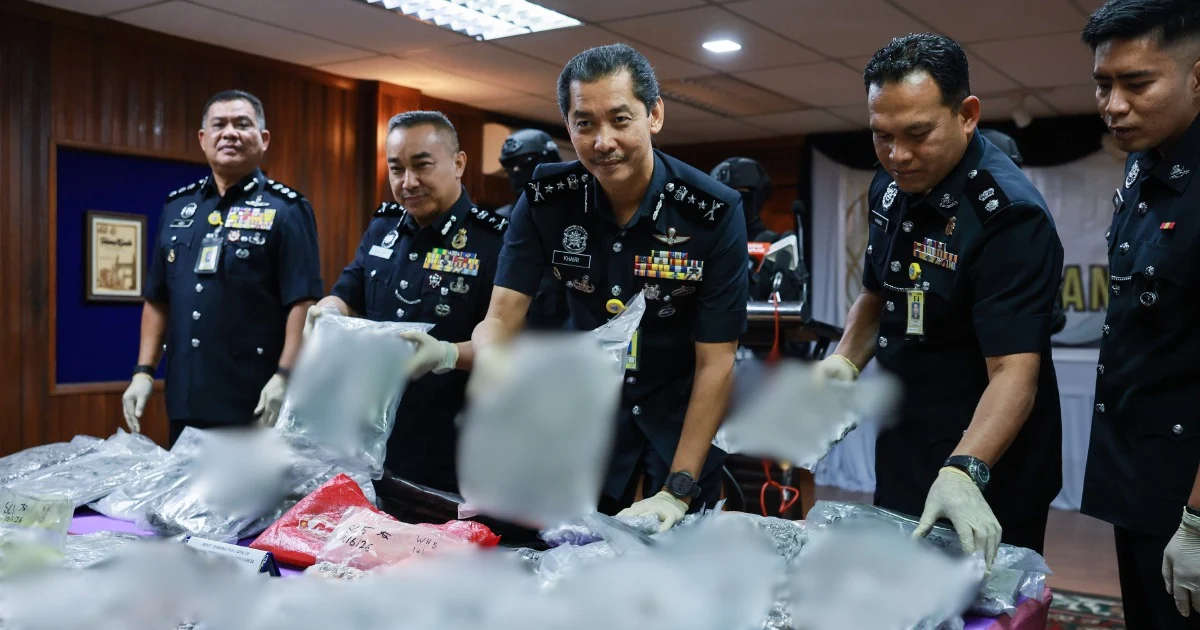
Authorities in Kuala Terengganu have made a significant breakthrough in combating drug trafficking, apprehending two brothers who allegedly transformed their family residence into a substantial distribution and storage hub for illicit narcotics. The operation, conducted at a property located in Kampung Duyong Besar, resulted in the seizure of drugs estimated to be worth RM1.76 million, marking one of the more substantial hauls recorded in the state in recent months.
The arrest highlights a concerning shift in how drug trafficking networks operate across Malaysia. Rather than relying on purely commercial premises or transient locations that might attract police attention, organised crime syndicates increasingly exploit residential properties to maintain their operations. Such facilities are typically more inconspicuous, blend into neighbourhood environments, and allow traffickers to conduct their business while maintaining a veneer of normality that can delay detection by law enforcement.
The Kampung Duyong Besar location in Kuala Terengganu is a residential area within the state capital, underscoring how these operations penetrate ordinary communities. This neighbourhood-based approach presents particular challenges for police enforcement, as distinguishing between innocent households and active distribution nodes requires targeted intelligence rather than random patrols. The successful operation suggests that local law enforcement received specific information that enabled them to focus their investigative resources effectively.
The RM1.76 million valuation places this seizure among the larger drug hauls in Terengganu, reflecting both the quantity of narcotics involved and the street-level value of the substances that would have entered the regional market had the operation remained undetected. This monetary assessment also indicates that the brothers were not merely small-scale retailers but rather participants in a significant commercial enterprise with substantial inventory and distribution capability.
For Malaysian law enforcement agencies, particularly the Royal Malaysia Police, such operations reinforce the necessity of intelligence-led policing strategies. The transition from large-scale manufacturing facilities to distributed residential networks means that police must develop more sophisticated surveillance and community-reporting mechanisms rather than relying solely on conventional enforcement approaches. The success in Kuala Terengganu demonstrates that when intelligence is effectively gathered and acted upon, disruption of trafficking operations remains achievable.
The regional context cannot be overlooked, as Terengganu's coastal location and proximity to maritime routes make it inherently vulnerable to drug trafficking. The state serves as both a consumption market for local drug users and a potential transit point for narcotics moving between production centres in the Golden Triangle and distribution networks in peninsular Malaysia. Arresting major distributors operating within state boundaries directly impacts the supply chain and prices available to downstream users.
The involvement of family members in trafficking operations, while not unique, underscores how criminal syndicates exploit personal relationships and domestic trust to shield their activities. Family-run operations create additional layers of concealment, as neighbours and authorities may be less likely to scrutinise homes associated with established families. This particular case involved two brothers, suggesting a level of familiarity and delegation within the criminal structure that allowed the operation to function with relative autonomy.
From an enforcement perspective, residential drug warehousing presents distinct investigation challenges compared to commercial premises. Police must typically obtain search warrants based on substantial probable cause, requiring higher evidentiary thresholds than might apply to suspected commercial drug labs or distribution centres. The successful execution of this arrest indicates that investigators accumulated sufficient evidence to convince judicial authorities to authorise the operation.
Looking forward, this case serves as a reminder that drug trafficking networks continuously adapt their operational methods to evade detection. The shift toward residential bases reflects criminal organisations responding to increased police vigilance at traditional trafficking locations. For authorities across Southeast Asia, and particularly in Malaysia, this represents an ongoing cat-and-mouse dynamic requiring constant evolution of investigative techniques, intelligence gathering, and community engagement.
The seizure and arrests should reduce the immediate supply of narcotics available in Kuala Terengganu and surrounding areas, potentially affecting street-level availability and pricing in the short term. However, law enforcement agencies recognise that dismantling a single warehouse does not resolve the underlying demand drivers or the economic incentives that sustain trafficking networks. Comprehensive drug control requires simultaneously addressing supply reduction through arrests and seizures, demand reduction through treatment and rehabilitation programmes, and long-term prevention through community-based interventions.
Police investigations into the operation are continuing, likely to determine the source of the seized narcotics, the distribution networks the brothers serviced, and whether additional individuals upstream or downstream remain involved in the conspiracy. Such follow-up investigations often prove as valuable as the initial arrest, potentially leading to further dismantling of the trafficking organisation and disruption of supply networks feeding Malaysian markets.