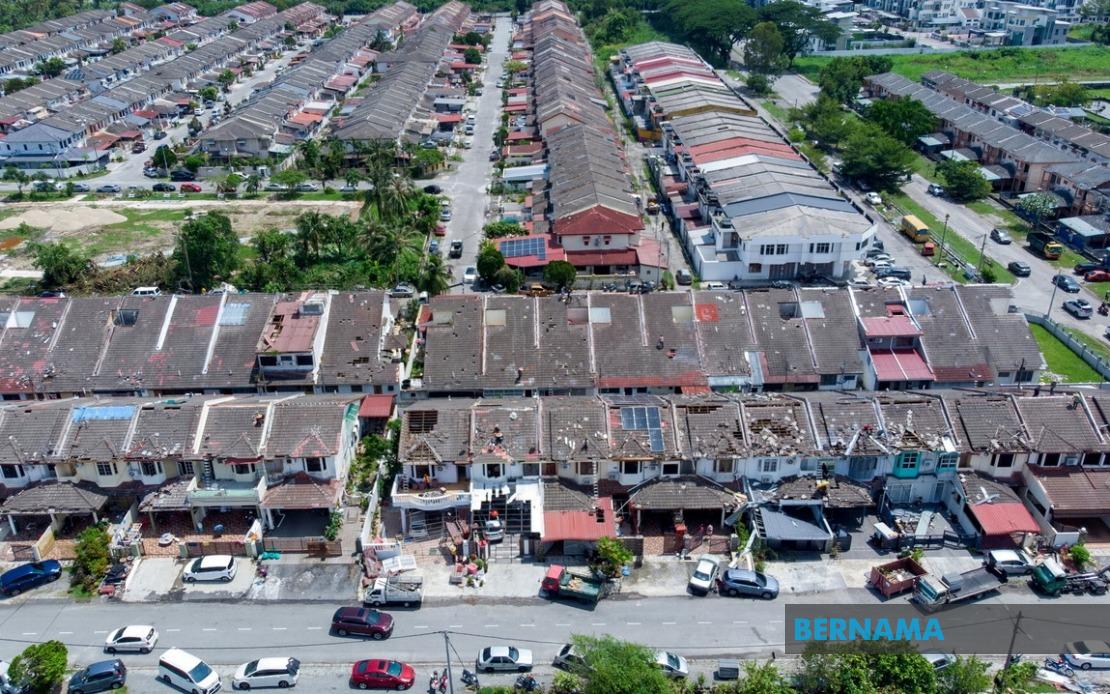
Police have imposed strict access controls across five separate zones within Bercham's disaster-affected neighbourhoods, implementing a security response designed to prevent criminal exploitation of the weather emergency. The cordon follows a severe storm that struck the Ipoh area on Friday, leaving widespread structural damage and displacing residents across multiple residential zones.
Ipoh district police chief ACP Muhammad Najib Hamzah outlined the rationale for the containment strategy, explaining that the sealed zones protect vulnerable properties during the critical recovery period when residents and recovery workers are most at risk from opportunistic criminals. The lockdown reflects growing concerns about theft and break-ins that frequently plague disaster-stricken areas, where damaged homes are left unoccupied and neighbourhood watch networks are disrupted by the chaos of emergency response operations.
While the restriction appears stringent on its surface, Muhammad Najib acknowledged that residents face genuine challenges accessing their own homes for essential cleanup and salvage work. He indicated the police force would exercise discretion, granting temporary passage to homeowners seeking to retrieve belongings and undertake initial damage assessment, particularly recognising that many residents have been unable to reach their properties since the storm hit.
Nighttime movement remains the primary enforcement focus, however. Police have made clear that after dark, when visibility is reduced and criminal elements have operational advantage, restrictions will be applied with minimal flexibility. This distinction is particularly significant in Anjung Bercham and surrounding areas that remain without electricity following the disaster, creating conditions where looters could operate with relative impunity under cover of darkness.
The police strategy includes verification procedures whereby officers will confirm residency before permitting nighttime access to properties. This safeguard attempts to distinguish between legitimate residents conducting cleanup activities and individuals using the disaster as cover for criminal enterprise. The approach requires police checkpoints to maintain detailed records of who enters sealed zones and at what times, creating an audit trail that enables investigation of any subsequent break-ins or thefts.
As of 8 am on the day of the police statement, authorities had logged 492 storm-related incident reports through the Op Bencana emergency reporting system. Significantly, Muhammad Najib confirmed no deadline exists for victims to file additional reports, understanding that many residents are struggling to assess damage, contact authorities, and navigate insurance and assistance processes simultaneously. This flexibility in reporting timeframes acknowledges the reality that disaster victims often require days or weeks to fully comprehend the extent of their losses.
The financial scale of the disaster remains uncertain. Authorities have not yet compiled comprehensive damage assessments across the affected neighbourhoods, leaving the total loss figure undetermined at the time of police briefing. This information gap complicates disaster response coordination, as accurate damage estimates are essential for allocating government assistance, triggering insurance claims, and planning reconstruction efforts.
M. Kulasegaran, the Ipoh Barat Member of Parliament and Deputy Minister in the Prime Minister's Department (Law and Institutional Reform), characterised the storm as extraordinary in its intensity and geographic concentration. His description of the event as unprecedented is significant, as it suggests the storm's meteorological signature differed substantially from typical weather events that periodically strike the region. Kulasegaran attributed the damage pattern to a landspout phenomenon, a rare and highly localised rotating column of wind that can develop over land, generating extreme velocities capable of structural devastation.
The affected residential zones encompassed Anjung Bercham Utara, Taman Mujur, Kampung Bercham, Kampung Tersusun Tasek, Taman Pusat Bercham, and Taman Indah Sakti. More than 200 houses sustained damage across these neighbourhoods, affecting an estimated 800 to 1,000 residents depending on household size. The geographic spread indicates the storm system maintained damaging force across a relatively wide area, rather than impacting a single small neighbourhood.
For Malaysian readers and regional observers, the Bercham incident illustrates both the escalating climate vulnerability of developed urban areas and the coordination challenges facing emergency services responding to disasters in densely populated settings. Perak state, particularly the Ipoh district, has experienced multiple severe weather events in recent years, suggesting climate patterns may be shifting in ways that increase frequency or intensity of extreme precipitation and wind events. The police response model tested in Bercham—combining humanitarian flexibility with security enforcement—may serve as a template for future disaster management operations across Malaysia's major urban centres.
The incident also raises questions about building code compliance and structural resilience in Malaysian residential developments. That a single meteorological event could damage over 200 homes suggests that either the extreme nature of the weather exceeded existing design standards, or that construction quality in some neighbourhoods may not provide adequate protection against severe weather. Both explanations warrant investigation as authorities work to understand what occurred and how similar damage might be prevented in future events.
Movement beyond the sealed zones continues normally, and life in unaffected Ipoh neighbourhoods remains uninterrupted. The police operation concentrates resources on the most vulnerable geography, balancing humanitarian access against security imperatives as Bercham residents and authorities work together toward recovery.