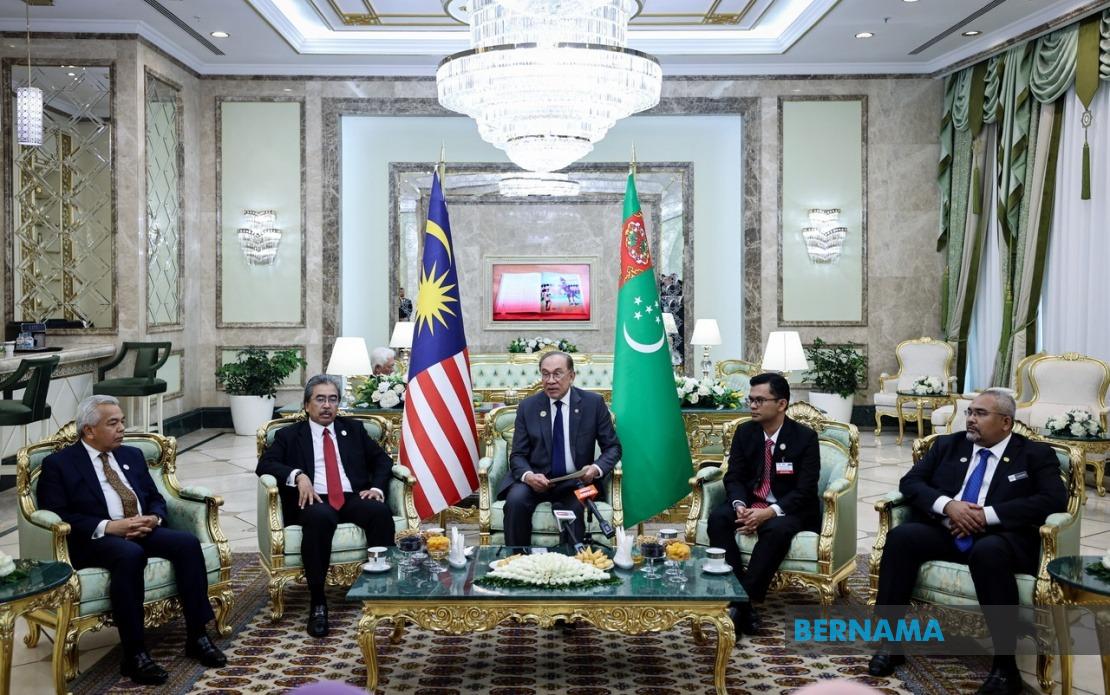
Prime Minister Datuk Seri Anwar Ibrahim has concluded his two-day working visit to Turkmenistan with an assessment that the mission successfully achieved its core objectives of fortifying relations and establishing new frameworks for strategic engagement. The trip, which commenced on June 18, represents Anwar's first formal diplomatic visit to the Central Asian nation since his assumption of office as Malaysia's 10th prime minister in November 2022, undertaken at the specific invitation of Turkmenistan's President Serdar Berdimuhamedov.
The premier characterised the visit as instrumental in launching a fresh phase of bilateral cooperation spanning multiple sectors of shared concern and economic relevance. Energy emerged as the paramount focus area, given Turkmenistan's substantial hydrocarbon reserves and Malaysia's status as a major energy consumer and petroleum exporter with deep technical expertise. This convergence of interests creates considerable potential for joint ventures, technology transfer arrangements, and strategic resource partnerships that could benefit both economies.
Anwar extended formal gratitude to President Berdimuhamedov and Turkmenistan's government for facilitating a comprehensive and gracious reception for the Malaysian delegation. His acknowledgment extended to multiple institutional stakeholders within Malaysia's own apparatus, reflecting the multifaceted nature of the engagement. The Prime Minister's Office coordinated logistics, while the Foreign Ministry managed diplomatic protocols and relationship continuity. PETRONAS, Malaysia's national petroleum corporation, participated substantively given the energy-focused agenda, positioning itself to evaluate potential commercial arrangements within Turkmenistan's hydrocarbon sector.
The Malaysian delegation brought considerable ministerial heft to underline the importance Kuala Lumpur attaches to this relationship. Minister of Investment, Trade and Industry Datuk Seri Johari Abdul Ghani accompanied Anwar, signalling Malaysia's intent to explore commercial partnerships beyond conventional diplomacy. Minister of Economy Akmal Nasrullah Mohd Nasir's inclusion further demonstrated Malaysia's comprehensive approach to bilateral engagement, addressing both macro-economic frameworks and sectoral opportunities. Supporting personnel from the Prime Minister's Office and Foreign Ministry ensured coherent messaging and follow-up mechanisms.
The timing of this visit carries particular significance within Southeast Asia's broader geopolitical and economic context. Turkmenistan, situated at the intersection of Central Asia and the broader Eurasian landscape, represents a strategic vantage point for Malaysian interests seeking to diversify energy sourcing and expand commercial footprints beyond traditional markets. Malaysia, as a Southeast Asian anchor economy with strong institutional capacity and investment credentials, similarly offers Turkmenistan pathways to Asian markets and regional integration opportunities.
Energy cooperation constitutes the most substantive element of Malaysia-Turkmenistan relations, given complementary strategic interests. Turkmenistan possesses some of the world's largest proven natural gas reserves, yet faces persistent challenges in monetising these resources through diversified export channels. Malaysia, conversely, maintains robust downstream energy infrastructure, refining capabilities, and established distribution networks across Asia-Pacific markets. A partnership framework could encompass liquefied natural gas arrangements, joint upstream exploration ventures, and technology collaboration in extraction and processing methodologies.
Beyond hydrocarbon commerce, the visit implicitly opened discussions across economic sectors reflecting Malaysia's diversified development priorities. These encompass trade and investment facilitation, manufacturing partnerships, telecommunications and digital economy initiatives, and potentially cultural and educational exchanges. For Malaysian companies, Turkmenistan's infrastructure development requirements present commercial opportunities in construction, engineering services, and technology provisioning. Conversely, Turkmen businesses may seek Malaysian expertise in financial services, petrochemical refining, and Islamic finance mechanisms.
The diplomatic significance extends to Malaysia's positioning within the broader Organisation of Islamic Cooperation framework, which includes Turkmenistan as an observer state. Enhanced bilateral ties reinforce Malaysia's engagement with Central Asia, a region historically underweighted in Malaysian foreign policy despite considerable economic and strategic potential. This visit signals Kuala Lumpur's intention to deepen Southeast Asian connections with Central Asian economies, potentially creating trade corridors and investment pipelines that circumvent traditional intermediaries.
For Turkmenistan, engaging Malaysia at prime ministerial level validates its efforts to diversify international partnerships beyond traditional Russian and Chinese relationships. Malaysia's democratic governance framework, transparent investment institutions, and established regional influence make it an attractive partner for resource-rich nations seeking to balance geopolitical exposure while pursuing sustainable development objectives. The visit also positions Turkmenistan to access Malaysian expertise in Islamic finance and Sharia-compliant investment mechanisms, aligning with both nations' religious and cultural identities.
Following the visit, both governments are anticipated to formulate concrete mechanisms for advancing the identified cooperation areas. These may include bilateral commissions, sectoral working groups involving PETRONAS and Turkmen energy authorities, and expedited visa and trade facilitation procedures. The involvement of Malaysia's trade and investment ministry suggests potential frameworks for encouraging Malaysian corporate exploration of Turkmenistan opportunities, possibly through embassy-based investment promotion activities and targeted business delegations.
The success metric for this diplomatic engagement will ultimately rest upon implementation of announced cooperation frameworks and tangible commercial outcomes materialising over subsequent months. While inaugural prime ministerial visits establish important political symbolism and high-level commitment, sustained engagement requires institutional follow-through and commercially viable projects delivering mutual benefits. Both governments possess the institutional capacity and strategic motivation to transform diplomatic statements into operational partnerships, particularly within the energy sector where technical expertise and capital requirements align Malaysian and Turkmen capabilities and needs.
This visit underscores Malaysia's proactive approach to global engagement under Anwar's leadership, extending diplomatic reach into strategically important yet traditionally underexplored regions. As Malaysia navigates evolving regional dynamics and energy transition imperatives, partnerships with major resource economies like Turkmenistan provide strategic flexibility and long-term energy security options. For Malaysian investors and enterprises, the opened diplomatic channels facilitate market entry and partnership development in a Central Asian economy increasingly seeking diversified international engagement.