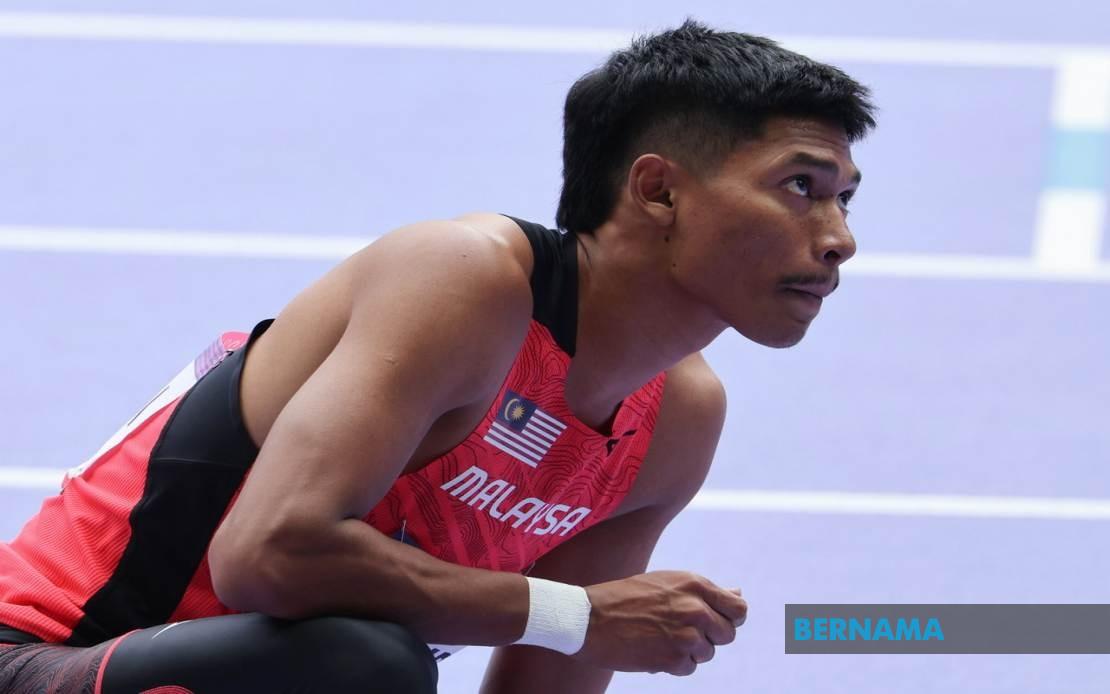
Muhammad Azeem Mohd Fahmi, Malaysia's leading sprinter and holder of the national 100-metre record with a time of 10.09 seconds, has committed to building his athletics career at home after completing his four-year studies at Auburn University in the United States. The 22-year-old's decision marks a significant development for Malaysian track and field, as the country continues to nurture homegrown talent in a sport where Southeast Asian representation remains limited at the highest levels of international competition.
Azeem's choice to remain in Malaysia reflects a deepening recognition among elite Malaysian athletes of the value that family support networks provide throughout an athletic career. Having spent the past four years developing his craft in the United States, the sprinter emphasized that proximity to his parents, siblings, and longtime supporters has become central to his next phase of development. His comments underscore a broader pattern among Southeast Asian athletes who often balance the technical advantages of training abroad with the psychological and emotional benefits of remaining rooted in their home communities.
The sprinter's training framework will now combine international expertise with local oversight. Ken Harnden, his American coach who oversaw his development at Auburn, will continue designing his training programmes remotely, while Muhammad Amir Izwan Tan Abdullah, a Malaysian coach, will provide day-to-day supervision and adaptation of these plans to local conditions. This hybrid approach has become increasingly common in Malaysian sports, where athletes leverage overseas coaching knowledge while maintaining continuous oversight from domestically-based specialists who understand local training facilities and competitive calendars.
Azeem's decision carries implications for Malaysian athletics' broader infrastructure. The return of accomplished athletes trained at international universities can strengthen domestic coaching ecosystems by introducing advanced methodologies and competitive standards. Auburn University has produced several notable track athletes, and Azeem's trajectory there demonstrates that Malaysian sprinters can compete credibly within American collegiate athletics, traditionally a proving ground for global track talent. His presence back in Malaysia may raise the performance benchmark for younger sprinters entering the national pipeline.
The athlete also announced intentions to pursue postgraduate education, though he has decided to postpone this commitment for several months to concentrate exclusively on athletic preparation. This measured approach reflects maturity in balancing long-term career development with immediate competitive priorities. For Malaysian elite athletes, the ability to pursue higher education while maintaining elite sporting status remains constrained by limited financial support systems, making Azeem's situation relatively privileged within the local context.
Azeem's 10.09-second clocking in the 100 metres stands as the fastest time ever recorded by a Malaysian sprinter and positions him among the faster runners across Southeast Asia. His national record, achieved through sustained training and international exposure, establishes a new benchmark for the country's sprinting programme. The margin between Azeem's time and typical performances at regional championships suggests Malaysia possesses genuine depth in this event, though broader development of supporting talent remains essential for consistent international representation.
The sprinter's emphasis on family reflects cultural values deeply rooted in Malaysian society, where extended kinship networks traditionally provide emotional foundation for individual achievement. His willingness to articulate this dimension publicly may help normalize conversations about mental health and family support within Malaysian sports, an area where psychological frameworks have historically received less attention than physical training protocols. The recognition that family relationships constitute genuine sporting infrastructure rather than mere sentiment offers valuable perspective for sports psychology development in the region.
Malaysia's athletics programme has historically struggled to produce consistently competitive international performers, with individual champions often finding greater support and training opportunities overseas. Azeem's return potentially signals changing attitudes toward domestic athlete development, possibly reflecting improved national coaching standards and facility quality. His case study may influence how Malaysian sports administrators allocate resources to track and field, particularly if his continued success at international competitions demonstrates that elite performance can be maintained through domestically-based training systems.
The transition period Azeem has outlined, combining rest and refocused training intensity, represents a critical juncture in his athletic trajectory. The physiological and psychological demands of university athletics differ from open competition circuits, requiring careful calibration as he adjusts to post-collegiate calendars. His decision to prioritize this transition rather than immediately seeking international competition indicates strategic thinking about long-term athletic sustainability, a consideration increasingly emphasized in modern sports science but sometimes overlooked by athletes eager to capitalize on recent achievements.
Azeem's situation also illustrates broader questions about athlete retention in Southeast Asia. The region's most talented individuals frequently relocate abroad for training, education, and competition, creating brain drain in sports sectors already constrained by limited funding and infrastructure. His deliberate choice to base himself in Malaysia, despite having access to continue training in the United States, represents a conscious decision to contribute to local athletics development. Should Azeem maintain or improve his competitive performance while training domestically, he may inspire other Malaysian athletes to consider similar paths, potentially creating positive feedback loops for the national programme.

%22%2F%3E%3C%2Fpattern%3E%3C%2Fdefs%3E%3Crect%20width%3D%22100%25%22%20height%3D%22100%25%22%20fill%3D%22url(%23ph4dnbsg)%22%2F%3E%3Crect%20width%3D%22100%25%22%20height%3D%22100%25%22%20fill%3D%22url(%23ph4dnbsp)%22%2F%3E%3Ctext%20x%3D%2250%25%22%20y%3D%2250%25%22%20text-anchor%3D%22middle%22%20dominant-baseline%3D%22central%22%20fill%3D%22rgba(255%2C255%2C255%2C0.95)%22%20font-family%3D%22Georgia%2C%20'Times%20New%20Roman'%2C%20serif%22%20font-weight%3D%22700%22%20font-size%3D%22170%22%20letter-spacing%3D%22-0.02em%22%3EMalaysia%3C%2Ftext%3E%3C%2Fsvg%3E)