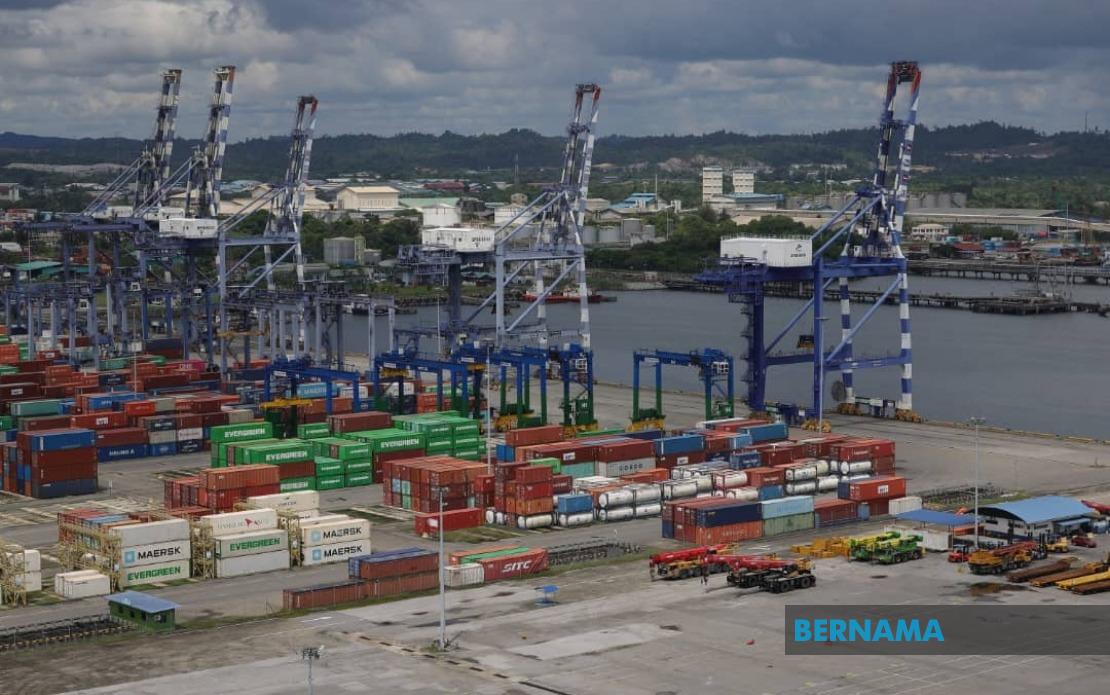
The Malaysian federal government has formally transferred regulatory authority of Bintulu Port to the Sarawak state government, a development that officials are heralding as a landmark achievement in implementing the Malaysia Agreement 1963 (MA63). The handover ceremony, held in Bintulu, was attended by Prime Minister Datuk Seri Anwar Ibrahim and Sarawak Premier Tan Sri Abang Johari Tun Openg, underscoring the significance placed on the transfer by the highest levels of government. Datuk Mustapha Sakmud, the Minister in the Prime Minister's Department responsible for Sabah and Sarawak affairs, characterised the move as recognition of Sarawak's constitutional standing as a founding partner in the Malaysian federation, while demonstrating that MA63 implementation can proceed harmoniously between federal and state authorities.
The shift in administrative control reflects a broader interpretation of MA63 that prioritises collaborative federalism over centralised control. Mustapha emphasised that the transfer should not be misunderstood as a diminishment of federal authority, but rather as a strategic strengthening of Malaysia's federal structure through the honouring of agreements signed with Sabah and Sarawak upon independence. This framing is particularly significant in the Malaysian political context, where questions about state autonomy and federal-state relations remain perennially sensitive. By positioning the handover as mutually beneficial rather than adversarial, the government signals an openness to reconsidering the balance of power enshrined in the original agreement, potentially establishing a template for addressing other outstanding MA63 claims.
Bintulu Port has long served as a critical economic asset for both Sarawak and Malaysia's broader interests. The facility functions as the nation's primary liquefied natural gas export hub, handling the export of LNG produced from offshore fields. Under federal management, the port was essentially operating as a dedicated energy infrastructure facility, with limited scope for diversification or integration with broader state economic strategies. The transfer of regulatory control now enables the Sarawak government to shape the port's development trajectory in alignment with its own economic vision, potentially opening pathways for expansion into adjacent industrial, logistics, and manufacturing sectors.
Official commentary suggests that Bintulu Port is positioning itself as more than a hydrocarbon export terminal. Mustapha outlined an ambitious vision for the facility as an industrial, logistics, and green energy centre that could anchor economic growth across Malaysia and the wider Asia-Pacific region. This ambition taps into global trends favouring low-carbon industrial development and renewable energy integration. Sarawak's abundance of hydroelectric generation capacity provides a compelling advantage for energy-intensive industries seeking to reduce their carbon footprint. The state's potential as a hub for green manufacturing and clean energy industries could attract multinational investors operating under increasingly stringent environmental compliance requirements.
The geographic positioning of Bintulu within the broader Southeast Asian economic landscape amplifies the significance of this transfer. Strategically situated along major shipping lanes connecting the Indian Ocean to the Pacific, Bintulu offers unparalleled logistics advantages for companies serving regional and global markets. The combination of deep-water port infrastructure, hydroelectric power capacity, and now direct state administrative control creates a compelling value proposition for investors in capital-intensive, environmentally sensitive industries. This development may reshape how Sarawak approaches its economic diversification strategy, moving beyond dependency on natural resources towards high-value manufacturing and services.
The timing of the transfer carries political weight beyond its administrative implications. It arrives during a period when the federal government under Datuk Seri Anwar Ibrahim has been positioning itself as more attentive to the constitutional and economic concerns of East Malaysian states. The visible participation of the Prime Minister in the handover ceremony sends a message to Sarawak and Sabah that their historical grievances are being taken seriously at the highest levels of government. For Malaysian observers across the peninsula, the transfer also demonstrates that the federal government is willing to devolve control over economically significant assets when doing so aligns with constitutional agreements and political consensus.
From a broader constitutional perspective, the Bintulu Port handover exemplifies how MA63 implementation operates in practice. The agreement, signed in 1963, contained provisions reserving certain powers to Sabah and Sarawak, including authority over matters of state economic development. However, decades of federal administrative precedent had effectively concentrated control over major ports and infrastructure in federal hands. Reversing this trend requires both political will and a willingness to reconsider institutional arrangements that have become embedded over time. The successful execution of the Bintulu transfer suggests that the current political configuration permits such reversals, though questions remain about how comprehensively MA63 will ultimately be implemented.
The implications for Malaysian federalism extend beyond Sarawak and Bintulu Port. The transfer establishes a precedent that may influence how other outstanding MA63 claims are addressed. Sabah and Sarawak have historically pressed for greater control over resource royalties, taxation arrangements, and economic development initiatives. While the Bintulu Port transfer is narrower in scope than some of these demands, it demonstrates that the federal government is willing to engage substantively with claims grounded in the historical agreement. This willingness could reshape negotiations around broader constitutional and fiscal arrangements between the federal government and the East Malaysian states.
For investors and business communities across Malaysia and the region, the port transfer signals institutional clarity and stability. Private enterprises considering investments in industrial facilities, logistics operations, or manufacturing hubs at or near Bintulu can now negotiate directly with the Sarawak state government, reducing bureaucratic complexity and aligning incentive structures. Sarawak's governance of the port allows the state to craft policies and incentive mechanisms tailored to attracting specific industries and investment profiles. This direct connection between state political interests and port development strategy could accelerate the facility's evolution into a diversified economic hub rather than a single-purpose export terminal.
The broader narrative advanced by federal officials positions MA63 implementation as compatible with national economic development. By framing Sarawak's expanded role as advancing Malaysia's competitiveness in green industries and regional logistics, the federal government argues that devolving authority to states ultimately strengthens the nation's economic position. This framing contrasts with arguments that federal centralisation ensures efficiency and uniform standards. Instead, it suggests that allowing states to tailor development strategies to local conditions and comparative advantages produces superior economic outcomes. Whether this theory translates into practice at Bintulu Port will bear watching, but the transfer has created conditions for testing these propositions.
The handover also reflects shifting geopolitical and economic realities in Southeast Asia. As competition intensifies for investment in green industries and as energy transition pressures mount, ports and industrial facilities that can combine reliable power supply, environmental credentials, and strategic location become increasingly valuable. Bintulu Port, now operating under state governance that explicitly emphasises its role in green energy and sustainable manufacturing, positions Sarawak to compete effectively for investment flowing from these global trends. Whether the state can realise the ambitious vision outlined by federal officials depends on implementation capacity, policy consistency, and the willingness of businesses to respond to the opportunities the transfer creates.
%22%2F%3E%3C%2Fpattern%3E%3C%2Fdefs%3E%3Crect%20width%3D%22100%25%22%20height%3D%22100%25%22%20fill%3D%22url(%23ph40ds4g)%22%2F%3E%3Crect%20width%3D%22100%25%22%20height%3D%22100%25%22%20fill%3D%22url(%23ph40ds4p)%22%2F%3E%3Ctext%20x%3D%2250%25%22%20y%3D%2250%25%22%20text-anchor%3D%22middle%22%20dominant-baseline%3D%22central%22%20fill%3D%22rgba(255%2C255%2C255%2C0.95)%22%20font-family%3D%22Georgia%2C%20'Times%20New%20Roman'%2C%20serif%22%20font-weight%3D%22700%22%20font-size%3D%22151%22%20letter-spacing%3D%22-0.02em%22%3EFollowing%3C%2Ftext%3E%3C%2Fsvg%3E)