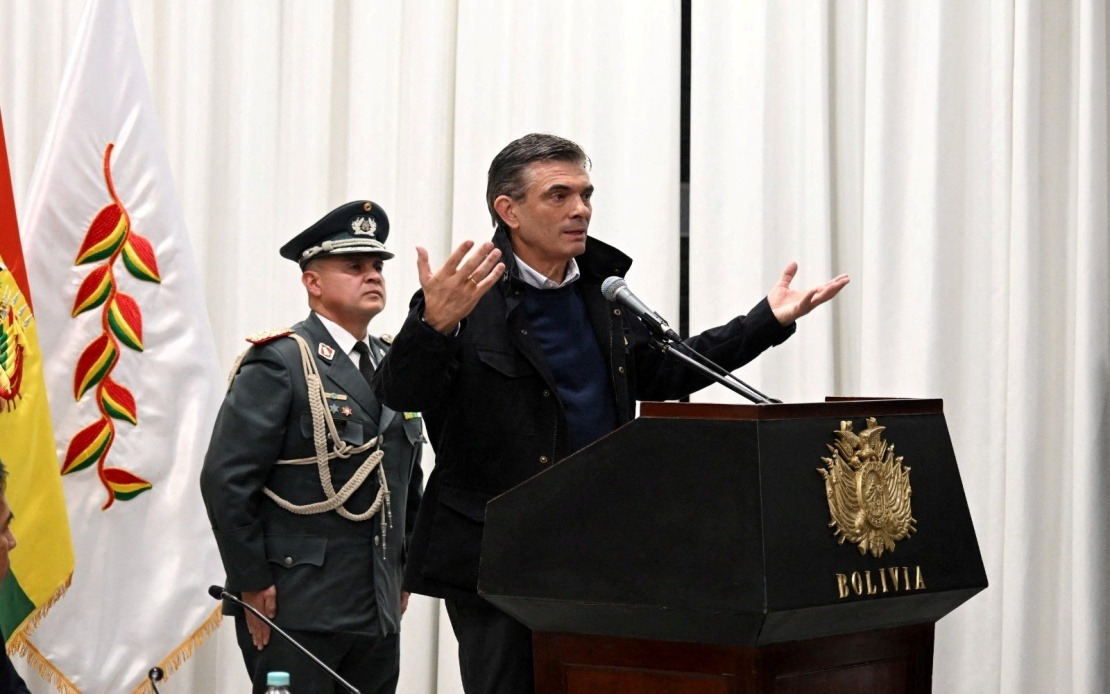
Bolivian President Rodrigo Paz has moved to invoke emergency powers in response to an escalating political and economic crisis gripping the South American nation. The declaration, announced through a televised address, marks an unprecedented escalation in efforts to counter weeks of sustained protests and road blockades that have brought critical infrastructure to a standstill across multiple regions.
The unrest reflects deepening discontent among Bolivia's working classes and agricultural sectors, with unions and farming organisations leading demonstrations calling for Paz's resignation. Central to their grievances are soaring living costs and mounting economic hardship affecting ordinary Bolivians. The protests have evolved beyond labour disputes into a broader challenge to presidential authority, threatening the stability of a nation already grappling with inflation and resource constraints.
For 50 consecutive days, roadblocks maintained by protest groups have severely disrupted Bolivia's economic functioning and daily life. Supply chains have fractured across the country, creating acute shortages of essential commodities including food, fuel, and pharmaceutical products in affected areas. The blockades have not merely caused inconvenience; they have undermined the fundamental ability of citizens to access healthcare, purchase groceries, and sustain their livelihoods, while paralyzing commercial activity and investment.
In his address to the nation, Paz articulated the humanitarian dimensions of the crisis, emphasising that Bolivians cannot be held "hostages" to blockade tactics. He specifically referenced the ways in which road closures have prevented citizens from working, pursuing education, obtaining medical treatment, purchasing supplies, and ensuring their families have adequate food. This framing attempted to position the government as defender of ordinary people against what it characterises as extortionist protest tactics, though such messaging has resonated differently depending on observers' political alignments.
The declaration of a state of exception represents a constitutionally significant step, effectively suspending normal legal constraints on executive power. By invoking these emergency provisions, Paz has cleared the way for expanded military involvement in domestic affairs—a particularly sensitive matter in Bolivian politics, where military interventions carry historical weight and trigger concerns about democratic backsliding. The deployment of armed forces to break blockades and restore road access marks a decisive, and controversial, government response.
For Southeast Asian observers, Bolivia's crisis offers an instructive case study in how political polarisation, economic mismanagement, and social inequality can rapidly destabilise even established democracies. The Malaysian context differs substantially, yet the underlying vulnerabilities—dependence on resource extraction, regional inequality, and tension between organised labour movements and government authority—resonate across developing nations in the region. The willingness of workers and farmers to undertake sustained, disruptive action reflects the depth of economic grievance, suggesting that conventional policy responses alone may prove insufficient to restore stability.
The international dimensions of Bolivia's turmoil merit attention as well. The country's economic struggles are partly rooted in commodity price fluctuations and regional trade dynamics that affect many Southeast Asian nations similarly. Furthermore, the precedent of invoking emergency powers to address protest movements influences how other governments across the developing world calibrate their responses to dissent. Malaysia, Indonesia, Thailand, and other regional states continue to grapple with balancing legitimate security concerns against the protection of civic freedoms—a tension that Bolivia's experience exemplifies in acute form.
The military's deployment will likely prove necessary to physically reopen roads, yet doing so may deepen rather than resolve underlying grievances. Workers and farmers view blockades as their primary leverage against a government they perceive as unresponsive to their material suffering. Military action to disperse them may suppress visible protest but will not address inflation, unemployment, or declining real wages that fuel the discontent. This suggests that unless the Paz administration couples enforcement measures with substantive economic reforms, the crisis may persist or resurface in alternative forms.
Regional governments observing Bolivia's trajectory face a cautionary lesson about the limits of security-focused crisis management. While restoring road access and economic functioning is immediately necessary, sustainable resolution requires addressing the legitimate demands underlying protest movements. In Bolivia, as across much of Latin America and Southeast Asia, the gap between citizens' material needs and government capacity to meet them has widened significantly, creating conditions for sustained social friction.
The coming weeks will reveal whether Paz's emergency declaration and military mobilisation can restore sufficient order for negotiation with protest leaders, or whether confrontational measures will merely postpone a reckoning with fundamental economic grievances. The international community, including regional observers in Southeast Asia, will be watching closely to assess whether Bolivia's democratic institutions can accommodate pressure from below, or whether emergency powers become instruments of permanent constraint on dissent.