Cambodia's economic diversification strategy took a concrete step forward when Deputy Prime Minister Sun Chanthol led a high-level delegation to South Korea in mid-June to promote investment opportunities in advanced manufacturing and technology sectors. The mission, framed as an intensive "door-knock" outreach to Korean companies, represents a significant pivot away from the garment-centric model that has dominated Cambodia's industrial economy for decades. By directly engaging established manufacturers already operating in the Kingdom, Cambodian officials are signalling that the country is ready to deepen its integration into regional supply chains and offer sophisticated industrial platforms beyond low-cost labour.
The investment roadshow held in Incheon on June 16 was organised jointly by the Council for the Development of Cambodia and the Incheon Chamber of Commerce and Industry, bringing together Korean company executives and investors to explore expansion opportunities. Sun Chanthol, who holds the position of first vice-chairman of the CDC, told attendees that the Cambodian government stands prepared to facilitate Korean investment with comprehensive support mechanisms. His message was carefully calibrated to address investor concerns about stability, incentives and operational support, emphasising that Cambodia's new investment law provides attractive fiscal packages, macroeconomic reliability and robust legal protections for foreign capital.
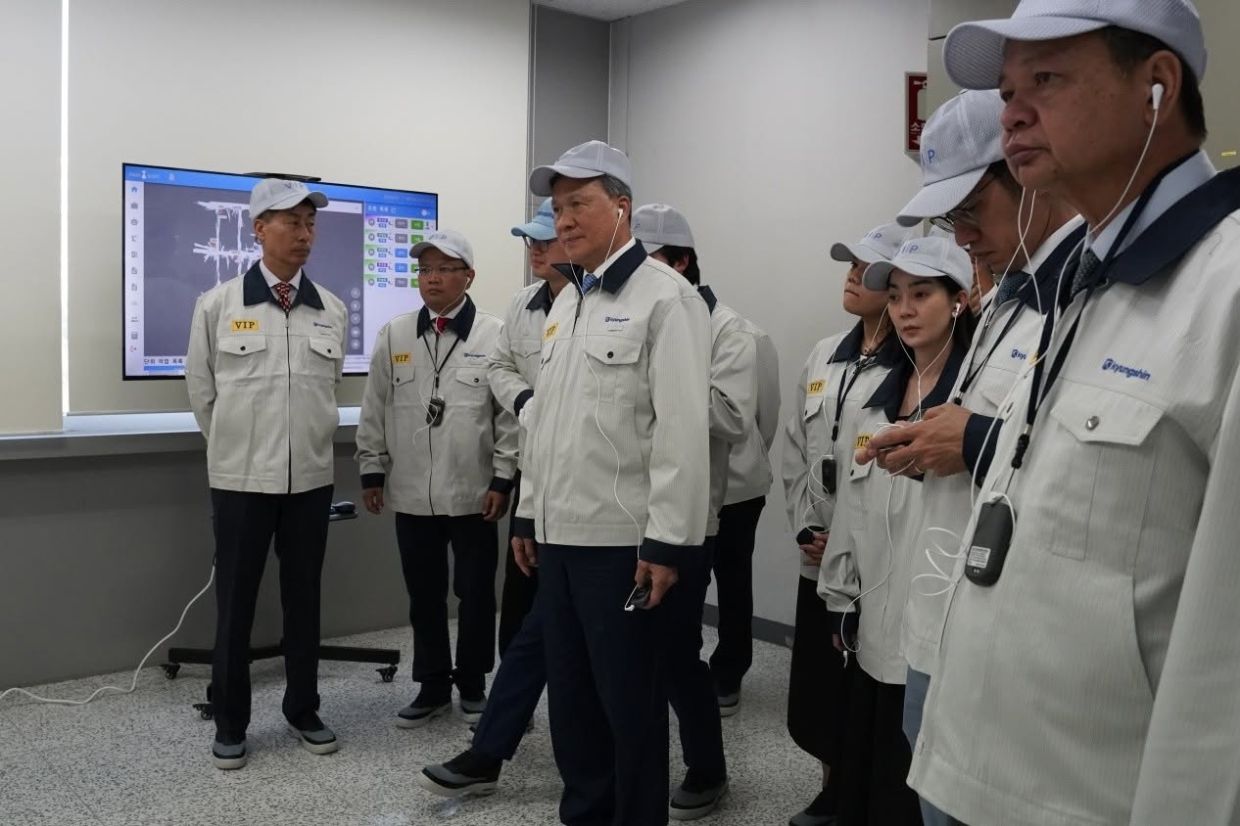
The strategic focus on automotive components and electric vehicle systems reflects Cambodia's awareness of global manufacturing trends. As international automakers accelerate their transition toward electrification and autonomous mobility, the companies that supply components and systems to this sector are relocating production closer to emerging markets in Southeast Asia. Kyungshin Co., Ltd., a leading Korean manufacturer of automotive electronic components and wire harnesses founded in 1974, exemplifies the type of investment Cambodia seeks to expand. The company has maintained operations in Cambodia since 2012, running a facility in Kandal province with approximately US$20 million in capital investment and 1,467 employees, demonstrating that the Kingdom can sustain complex electronics manufacturing at scale.
The presence of companies like Daejoo KC Group, which operates in Cambodia through subsidiaries including Camko Motor and Camko Infracore, provides a practical foundation for Cambodia's pitch to potential investors. Camko Motor assembles Hyundai vehicles for domestic consumption and manufactures automotive wire harnesses for export, generating nearly 500 jobs and establishing proof-of-concept for automotive manufacturing in the country. By encouraging such established companies to expand into adjacent sectors where they operate successfully in South Korea—such as chemicals, construction materials and renewable energy—Cambodia is effectively leveraging existing relationships and operational familiarity to attract incremental investment with lower perceived risk.
The mission's inclusion of a visit to Incheon Baek Hospital signals that Cambodia's ambitions extend beyond factory floors into high-end services and knowledge transfer. Sun Chanthol explicitly identified healthcare as a key government priority, requesting technical assistance, training exchanges and technology transfer in digital healthcare management and advanced medical systems. This dimension of the investment push reflects growing recognition within Cambodia's policymaking circles that sustainable economic development requires not just manufacturing capacity but also institutional capability to deliver advanced services. For regional manufacturers seeking regional hubs, access to high-quality healthcare for expatriate workers and their families is an important quality-of-life consideration that affects talent retention and expansion decisions.
The strategic framing of Cambodia as both a production base and a consumer market for advanced services represents a maturation in the country's investment promotion approach. Rather than competing solely on labour costs—a race Southeast Asian countries increasingly cannot win against Vietnam and Bangladesh—Cambodia is positioning itself as offering proximity to regional markets, existing supply chain integration, and the potential for technology spillovers. The participation of multiple government ministries, the Cambodian ambassador to South Korea, chambers of commerce from both nations and the Cambodian Oknha Association underlines the whole-of-government commitment to attracting and embedding quality investment.
Cambodia's pivot toward higher-value manufacturing comes as the global garment industry continues to face structural headwinds. While apparel, footwear and travel goods sectors remain vital employment sources and export earners, generating hundreds of thousands of jobs, their vulnerability to automation, supply chain disruption and shifting consumer preferences is well documented. The garment sector has already experienced significant contraction post-pandemic, and demographic trends suggest Cambodia cannot rely indefinitely on low-skill manufacturing to absorb its growing workforce. Automotive components and EV systems, by contrast, are labour-intensive in assembly and quality control but require technical training and process discipline that commands higher wages and yields greater productivity gains.
The automotive sector holds particular appeal for Cambodia because it offers multiple entry points along the value chain. Wire harness manufacturing, which Kyungshin and other Korean suppliers specialise in, is moderately labour-intensive and can be scaled across multiple facilities. As EV adoption accelerates globally and Chinese and Korean battery manufacturers increasingly establish regional production hubs in Southeast Asia, proximity to battery assembly plants makes Cambodia an attractive location for component suppliers and electronics assemblers. Regional supply chains for EVs are still in formation, creating a window of opportunity for Cambodia to establish itself as a reliable production location before global competition fully consolidates around particular hubs.
The investment promotion mission also reflects Cambodia's broader geopolitical positioning within Southeast Asia. While Vietnam has historically captured more foreign investment in automotive components and electronics, Cambodia sees opportunity to differentiate itself through political stability, geographic location relative to Thailand and Laos, and competitive operational costs. The strong presence of South Korean companies already embedded in Cambodia—beyond just Daejoo and Kyungshin, numerous Korean construction firms, energy companies and logistics providers operate throughout the Kingdom—creates a natural network effect that facilitates recruitment of new investors. Existing Korean businesses provide market intelligence, workforce training capabilities and supply chain connections that reduce risk for new entrants.
From Malaysia's perspective, Cambodia's industrial diversification strategy carries implications for regional competitiveness and supply chain architecture. Malaysia itself has sought to position its manufacturing sector around high-value electronics, automotive components and EV systems, competing directly with Cambodia for Korean and other foreign investment. However, the two countries' different labour cost structures, existing supply chain positions and technological capabilities suggest complementary rather than directly competitive roles. Malaysian companies with expertise in industrial training, logistics and component manufacturing may find opportunities to partner with Cambodian operations or to supply inputs to Korean companies establishing larger regional platforms that span both countries.
The success of Cambodia's diversification push will depend on sustained investment in human capital, infrastructure and institutional quality. South Korean investors selecting Cambodia over other Southeast Asian destinations will make decisions based not just on headline incentives but on actual operational experience—electricity reliability, customs efficiency, worker productivity and technical capability. The government's explicit commitment to facilitate Korean investment through the new investment law signals policy intent, but implementation and consistency will ultimately determine whether the mission produces lasting commitments or merely goodwill gestures. Companies like Kyungshin that have remained in Cambodia for over a decade despite modest returns suggest that conditions are adequate, though still requiring improvement in areas like technical training availability and supply chain transparency.
Cambodia's investment diversification also reflects demographic and labour market realities. The country's working-age population continues to grow, but rural-to-urban migration and rising educational attainment mean that each new cohort of workers expects better wages and conditions than the previous generation. Low-skill, low-wage manufacturing will not sustainably absorb this workforce. By cultivating investments in automotive electronics, healthcare technology and advanced manufacturing, Cambodia creates pathways for workers to develop technical skills, earn middle-class incomes and participate in global value chains at higher levels. This dynamic addresses both economic sustainability and social stability, as rising living standards and meaningful employment reduce pressure for regional migration and help contain inequality.
The June 2026 Incheon-Cambodia Investment Roadshow represents one element of a longer-term industrial repositioning that will take years to mature. Whether it catalyses substantial new Korean investment in EV components, medical technology and advanced manufacturing depends partly on forces beyond Cambodia's control—global automotive industry evolution, technology development timelines, regional geopolitical stability. However, the mission demonstrates that Cambodia's leadership recognises the urgency of economic transformation and is willing to invest diplomatic capital and institutional coordination to attract the type of investment that can anchor the country's development trajectory for the next decade. For Korean companies already operating in Cambodia, the visit signals receptiveness to expansion and partnership, while for potential new investors, it communicates that the Kingdom is actively competing for quality manufacturing investment in strategically important sectors.