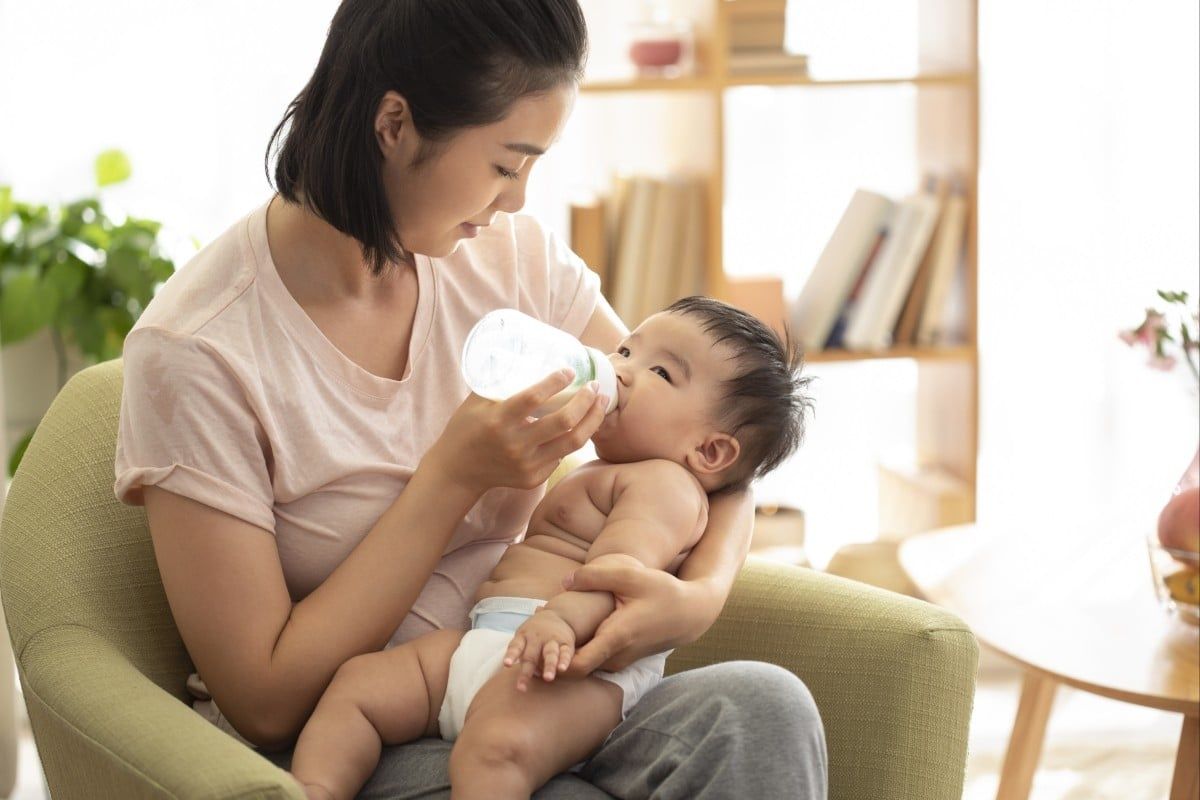
A three-month-old boy in Guangdong province required emergency intensive care treatment after his parents inadvertently poisoned him by preparing his milk formula with vegetable juice instead of water. The infant's condition deteriorated rapidly, with his skin and mouth turning purple and his breathing becoming laboured shortly after consuming the contaminated formula. He was rushed to Zhongshan Women and Children's Hospital where doctors diagnosed acute nitrite poisoning, a potentially fatal condition in young children.
The parents' decision stemmed from a common misconception that vegetable juice would provide superior nutritional value compared to plain water. This well-intentioned but dangerous choice exposed their infant to toxic levels of nitrites that his underdeveloped body could not process safely. After two days of intensive medical intervention, the child recovered sufficiently to be discharged in mid-June, though the incident underscores the critical importance of following established feeding guidelines for infants.
The medical explanation for the infant's severe reaction lies in the chemistry of overcooked vegetables. When vegetables are boiled for extended periods, their natural nitrates break down into nitrites—compounds that prove catastrophic for developing babies. The infant's immature digestive system and kidneys lack the enzymatic capacity to neutralise these toxins, allowing them to accumulate in the bloodstream with dangerous consequences.
Once nitrites enter circulation, they fundamentally impair the blood's oxygen-carrying capacity by interfering with haemoglobin function. This mechanism explains why the child's skin, lips and fingernails displayed the characteristic purple discolouration—visible evidence of oxygen deprivation at the cellular level. The condition progresses rapidly in infants, making immediate medical intervention essential for survival.
Paediatricians across China have responded with urgent public health warnings following this case. Cao Qi, a paediatrician at Nanning No 1 People's Hospital in Guangxi Zhuang autonomous region, used social media to alert parents about the warning signs of nitrite toxicity and emphasised that delays of mere minutes in seeking emergency treatment can prove fatal. His message reflects growing concern among medical professionals about dangerous feeding practices driven by parental assumptions rather than evidence-based guidance.
Cao's broader cautionary statement resonates deeply within China's parenting culture, where online trends and individual interpretations sometimes override professional medical consensus. He stressed that natural foods, while beneficial for older children and adults, are not automatically suitable for infants whose physiological systems remain in early developmental stages. This distinction—between what is healthy for mature individuals and what is safe for babies—represents a fundamental principle that many caregivers overlook.
The incident is not isolated within China's social media landscape. Cases of unusual and potentially harmful infant feeding practices regularly generate widespread online discussion and concern. The previous year had witnessed another serious poisoning case involving a 52-day-old baby in Henan province whose grandmother added honey to his water, inadvertently introducing Clostridium botulinum bacteria that causes infant botulism. These recurring episodes suggest systemic gaps in public understanding of infant nutritional safety.
For Malaysian parents and caregivers, this case carries particular relevance as traditional practices sometimes intersect with modern parenting approaches. In Southeast Asian households, where herbal infusions and traditional remedies are culturally significant, similar confusion might arise about substituting plain water with plant-based liquids for infants. The medical reality remains unambiguous: babies under six months require only breast milk or formula mixed with clean water, with no exceptions for perceived nutritional enhancement.
Healthcare authorities emphasise that infant formula preparation requires strict adherence to manufacturer instructions using only boiled, cooled water. Even seemingly harmless additions like rice water, fruit juice, or vegetable broths can introduce pathogens or chemical compounds that overwhelm an infant's defence systems. The temptation to improve on scientifically formulated products reflects parental investment and care, yet this very motivation becomes dangerous when it diverges from evidence-based practice.
The recovery of this Guangdong infant, while fortunate, masks a sobering reality: nitrite poisoning can cause permanent organ damage or death. Parents who observe symptoms such as unusual skin discolouration, breathing difficulties, lethargy, or rapid colour changes in their baby's lips and extremities must seek emergency medical care immediately. Recognition of these danger signs and swift action represent the difference between recovery and tragedy.
Public health campaigns in China and across Southeast Asia must address the cultural and psychological factors driving these dangerous practices. Many parents operate from genuine concern and desire to optimise their child's development, making them receptive to misinformation that aligns with cultural values around natural foods and traditional wisdom. Educational initiatives must therefore acknowledge this motivation while clearly explaining the physiological vulnerabilities of infants.
The case highlights how modern parenting occurs at the intersection of tradition, misinformation, and evolving medical knowledge. Rather than dismissing parents' desire to provide optimal nutrition, healthcare systems must offer accessible, culturally sensitive guidance that channels parental commitment toward genuinely safe and beneficial practices. For families across Malaysia and the broader region, the fundamental message remains unchanged: infant feeding protocols exist not as restrictive rules but as protective measures grounded in biological reality.